
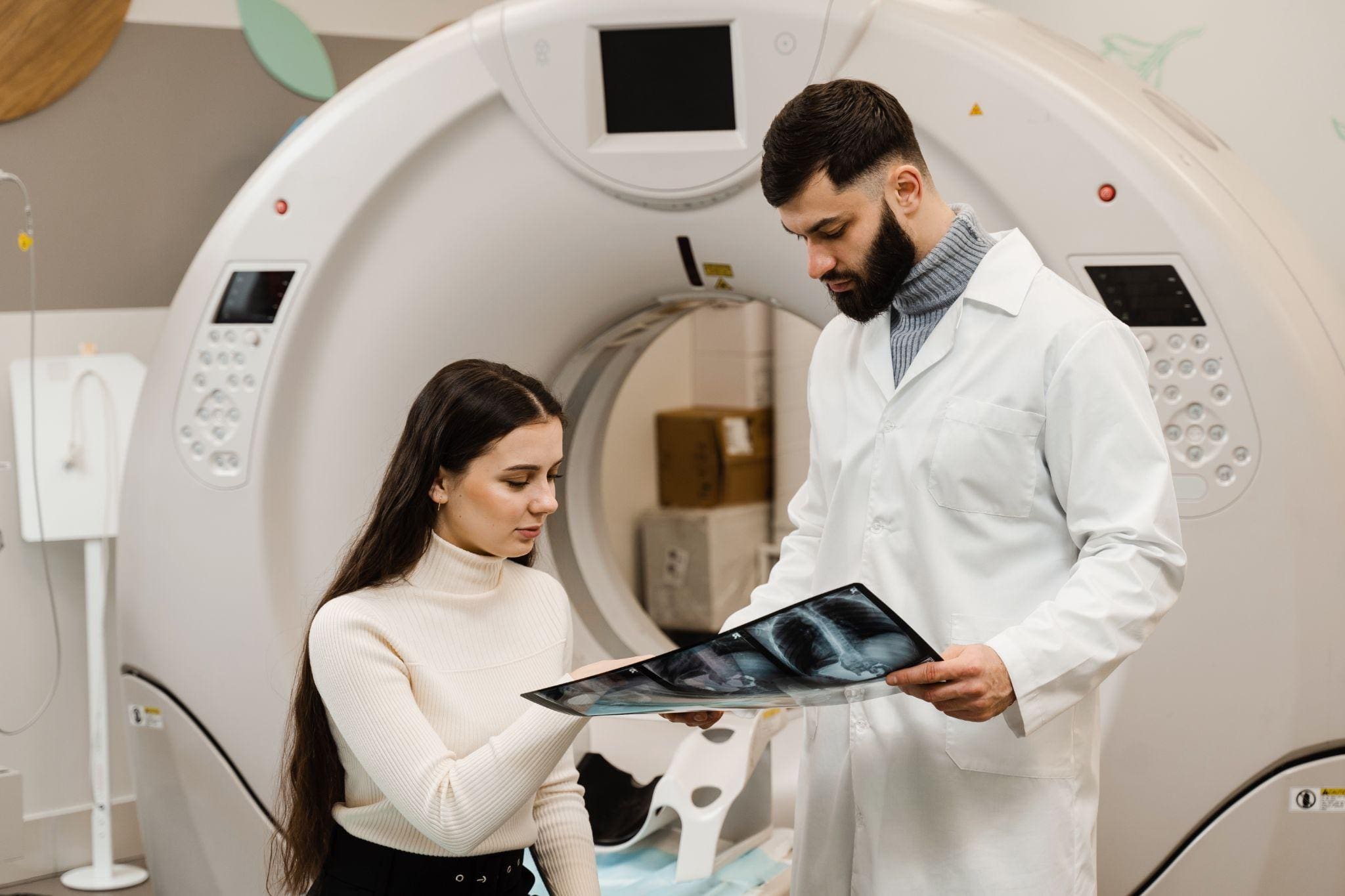
When health problems come up, doctors sometimes need to see inside the body. Simple tests may not be enough. This is when detailed imaging becomes important. Two common methods are the CT scan and the MRI. Many people feel unsure when these names are mentioned. They work in very different ways.
Each has its own use and benefits. Understanding the distinction can make things clearer and less scary. This blog will detail how each test is performed and when doctors recommend them.
What is a CT Scan?
A CT scan is an abbreviation of Computerised Tomography. It is an imaging test that uses X-rays. The machine snaps many images of the body from various angles. A computer uses these pictures to create very detailed cross-sectional images. These pictures provide clear images of bones, organs, and blood vessels.
A CT scan is often performed to look for broken bones, problems in the chest or internal injuries. It is also helpful in scanning the abdomen and identifying intraabdominal conditions. The test is fast and typically takes about a few minutes. Some scans may use a special dye, called contrast, to help certain parts of the body show up better.
What is an MRI?
MRI stands for Magnetic Resonance Imaging. It is a test that uses strong magnets and radio waves. It does not involve X-rays or radiation. The machine captures detailed images of the inside of the body. MRI images are suitable for soft tissues, like the brain, muscles, and organs.
A doctor typically uses an MRI to check the brain, spine, joints and muscles. It can help to identify problems in some organs. The test may be more time-consuming than a CT scan. You have to lie still while the machine does its work. If you are looking for an MRI scan near me, there are many hospitals and diagnostic centres where you can get it done safely.
Key Differences Between CT Scan and MRI
| Feature | CT Scan | MRI |
| Technology | Uses X-rays | Uses magnets and radio waves |
| Best for | Bones, chest, trauma, internal injuries | Soft tissues, brain, spine, muscles, organs |
| Time taken | Usually a few minutes | Can take 30–60 minutes |
| Availability | Common in most hospitals and clinics | Less widely available than CT |
| Safety | Uses radiation, not safe for frequent use | No radiation, but it cannot be done if you have metal implants or a pacemaker |
When Doctors Usually Recommend a CT Scan
It is often used in emergencies or when detailed images are needed. Common situations include:
- Head injuries and strokes – Helps detect bleeding or damage in the brain quickly.
- Bone fractures and tumours – Shows broken bones or growths clearly.
- Internal bleeding or trauma cases – Find bleeding or injuries inside the body fast.
- Lung and chest imaging – Checks the lungs, chest and other major organs.
- Quick evaluation in emergencies – Provides fast results to guide immediate treatment.
When Doctors Usually Recommend an MRI
An MRI is useful when doctors need to see soft tissues and organs clearly. Common situations include:
- Brain and spinal cord problems – Helps detect tumours, multiple sclerosis, or disc issues.
- Joint and ligament injuries – Checks knees, shoulders, hips, and other joints.
- Soft tissue and muscle damage – Shows injuries in muscles and other soft parts.
- Detailed scans of organs – Gives clear pictures of the heart, liver, kidneys, or pelvic region.
- High-resolution imaging – Used when very precise, detailed images are needed.
Safety Considerations
Both CT scans and MRI scans are generally safe. They do not hurt during the test.
- A CT scan uses X-rays, so there is a small amount of radiation exposure. It is usually safe in small amounts. It is not ideal for repeated use. Pregnant women should avoid CT scans unless it is urgent.
- An MRI scan does not use radiation. But it cannot be done if you have certain implants, pacemakers, or metal fragments in the body. The machine can be very loud. Some people may feel claustrophobic inside the MRI scanner.
Preparation and safety rules are different for each test. Doctors decide which test is safe based on your health and medical history.
Cost and Accessibility
CT scans are cheaper and available in most hospitals and diagnostic centres. They are easier to get quickly.
MRI scans cost more and may not be available everywhere. The MRI scan price can vary depending on the centre.
Insurance often covers both CT and MRI scans, but it depends on the policy. Waiting times for MRI scans may be longer than for CT scans.
Doctors usually suggest the test that is available and suitable for the patient’s condition. Both tests are important tools, but accessibility and cost can affect which one you can get first.
How to Know Which One You Might Need
The ultimate decision is always up to a physician. They review your symptoms and your medical history.
A CT scan is often the initial choice in emergent cases or trauma. They are fast and show bones and internal injuries clearly.
MRIs are best if you need detailed images of your soft tissues. They allow doctors to see the brain, muscles, organs and joints better.
Patients should not attempt to pick the test themselves. It is useful, though, to know why a doctor might rely on one test over the other.
It can be less confusing and less scary if you know the difference. Follow your doctor’s advice for the safest experience and get accurate results.
Conclusion
CT scans and MRIs are both powerful imaging tests. They help doctors see inside the body well. CT scans are suitable for bones, injuries and emergencies. MRI tests provide better views of soft tissues and nerves. The appropriate scan depends on your health problem, the urgency of that issue and safety.
A qualified doctor should always be consulted in deciding the right test for your condition. If you need a dependable place for either scan, Vijaya Diagnostic Centre is your best bet. Both tests are safe when done with care and precision.