

What is Corporate Training in Saudi Arabia?
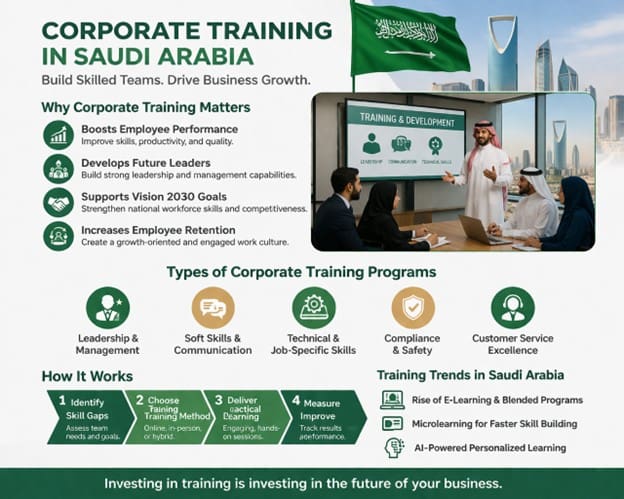
Corporate training in Saudi Arabia is a structured process where businesses improve employee skills through workshops, digital learning, and practical sessions. These programs focus on leadership, communication, and job-specific abilities to help companies increase productivity, improve performance, and stay competitive in a growing economy.
Saudi Arabia is growing fast. New industries are opening, and companies are becoming more competitive. This means businesses need skilled employees who can adapt and perform well in modern work environments.
Corporate training plays a key role in this change. It helps companies build strong teams, improve employee performance, and prepare for future challenges.
Key Takeaways
- Employee training improves performance and efficiency
- Skilled teams help businesses grow faster
- Training includes leadership, soft skills, and technical learning
- Modern methods use digital platforms and AI tools
- Investing in employees leads to long-term success
Why Do Companies in Saudi Arabia Invest in Employee Development?
Businesses invest in workforce learning programs to improve performance and stay competitive. With Vision 2030, there is a strong focus on skills, innovation, and productivity.
Improves Daily Work Performance
When employees receive proper training, they understand their tasks clearly and perform them with confidence. This leads to:
- Fewer mistakes in daily work
- Faster task completion
- Better quality output
Over time, teams become more efficient and reliable.
Supports Business Expansion
A skilled workforce allows companies to grow without delays. Employees can handle more responsibilities and complex tasks. This helps businesses:
- Take on larger projects
- Enter new markets
- Scale operations smoothly
Builds Strong Leadership Skills
Training programs help employees develop leadership abilities that are essential for business success. These include:
- Decision-making skills
- Clear communication
- Team management
Strong leaders improve both team performance and company direction.
Reduces Employee Turnover
Employees stay longer in companies that invest in their growth. This helps businesses:
- Reduce hiring costs
- Retain experienced staff
- Maintain stable teams
Types of Corporate Training Programs in Saudi Arabia
Different businesses need different learning approaches depending on their goals.
Leadership and Management Development
This training prepares employees for leadership roles. It helps them:
- Manage teams effectively
- Plan and execute strategies
- Handle workplace challenges
Soft Skills and Communication Training
Soft skills improve everyday workplace interactions. Employees learn:
- How to communicate clearly
- How to work in teams
- How to manage time
These skills improve overall workplace efficiency.
Technical and Job-Specific Learning
This type of training focuses on practical knowledge. Employees gain:
- Hands-on experience with tools
- Better understanding of systems
- Improved task accuracy
Compliance and Safety Awareness
This training ensures employees follow company policies and safety rules. It helps:
- Reduce workplace risks
- Maintain legal compliance
- Create a safe environment
Customer Service and Client Handling
Employees learn how to interact with customers professionally. This leads to:
- Better communication
- Higher customer satisfaction
- Stronger client relationships
How Corporate Training Works in Saudi Arabia
Companies follow a structured process to make training effective.
Step 1: Identify Skill Gaps
Businesses analyze employee performance to find areas that need improvement. This helps in creating focused training plans.
Step 2: Select the Right Training Method
Companies choose learning formats based on their needs:
- Online learning for flexibility
- Classroom sessions for interaction
- Hybrid models for balance
Step 3: Deliver Practical Training
Training focuses on real-world applications. Employees learn skills they can use immediately in their roles.
Step 4: Measure Performance Improvement
After training, companies evaluate results by tracking:
- Productivity levels
- Work quality
- Employee feedback
Benefits of Corporate Training for Businesses
Employee training brings long-term value to organizations.
Increases Productivity
Trained employees work faster and more efficiently. This results in:
- Reduced delays
- Better output
- Improved workflow
Enhances Team Collaboration
Training improves how employees work together. Teams benefit from:
- Clear communication
- Better coordination
- Faster problem-solving
Builds a Positive Work Culture
When employees feel supported, they become more engaged. This creates:
- Higher motivation
- Better job satisfaction
- Strong workplace relationships
Strengthens Competitive Position
Companies with skilled teams gain an advantage in the market. They can:
- Adapt to changes quickly
- Deliver high-quality work
- Stay ahead of competitors
Latest Trends in Corporate Training in Saudi Arabia
Training methods are evolving with modern technology.
Digital Learning Platforms
Online learning offers flexibility and convenience. Employees can:
- Learn anytime
- Access materials easily
- Study at their own pace
Blended Learning Models
Combining online and in-person training provides:
- Better engagement
- Improved understanding
- Flexible learning options
Microlearning Approach
Short lessons make learning easier. Employees can:
- Absorb information quickly
- Stay focused
- Avoid overload
AI-Based Learning Systems
Advanced tools improve training efficiency by:
- Tracking progress
- Personalizing content
- Suggesting improvements
Challenges in Employee Training Programs
While employee training offers many benefits, organizations often face certain challenges when implementing effective programs. Addressing these issues is essential to ensure successful learning outcomes and long-term value.
Budget Limitations
One of the most common challenges is the cost associated with training programs. Smaller businesses, in particular, may find it difficult to allocate sufficient budgets for high-quality training resources, trainers, or advanced tools. However, organizations should view training as a long-term investment, as it improves employee performance, reduces errors, and contributes to overall business growth.
Time Constraints
Balancing daily work responsibilities with training schedules can be challenging for both employees and management. Employees may struggle to dedicate time to learning while meeting deadlines and maintaining productivity. Proper planning, flexible schedules, and the use of online or self-paced training solutions can help organizations overcome this challenge effectively.
Measuring Training Effectiveness
Tracking results requires clear performance indicators such as:
- Productivity improvement
- Skill development
- Employee feedback
Maintaining Engagement
Keeping employees interested requires:
- Interactive sessions
- Practical examples
- Clear learning goals
How to Choose the Right Corporate Training Program
Selecting the right corporate training program is essential for achieving meaningful results. A well-planned approach ensures that employees gain relevant skills and that the organization sees measurable improvements in performance.
Identify Business Needs
Start by evaluating your organization’s current challenges and skill gaps. Focus on:
- Skills your employees currently lack
- Areas where performance is below expectations
- Future business goals and required capabilities
Set Clear Objectives
Define specific and measurable goals to guide your training program. This helps in tracking success and ensuring alignment with business outcomes.
Select Suitable Learning Formats
Choosing the right training format is important to match your team’s working style and availability. Consider:
- Online Learning: Flexible and accessible from anywhere
- In-Person Training: Interactive and engagement-focused
- Hybrid Learning: Combines flexibility with face-to-face interaction
Work with Experienced Providers
Partnering with experienced training providers ensures better results. When selecting a provider, consider:
- Proven industry experience
- Understanding of the Saudi market
- Quality of trainers and training materials
H3: Track Results and Improvement
After the training program, continuously measure its effectiveness. Key ways to track progress include:
- Employee performance metrics
- Feedback and satisfaction surveys
- Achievement of training objectives and KPIs
Future of Corporate Training in Saudi Arabia
The future of employee development in Saudi Arabia looks promising as organizations continue to invest in upskilling their workforce. With rapid digital transformation and evolving business needs, corporate training is becoming more advanced, flexible, and results-driven.
Expansion of Online Learning
Digital learning platforms are expected to grow significantly, making training more accessible for employees across different locations. Companies are increasingly adopting e-learning, virtual classrooms, and hybrid models to provide flexible learning opportunities.
Personalized Training Programs
Organizations are moving towards customized training solutions that match individual employee needs. Personalized learning paths help employees develop relevant skills faster and improve overall performance.
Focus on Leadership Development
Businesses will continue to invest in leadership training to prepare future managers and decision-makers. Strong leadership is essential for driving growth, managing teams, and adapting to market changes.
Increased Use of Smart Technologies
Advanced technologies like AI, data analytics, and automation are transforming corporate training. These tools help track progress, measure performance, and deliver more effective and engaging learning experiences.
Conclusion
Corporate training in Saudi Arabia helps businesses improve employee skills, increase productivity, and support long-term growth. Companies that invest in workforce development build stronger teams, reduce turnover, and stay competitive in a rapidly changing market.
FAQs
What is corporate training in Saudi Arabia?
It is a structured process that helps employees improve their skills and workplace performance.
Why is employee training important?
It improves productivity, supports growth, and helps businesses stay competitive.
What types of training programs are available?
Leadership, communication, technical, and compliance training are common options.
How do companies measure training success?
They track productivity, performance, and employee feedback after training.
Is online training effective?
Yes, it offers flexibility and allows employees to learn at their own pace.