
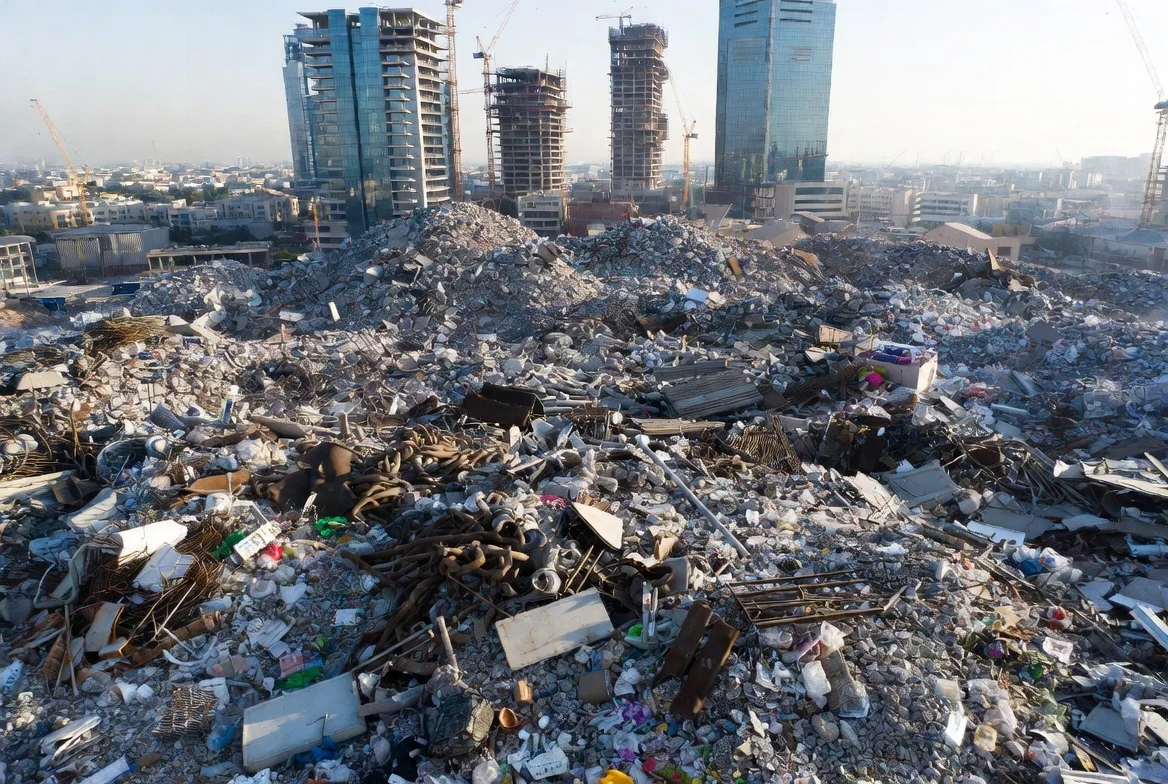
Dubai’s skyline never stops climbing — but neither do the piles of construction waste that rise alongside it. Behind every iconic tower, villa community, and infrastructure project lies a growing mountain of debris that contractors can no longer afford to ignore.
In 2025, construction and demolition (C&D) waste is no longer just “leftover material.” It has become one of the most expensive, regulated, and strategically important elements of project management in the UAE. From rising landfill fees to stricter municipality rules, the cost of doing nothing is becoming the silent tax eating into project margins.
But here’s the surprising truth:
The contractors making the highest profits in Dubai today aren’t winning because of faster cranes, bigger teams, or cheaper labor — they’re winning because they mastered construction waste.
Dubai’s Construction Waste Problem Is Bigger Than Most Realize
Dubai’s rapid growth comes with a heavy environmental and financial footprint. Every single day, the emirate produces over 20,000 tons of construction and demolition waste — enough to fill the entire Burj Khalifa foundation pit in less than two weeks.
That staggering volume represents:
- More than 65% of all solid waste generated in the UAE
- Billions of dirhams lost annually in transportation fees, tipping charges, and non-compliance penalties
- Project delays due to blocked access, unsafe work zones, and municipality violations
- Lower tender competitiveness because of weak ESG scores
What was once considered “a normal part of construction” is now a high-stakes performance metric in developer evaluations, financing approvals, and government compliance.
Contractors who ignore this shift risk being priced out of the market — not because they build slowly, but because they waste too much.
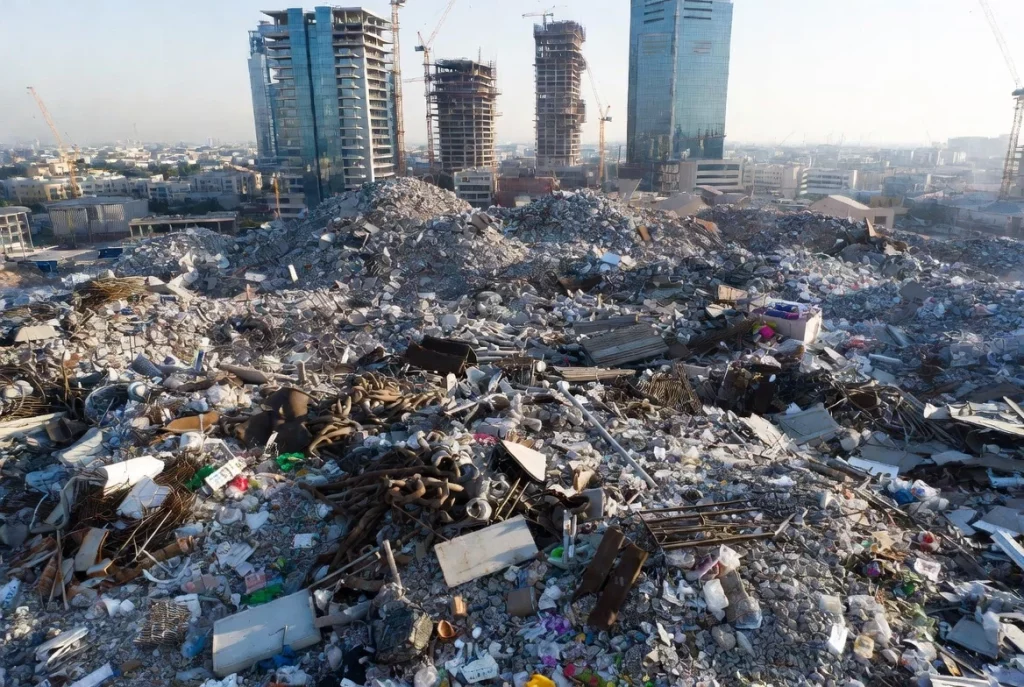
Why 2025 Is the Year Construction Waste Became a Competitive Advantage
1. Regulations Now Have Teeth — And They Bite Hard
Dubai Municipality’s updated 2024–2025 rules include:
- AED 50,000 to 500,000 fines for mixed waste, missing manifests, or improper disposal
- Possible site shutdowns for illegal dumping
- Strict documentation requirements for LEED, BREEAM, and Al Sa’fat certifications
One non-compliant truckload is enough to freeze a multimillion-dollar project.
2. Disposal Costs Have Skyrocketed
Landfill fees at Jebel Ali, Al Qusais, and other government-approved sites have increased over 300% since 2019.
For a typical high-rise project, waste disposal can now exceed the cost of:
- Rebar
- MEP fittings
- Interior finishing
Some CEOs now call it “the new unspoken tax on construction.”
3. Developers Want Greener Contractors — and Pay More for Them
Major developers including:
- Emaar
- Nakheel
- DAMAC
- Aldar
…now require 60–75% waste diversion just to qualify for pre-qualification.
Hit 80% or more, and you jump to preferred contractor status — with better payment terms, faster approvals, and access to premium projects.
4. Global Investors Are Screening Waste Metrics
ESG (Environmental, Social, Governance) scoring is now part of due diligence. Private equity, sovereign funds, and major banks scrutinize waste-diversion data before approving major funding.
If your waste numbers are weak, your bid may die before it even reaches the pricing stage.
The Numbers That Are Keeping CEOs Awake
Contractors who adopted a structured, data-driven waste strategy in 2025 report:
- 10–18% reduction in total project hard costs
- 50–75% diversion from landfills — documented and audit-ready
- AED 8–15 million saved on a standard 40-storey building
- Zero days lost due to municipality stop-work orders
The result?
Waste is no longer a “cost center.” It has become a profit engine.
🔗 Learn more about efficient construction waste management strategies here.
The 2025 Waste-Optimization Playbook Used by Dubai’s Top Contractors
1. Ruthless On-Site Segregation From Day One
Top-performing contractors begin with eight dedicated, clearly labeled skips:
- Concrete
- Metals
- Timber
- Gypsum
- Cardboard
- Plastics
- E-waste
- Hazardous materials
By eliminating mixed loads, the recycling value jumps 400–700%.
Metals, concrete, and timber suddenly transform from “waste” into recoverable assets.
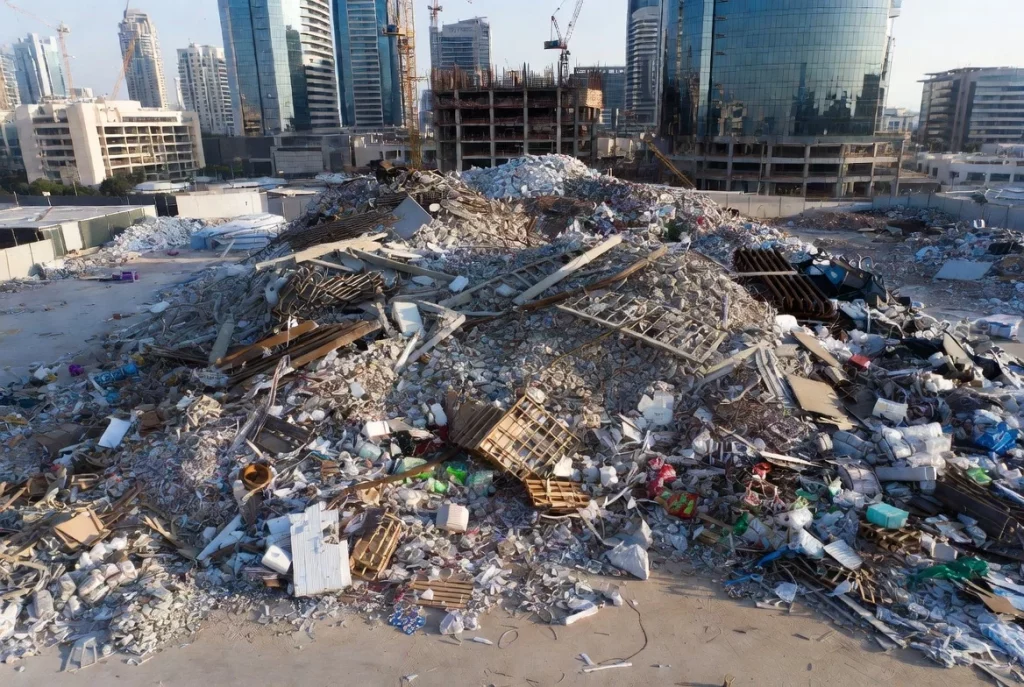
2. Zero-Clutter Worksites = Faster Builds
Daily or same-day waste pickups:
- Prevent accidents
- Keep access roads open
- Allow cranes to operate at full capacity
- Reduce time lost in moving or re-arranging debris
A clean site builds faster — and safer.
3. Turning Rubble Into Revenue Streams
Dubai’s new world-class recycling plants — Bee’ah, Enviroserve, Dulsco, and others — now pay for sorted materials.
You can literally earn back:
- Cash for metals
- Rebates for clean concrete
- Lower-cost recycled aggregates (30–40% cheaper than virgin)
This alone can shave millions off a single tower project.
4. Outsourcing to a Compliance-Proof Partner
The fastest-growing contractors in Dubai no longer handle waste themselves.
They outsource to licensed, professional companies with:
- Compliance-ready documentation
- Certified recycling partners
- Hazardous waste permits
- Real-time tracking and manifests
- 24/7 support
This eliminates errors — and maximizes recycling rebates.
Meet the Waste Partner Behind Dubai’s Most Efficient Construction Sites (2025)
Navyom Waste Collection Services has become one of Dubai’s most trusted partners for large-scale construction waste management.
But Navyom isn’t “just a skip provider.”
They function as the invisible operational backbone that keeps projects compliant, profitable, and municipality-proof.
Contractors choose Navyom because they deliver:
- Instant construction waste pickup across all emirates
- Fleet of 4–40 yard skips, roll-on/roll-off bins, and compactors
- Licensed hazardous waste removal: asbestos, contaminated soil, industrial chemicals
- GPS-tracked manifests for LEED, Al Sa’fat & investor reporting
- Average 78% diversion rate — one of the highest in the UAE
- 24/7 emergency response for night pours, crane lifts, or urgent clearances
If you need a partner who protects your productivity and your compliance, Navyom is the name every major contractor already knows.
🔗 Explore Dubai’s most reliable construction waste solutions.
What the Next Decade Will Look Like: Waste Masters vs. Waste Burdened
Dubai aims to achieve:
- 90% landfill diversion
- Zero illegal dumping
- Circular-economy standards across all new developments
This means the future will be divided into two types of contractors:
1. The Waste Masters
These are the companies that:
- Use data-driven waste plans
- Work with licensed partners
- Provide documentation automatically
- Hit 75–90% diversion
- Reduce costs through recycling revenue
They will dominate tenders, win large-scale projects, and become preferred partners for top developers.
2. The Waste-Burdened
Contractors who continue treating waste as an afterthought will face:
- Bigger fines
- Lost bids
- Rising landfill fees
- Slower sites
- Lower ESG scores
- Higher long-term project costs
In the new Dubai, inefficient waste handling isn’t just an operational issue — it’s a competitive disadvantage.
Final Word: Don’t Let Construction Waste Decide Your Profitability
Construction waste in Dubai is no longer a side task. It’s a core financial, regulatory, and strategic factor that determines:
- Who wins tenders
- Who secures investment
- Whose projects hit deadlines
- Whose margins grow or collapse
By taking control of waste — not reacting to it — contractors can unlock millions in savings and gain a distinct competitive edge.
The smartest contractors aren’t just building towers.
They’re building waste-efficient systems that guarantee higher margins and regulatory safety.
Don’t wait for the next municipality inspection or landfill fee increase.
Take control of your waste — and your profits — now.