
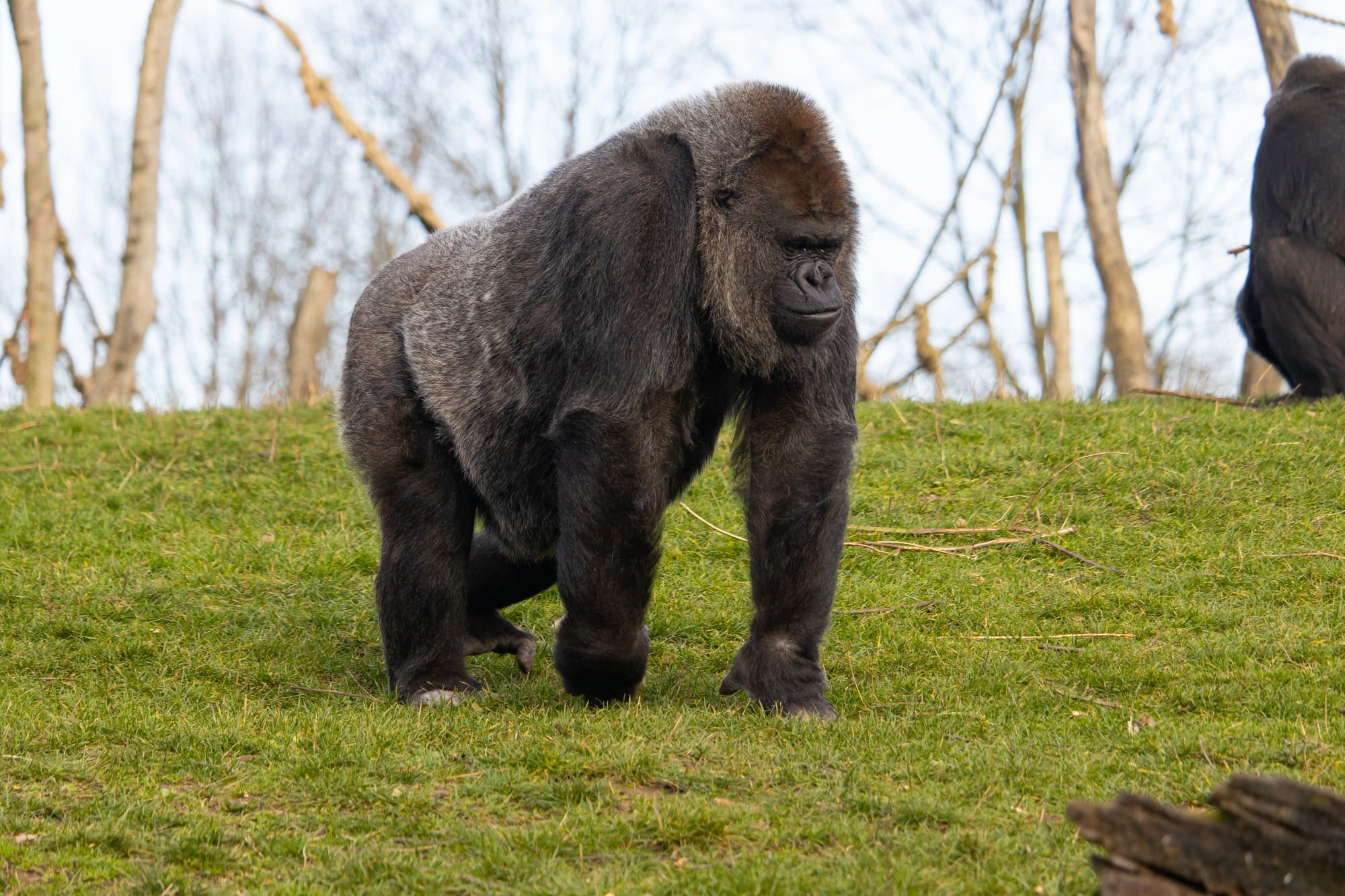
Volcanoes National Park stands as one of Africa’s most celebrated conservation success stories, particularly for the recovery of endangered mountain gorillas. However, success does not eliminate vulnerability. Behind the steady growth in gorilla numbers lies a complex web of environmental, social, and ecological pressures that require constant management.
Volcanoes National Park protects a relatively small area of high-altitude rainforest within the Virunga Massif ecosystem. As mountain gorilla populations grow and human communities expand around park boundaries, conservation challenges become increasingly intricate. Sustaining progress demands adaptive strategies, long-term funding, and strong governance.
Limited Habitat Size and Population Pressure
One of the most pressing challenges facing Volcanoes National Park is its limited size. The Park covers approximately 160 square kilometers, which must sustain not only mountain gorillas but also golden monkeys, forest elephants, and numerous bird and plant species.
As mountain gorilla numbers gradually increase, territorial space becomes more competitive. Gorilla families require adequate feeding areas, nesting zones, and movement corridors. Habitat expansion opportunities are limited due to agricultural land surrounding the park.
Balancing population growth with habitat capacity requires careful ecological monitoring. Authorities must ensure that food availability remains stable and that gorilla groups do not experience increased stress due to overcrowding.
Human Population Pressure at Park Boundaries
Volcanoes National Park lies adjacent to densely populated agricultural communities. Rwanda’s population density ranks among the highest in Africa. As surrounding communities grow, pressure on land resources intensifies.
Although park boundaries are clearly demarcated, occasional encroachment attempts and illegal harvesting of forest products still occur. Maintaining strong boundary enforcement requires continuous ranger patrols and community engagement.
Economic disparities can increase the temptation to exploit forest resources. Conservation strategies must therefore align closely with community development to reduce dependence on parkland.
Disease Transmission Risks
Mountain gorillas share approximately 98 percent of human DNA, which makes them highly susceptible to human-transmitted diseases. Respiratory infections pose the greatest risk. Even mild human illnesses can spread quickly within a gorilla family.
Tourism protocols help reduce risk through health screenings, minimum distance rules, and strict time limits during visits. However, disease transmission remains a persistent concern, especially in an era of global travel and emerging pathogens.
Veterinary monitoring programs play a crucial role in early detection and response. Continuous vigilance remains essential to prevent outbreaks that could destabilize population growth.
Climate Change and Ecological Uncertainty
Climate change introduces long-term uncertainty for high-altitude ecosystems like those in Volcanoes National Park, Rwanda. Altered rainfall patterns and temperature shifts can affect vegetation growth cycles, and Gorilla movements in their Natural habitat.
Mountain gorillas depend on consistent availability of bamboo shoots and other plant species. If climate variations disrupt these cycles, food supply may fluctuate. Such changes could influence gorilla movement patterns and territorial dynamics.
Research teams under the Karisoke Research Fund monitor vegetation trends and ecological indicators to anticipate potential impacts. Adaptive management strategies must remain flexible as environmental conditions evolve.
Balancing Tourism and Conservation
Gorilla tourism funds conservation efforts but also introduces potential disturbance. Rwanda operates under a high-value, low-volume model that limits each gorilla family to eight visitors per day for one hour.
Maintaining this balance is critical. Increasing visitor numbers to generate more revenue could place stress on gorilla groups. Conversely, reducing tourism without alternative funding sources could weaken conservation budgets.
The challenge lies in preserving financial sustainability while minimizing ecological impact. Strict regulation remains central to this equilibrium.
Cross-Border Coordination Within the Virunga Massif
Volcanoes National Park forms part of the larger Virunga ecosystem shared with Uganda and the Democratic Republic of Congo. Mountain gorillas, before they are open to public tracking, are taken through the process of Gorilla habituation, which is done with the help of the local communities that live next to the protected areas. move freely across national boundaries. Local communities are vital in the whole conservation process.
Political instability in neighboring regions can indirectly affect conservation stability. Coordinated cross-border monitoring, intelligence sharing, and joint patrols remain essential.
Maintaining regional cooperation ensures that conservation gains in Rwanda are not undermined by weaknesses elsewhere in the ecosystem.
Economic Dependence on Tourism Revenue
Gorilla permits provide a significant portion of conservation funding. This reliance creates vulnerability during global travel disruptions. Events such as pandemics can sharply reduce visitor numbers, limiting available conservation revenue.
Diversifying funding streams while maintaining tourism regulation is an ongoing challenge. Long-term financial resilience requires contingency planning and sustainable budget management.
Rwanda’s experience during global travel shutdowns highlighted the importance of maintaining ranger patrols and veterinary services even when tourism revenue declines.
Community Expectations and Social Equity
Community revenue-sharing programs have strengthened local support for conservation. However, rising expectations accompany economic growth. Ensuring that benefits are distributed equitably remains a continuous responsibility.
If communities perceive unequal access to tourism-related income, support for conservation could weaken. Transparent governance and consistent investment in social infrastructure help maintain trust.
Strong community relationships remain essential to long-term ecological stability.
Long-Term Monitoring and Adaptive Management
Conservation challenges are dynamic rather than static. Population growth, climate shifts, and socio-economic changes require adaptive management strategies.
Scientific monitoring through censuses, habitat surveys, and veterinary assessments informs policy adjustments. Data-driven decision-making strengthens resilience against emerging threats.
Continuous evaluation ensures that conservation strategies evolve alongside ecological and social realities.
Final Reflections
Conservation challenges in Volcanoes National Park highlight the complexity of protecting an endangered species within a small, high-density region. Habitat limitations, human pressure, disease risk, climate change, and financial sustainability require integrated responses.
Rwanda’s structured conservation model has demonstrated resilience, but success depends on ongoing commitment. Mountain gorilla recovery remains a living process that requires vigilance, funding, and community partnership.
Volcanoes National Park stands as proof that conservation success is achievable, yet it also reminds us that protection is never complete.
Support Sustainable Conservation With Your Visit
Volcanoes National Park organizes professionally managed gorilla trekking experiences that directly contribute to conservation funding in Volcanoes National Park. Every permit secured supports ranger patrols, veterinary monitoring, and community development programs.
If you want your journey to strengthen Rwanda’s conservation resilience, contact Volcanoes National Park today for Mountain Gorilla Trekking Safaris. Our team will design a seamless itinerary that combines extraordinary wildlife encounters with meaningful environmental impact.