
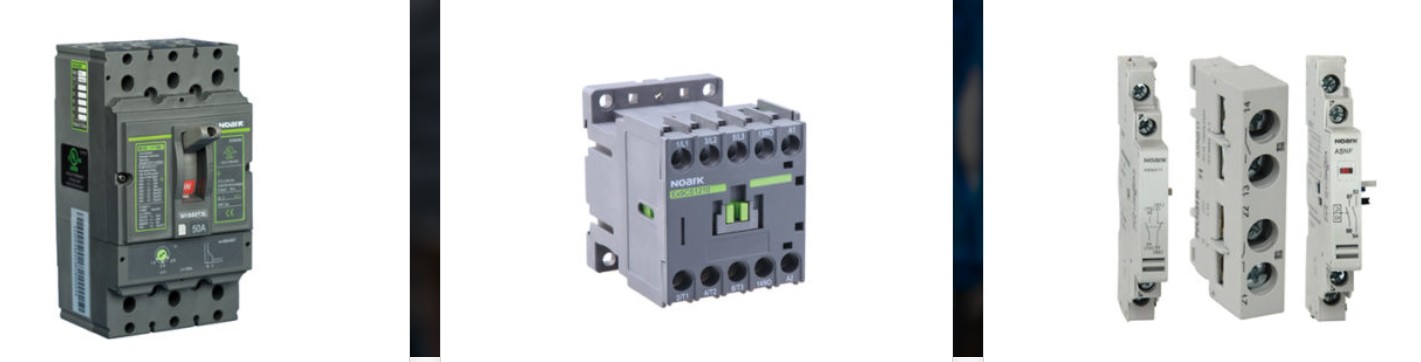
When it comes to the safety of your property, few components are as vital as the residential circuit breaker and its heavy-duty counterpart, the commercial circuit breaker. These devices act as the silent guardians of your electrical system, stepping in to cut off power the moment an overload or short circuit is detected. Understanding the nuances between these two systems is essential for any property owner looking to maintain a reliable and secure power supply. At Electrical Distribution & Control, we specialize in providing high-quality electrical solutions that ensure your infrastructure remains resilient against modern power demands.
Electrical Distribution & Control is a premier provider of advanced electrical components, offering a wide range of circuit protection devices designed for diverse environments. With a focus on durability and precision engineering, the company ensures that every installation meets the highest safety standards. You can explore their full inventory at https://edc-electrical.com/.
The Fundamentals of Residential Circuit Breakers
A residential circuit breaker is typically designed to handle the standard electrical loads found in a modern home. Most houses operate on a single-phase power system, usually delivering 120V or 240V. The breakers used in these settings are engineered to protect appliances like refrigerators, televisions, and HVAC units.
The primary goal of a residential unit is simplicity and safety for the average homeowner. These breakers are usually smaller and designed for lower amperage ratings, often ranging from 15 to 200 amps. They are meant to fit into a compact panel tucked away in a garage or basement. While they are incredibly reliable, they are not built to withstand the constant, high-intensity cycling of industrial machinery.
Stepping Up to Commercial Circuit Breakers
In contrast, a commercial circuit breaker is a different beast entirely. Commercial buildings, such as office towers, shopping malls, and hospitals, operate on much more complex electrical grids. These systems often utilize three-phase power, which provides a more consistent and powerful stream of electricity to run heavy-duty elevators, large-scale lighting systems, and massive server rooms.
These breakers are built with higher interrupting ratings. This means they can safely handle a much larger “fault current”—the sudden surge of electricity that happens during a short circuit—without exploding or failing. They are also frequently housed in much larger, more robust switchgear assemblies that allow for easier maintenance and monitoring by facility managers.
Performance and Durability: The Key Differences
One of the most significant differences lies in the thermal-magnetic trip units. While both types use this technology, the commercial circuit breaker often features adjustable trip settings. This allows electricians to fine-tune exactly when the breaker should trip based on the specific machinery it is protecting. In a residential setting, these settings are almost always fixed because the loads are predictable and standardized.
The physical construction also varies. Commercial units often use higher-grade materials to dissipate heat more effectively. Because commercial buildings run 24/7, the breakers are under constant thermal stress. Electrical Distribution & Control prioritizes these high-stress environments by supplying components that can withstand continuous operation without degrading.
Pros and Cons of Residential Systems
Looking at the advantages, residential breakers are highly cost-effective. They are mass-produced and easy to replace. Most local hardware stores carry the standard brands, making them accessible for quick repairs. They are also designed with “plug-on” or “bolt-on” configurations that are straightforward for licensed electricians to install in a standard home panel.
However, the downside is their limited capacity. You cannot simply install a residential breaker in a commercial environment and expect it to hold up. They lack the robust “interrupting capacity” needed for high-voltage surges, which could lead to a catastrophic fire if used incorrectly. Furthermore, they generally lack the advanced communication features found in high-end commercial models that notify building managers of a trip via a digital interface.
Pros and Cons of Commercial Systems
The biggest “pro” of a commercial circuit breaker is its sheer power and adaptability. These units can protect thousands of dollars worth of equipment and ensure that a small fault in one part of a building doesn’t shut down the entire facility. They often include features like ground-fault protection and arc-fault detection integrated into larger frames, providing a comprehensive safety net.
On the “con” side, the complexity comes with a higher price tag. The units themselves are significantly more expensive, and the labor required for installation and maintenance is specialized. They also require much more space; a commercial electrical room can be the size of a small apartment, filled with massive cabinets housing these breakers.
Which One Do You Really Need?
Choosing between a residential circuit breaker and a commercial one is usually determined by the “code” and the nature of your property. If you are running a home business that involves heavy machinery—perhaps a CNC machine in a garage or a professional-grade kiln—you might actually need to look into light commercial equipment even though you are in a residential zone.
Conversely, some small retail shops might only require residential-grade panels if their power needs are minimal. However, it is always safer to over-engineer than under-engineer. Consulting with experts like those at Electrical Distribution & Control can help you determine if your current setup is adequate for your power consumption patterns.
Maintenance and Longevity Insights
Both types of breakers require periodic inspection. In a home, it is wise to “exercise” your breakers once a year by flipping them off and on to ensure the internal spring mechanisms don’t seize up. In a commercial setting, this is often mandated by safety regulations and involves infrared scanning to detect “hot spots” before a failure occurs.
Commercial breakers are often designed to be “serviceable,” meaning certain parts can be replaced without tossing the whole unit. Residential breakers, because of their lower cost, are almost always “disposable”—if it fails, you replace it entirely. This reflects the different economic and operational philosophies behind the two designs.
Verdict: The Right Choice for the Right Task
The residential circuit breaker is a masterpiece of efficiency for the everyday user, providing exactly the right amount of protection for a safe and comfortable home life. It is the unsung hero of our domestic world, ensuring we can use our toasters and laptops without fear.
However, for the high-stakes world of business and industry, the commercial circuit breaker is the only logical choice. Its ability to handle massive electrical loads and its sophisticated customization options make it indispensable for modern commerce. At Electrical Distribution & Control, the focus is on bridging the gap between high-demand needs and reliable hardware, ensuring that no matter the scale, your power stays on and your property stays safe.
Ultimately, the best breaker is the one that meets your specific load requirements while adhering to local building codes. Never cut corners with electrical safety; the cost of a high-quality breaker is a fraction of the cost of property damage. Whether you are upgrading a home panel or outfitting a new office complex, selecting the right circuit protection is the most important investment you will make in your infrastructure.