
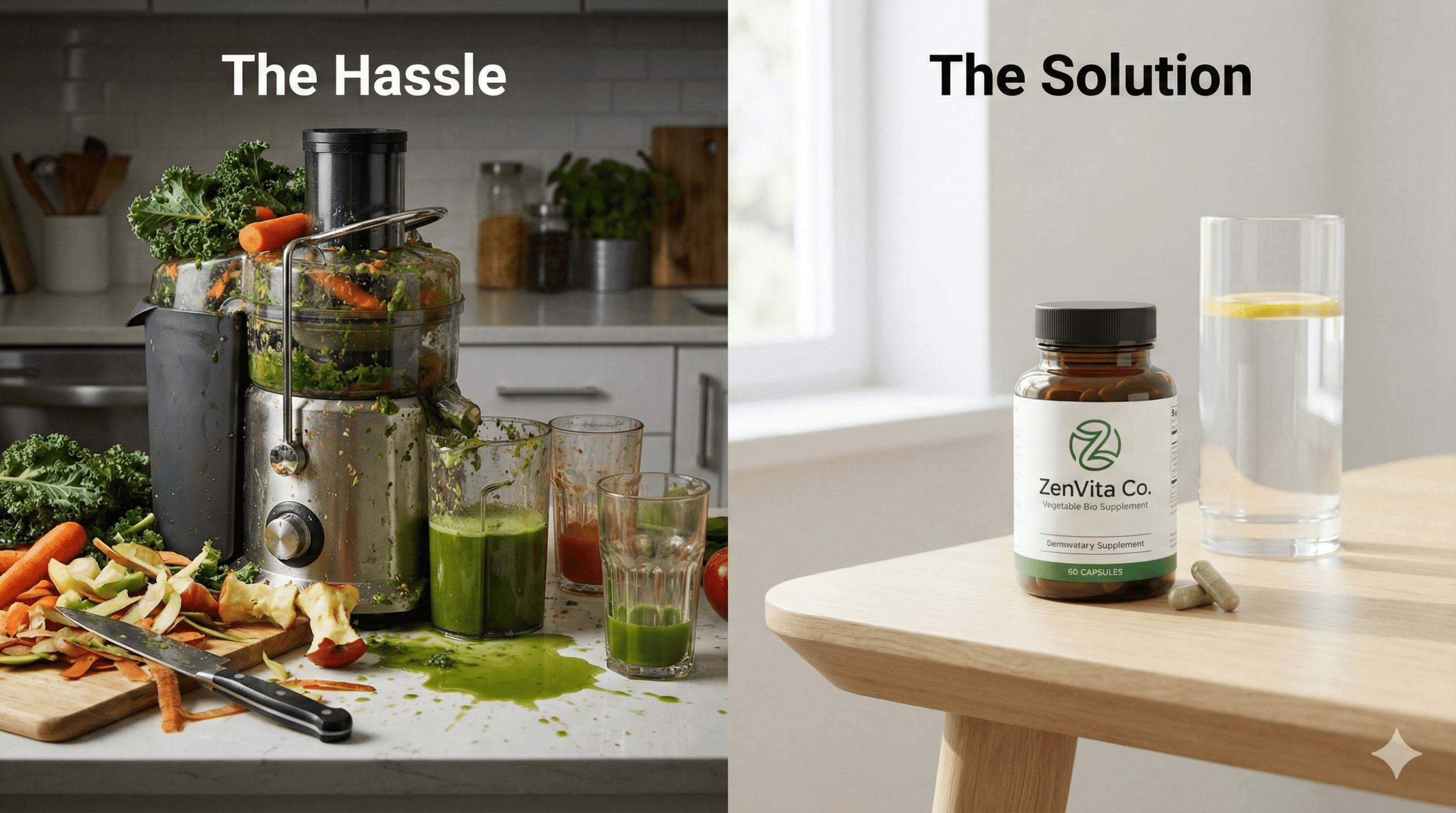
You feel heavy, bloated, and sluggish. Maybe you overindulged during a holiday, or perhaps stress eating has taken its toll. You want a reset—fast.
But the wellness aisle is confusing. On one side, you have herbal pills promising to “flush out toxins” overnight. On the other, expensive cold-pressed juices claim to “reset your system” through liquid nutrition. Both promise a flatter stomach and renewed energy, but the mechanisms behind them are radically different—and potentially dangerous if misused.
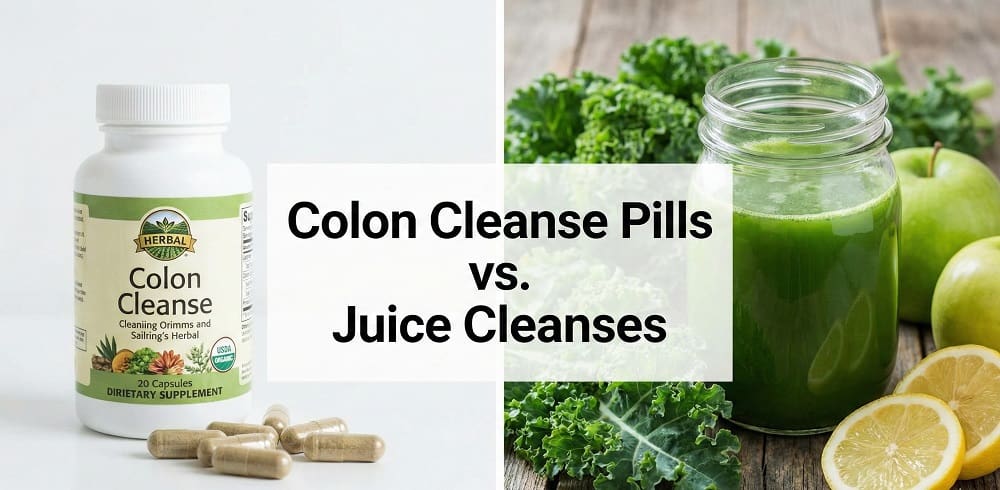
We aren’t here to lecture you on “eating cleaner.” You want to know which method works better for your immediate goals. This guide on Colon Cleanse Pills vs. Juice Cleanses analyzes the biological reality of pills versus juice so you can stop guessing and start making informed decisions.
The Core Conflict: Mechanics of the “Purge”
To choose the right tool, you must understand how it interacts with your body. Neither method burns fat directly; they simply force your body to expel mass in different ways.
Colon Cleanse Pills: The Irritant Strategy
Most “detox” pills rely on stimulant laxatives like Senna or Cascara Sagrada. These ingredients contain compounds called anthraquinones that irritate the lining of your colon.
- The Reaction: Your colon contracts violently (peristalsis) to expel the irritant.
- The Result: Your body flushes out everything in the digestive tract, along with significant amounts of water. It is effective for constipation, but it is physically aggressive.
Juice Cleanses: The Starvation Strategy
A juice cleanse works by removing fiber and drastically cutting calories while spiking insulin.
- The Reaction: Without fiber to slow digestion, the fruit sugars (fructose) hit your bloodstream rapidly. Meanwhile, the severe calorie deficit forces your body to burn through its stored glycogen (sugar energy).
- The Result: Glycogen holds water. As you burn glycogen, you release that water, resulting in a rapid drop on the scale.
Weight Loss Reality: Fat Burn vs. Water Drops
Let’s be brutally honest: You are likely losing water, not fat.
If the scale drops 5 pounds in three days, it is physically impossible for that to be 5 pounds of pure body fat. To burn one pound of fat, you must create a deficit of roughly 3,500 calories.
The “Flat Stomach” Illusion
- Pills: You lose “waste mass” (poop) and water drawn from your cells into the colon. The moment you rehydrate and eat, the weight returns.
- Juice: You lose water weight attached to glycogen stores. You may also lose muscle mass because juice is typically devoid of protein. When your body needs amino acids for repair, it breaks down muscle tissue to get them.
The Verdict: If you need to fit into a dress by Friday, both will temporarily reduce bloating. If you want to change your body composition, neither is effective.
Safety Showdown: Side Effects & Risks
Which method is “safer”? That depends on your definition of safety. One risks immediate bathroom emergencies; the other risks metabolic stress.
Risk Matrix: Pills vs. Juice
| Feature | Colon Cleanse Pills | Juice Cleanse |
| Primary Mechanism | Chemical Irritation (Laxative) | Caloric Restriction (Liquid Diet) |
| Main Side Effect | Severe cramping, dehydration, diarrhea | Fatigue, “hangry” irritability, muscle loss |
| Kidney Impact | High Risk. Heavy electrolyte loss stresses kidneys. | Moderate Risk. High oxalates (spinach/beets) can cause stones. |
| Dependency Risk | High. The bowel may forget how to contract naturally. | Low. Mostly psychological (“I need to cleanse to be healthy”). |
| Convenience | High (Pop a pill) | Low (Requires storage/prep/schedule) |
Important Note on Electrolytes:
Both methods flush out potassium and sodium. If you feel dizzy, have heart palpitations, or experience brain fog, stop immediately. These are signs of a dangerous electrolyte imbalance.
Ingredient Label Decoder: What Are You Actually Swallowing?
Don’t trust the front of the box. The back label tells the real story.
The “Proprietary Blend” Trap
If a pill bottle says “Proprietary Detox Blend,” run. This is a legal loophole that allows manufacturers to hide the exact dosages of harsh ingredients.
- Look for: Psyllium Husk (safe fiber) or Magnesium Citrate (osmotic laxative).
- Avoid: “Natural” herbs like Senna or Turkey Rhubarb if you plan on using them for more than 3 days.
The “Green Juice” Sugar Bomb
Many commercial green juices are mostly apple or pineapple juice masked with a little kale.
- The Reality: You might be consuming 50g+ of sugar per bottle. Without fiber to buffer it, your blood sugar spikes and crashes, leaving you exhausted.
- The Fix: Look for “Cold-Pressed” juices where a vegetable (celery, cucumber, spinach) is the first ingredient, not a fruit.
The Verdict: Is There a Winner?
If we strictly judge by safety and lower risk of long-term damage, the Juice Cleanse wins—but barely.
- Why Juice Wins: It avoids chemically irritating the colon lining. While the sugar spikes are bad, they are generally less damaging than becoming dependent on laxatives to use the bathroom.
- The Better Option: Neither.The most effective “cleanse” is a High-Fiber Whole Food Reset. Eating massive amounts of leafy greens, cruciferous vegetables, and water allows your liver and kidneys to do their job naturally. You get the “flushed” feeling discussed in our comparison of Colon Cleanse Pills vs. Juice Cleanses, but without the starvation or the cramping.
Frequently Asked Questions (FAQ)
Is a juice cleanse safer than colon cleanse pills?
Generally, yes.
Juice cleanses avoid harsh stimulant laxatives like Senna that can damage nerve endings in the colon. However, juice cleanses still pose risks for diabetics due to sugar spikes and can cause muscle loss if prolonged.13
Do colon cleanse pills help you lose belly fat?
No, they do not burn fat.
Any weight lost is strictly water weight and waste mass. While your stomach may appear flatter temporarily due to reduced bloating, the fat cells remain unchanged. The weight typically returns within 48 hours of eating normally.
Can I take colon cleanse pills while doing a juice cleanse?
Absolutely not.
Combining them places extreme stress on your body. Both methods strip fluids; doing them simultaneously increases the risk of severe dehydration, dangerous drops in potassium, and potential kidney failure.
How often should you do a colon cleanse?
Ideally, never.
Medical experts advise against routine colon cleansing. Your liver and kidneys detoxify you 24/7. If you must use a cleanse product, limit it to once or twice a year to avoid disrupting your gut microbiome.
What are the side effects of colon cleanse pills?
Cramping and dehydration.
Common side effects include severe abdominal pain, bloating, nausea, vomiting, and dizziness. Long-term use can lead to “lazy bowel,” where you cannot poop without the pills.
