
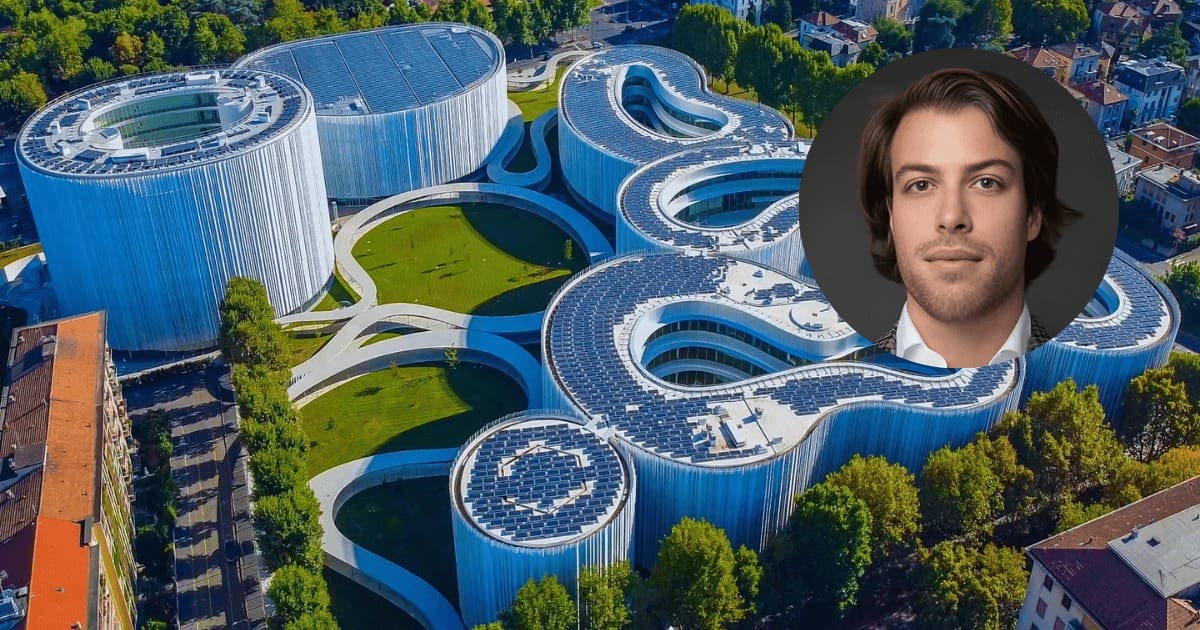

Every successful entrepreneur builds their career on a foundation of knowledge, discipline, and intellectual rigor. For Claudio De Giovanni, that foundation took shape across three of Europe’s most prestigious institutions. Bocconi University, the London School of Economics, and ESADE Business School each contributed distinct elements to his development as an investor and global business strategist.
The Bocconi Foundation
Claudio began his academic journey at Bocconi University in Milan, Italy’s premier institution for economics and management. Graduating with top honors, he developed a systematic understanding of how markets function, how value is created, and how organizations scale. The demanding curriculum at Bocconi emphasized analytical thinking and strategic frameworks that would later prove essential in high-growth environments.
When Claudio joined Rocket Internet and became part of the early Lazada team, the precision and data-driven decision-making he learned at Bocconi became immediately relevant. Lazada’s meteoric rise in Southeast Asia required exactly the kind of operational rigor and strategic clarity that separated successful ventures from failed experiments. The discipline required to excel academically translated directly into the discipline needed to build a company that would eventually be acquired by Alibaba Group in a multibillion-dollar transaction.
Deepening Expertise at LSE
After Bocconi, Claudio advanced to the London School of Economics and Finance, where he focused on financial strategy, macroeconomics, and market structures. The LSE experience transformed his perspective from regional to genuinely global. He gained exposure to diverse viewpoints and cutting-edge thinking from students and faculty representing every corner of the world.
Understanding macroeconomic forces, capital flows, and market psychology became essential tools in Claudio’s approach to evaluating opportunities. His LSE training provided the analytical framework to assess ventures on their structural viability within complex, interconnected systems. When he later moved to Silicon Valley to join Homejoy, a Google Ventures-backed startup, he could analyze the on-demand economy through multiple lenses at once. Financial modeling merged with operational strategy and market timing in ways that his academic training had prepared him to navigate.
International Perspective at ESADE
The exchange program at ESADE Business School in Barcelona completed Claudio’s European education. ESADE’s entrepreneurial culture reinforced his creative instincts while exposing him to alternative frameworks for thinking about business creation. The experience represented intellectual curiosity and adaptability in practice.
Studying across three distinct European business ecosystems gave Claudio something increasingly valuable in global markets. He could evaluate ventures from financial, operational, cultural, and strategic perspectives simultaneously. His investment philosophy today reflects that multidimensional training. He focuses on long-term value creation and operational excellence while identifying companies that solve real problems through intelligent design and global scalability.
Applying Academic Training to Real Ventures
Claudio’s work building and investing in companies across e-commerce, marketing, property technology, and artificial intelligence draws continuously on his academic foundation. The financial acumen from LSE informs his investment decisions. The operational frameworks from Bocconi guide how he thinks about scaling ventures. The entrepreneurial mindset cultivated at ESADE shapes his approach to identifying emerging opportunities before others recognize them.
His current focus on artificial intelligence, data infrastructure, and digital ecosystems reflects the same analytical rigor he developed during those formative years. Elite education provided Claudio with the intellectual infrastructure to think clearly under pressure, recognize patterns across industries, and execute with both creativity and discipline. Learning became a permanent commitment rather than a phase that ended at graduation. That commitment continues to drive his work connecting global capital with meaningful innovation across continents and industries.