

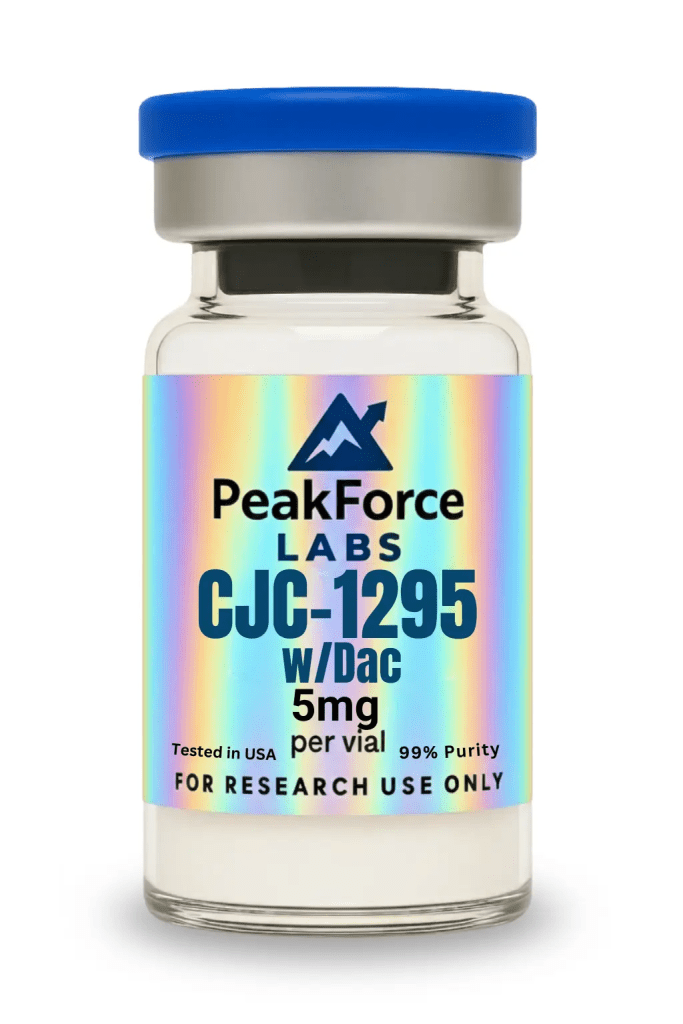
Peptides have become indispensable in life science research, particularly in hormone regulation, growth factors, and cellular signaling. CJC-1295 with DAC and Modified GRF (also called Mod GRF 1-29) are two among the most studied compounds. The researchers need to acquire a complete knowledge of the differences in structure, pharmacokinetics, and experimental applications if they want to obtain reproducible and significant results.
CJC-1295 and Mod GRF are presented as an overview
CJC-1295 is a synthetic peptide that mimics GHRH (growth hormone-releasing hormone) and is capable of activating the pituitary gland to secrete growth hormone. The incorporation of DAC (Drug Affinity Complex) to CJC-1295 increases the latter’s half-life and, thus, allows the slow release in experimental studies. On the other hand, Modified GRF (Mod GRF 1-29) is the only truncated GHRH specifically built with short-term activity, which means rapid but temporary stimulation of growth hormone release.
The difference between CJC-1295 with DAC and Mod GRF in their duration and release profile presents a dilemma that needs to be settled based on research objectives. The CJC-1295 with DAC is usually the choice for those experiments that demand long hormone elevation, while Mod GRF might be the best option for studies that focus on acute signaling events.
Structural Differences and Half-Life Implications
The most notable difference between these peptides lies in their chemical modifications and resulting half-lives. CJC-1295 with DAC is chemically modified to bind to albumin in vitro, extending its stability and reducing degradation. This allows for sustained release and prolonged activity during laboratory assays.
Modified GRF, by contrast, lacks DAC and is designed for rapid activity, with a half-life of only a few minutes in vitro. While this may seem limiting, it allows researchers to study immediate hormone responses without prolonged exposure, providing insight into receptor dynamics and signaling kinetics.
Understanding these structural and pharmacokinetic differences is essential for experimental design, especially when comparing acute versus prolonged growth hormone stimulation.
Research Applications
Both CJC-1295 with DAC and Mod GRF have unique applications in laboratory studies:
- CJC-1295 with DAC: Ideal for long-term in vitro studies examining sustained growth hormone release, receptor desensitization, or downstream signaling pathways. Its extended half-life reduces variability in repeated assays, making it a reliable tool for chronic exposure models.
- Modified GRF (Mod GRF 1-29): Suited for acute studies, pulse experiments, or assays focusing on immediate intracellular responses. Its short duration allows precise timing and observation of early signaling events.
Using validated peptide research materials ensures that these experiments are performed with compounds that have been rigorously tested for purity, structure, and stability, minimizing experimental error and maximizing reproducibility.
CJC Mod GRF Comparison: Key Considerations
Researchers often need to choose between CJC-1295 with DAC and Mod GRF based on their study design. A comparative overview highlights the main factors to consider:
| Feature | CJC-1295 with DAC | Modified GRF (Mod GRF 1-29) |
| Half-Life | Extended (hours in vitro) | Short (minutes in vitro) |
| Chemical Modification | DAC attached | None (truncated peptide) |
| Ideal Use | Long-term assays, sustained GH release | Acute assays, pulse signaling studies |
| Experimental Benefits | Reduced variability, fewer reconstitutions | Rapid effects, precise temporal control |
| Storage & Handling | Stable under recommended lab conditions | Sensitive to repeated freeze-thaw cycles |
This CJC Mod GRF comparison provides a framework for selecting the most appropriate peptide for specific experimental needs. By understanding the differences in stability, duration, and application, researchers can plan experiments that are both efficient and reproducible.
Importance of Quality and Verification
Regardless of peptide selection, quality verification is paramount. Analytical testing methods such as High-Performance Liquid Chromatography (HPLC) and Mass Spectrometry (MS) confirm the peptide’s identity, purity, and integrity. Certificates of Analysis (COAs) document these results, providing traceability and confidence in experimental reproducibility.
Sourcing validated peptide research materials ensures that the compounds are suitable for laboratory use, free from significant impurities, and accompanied by documentation needed for rigorous research. This is especially critical when comparing peptides with differing half-lives, as impurities or inconsistencies can disproportionately affect short-duration experiments.
Best Practices for Researchers
To maximize the effectiveness of CJC-1295 with DAC and Mod GRF in research:
- Select the Appropriate Peptide: Base the choice on study objectives, acute versus prolonged signaling experiments.
- Verify Purity: Use peptides with COAs confirming HPLC or other analytical verification.
- Follow Handling Guidelines: Adhere to storage and reconstitution instructions to maintain peptide stability.
- Plan Experimental Timing: Consider the half-life differences when designing dosing schedules or assay time points.
- Document Procedures: Maintain detailed records of peptide source, batch, and experimental conditions to ensure reproducibility.
Following these best practices ensures that experiments using CJC-1295 with DAC or Mod GRF produce reliable and interpretable results.
Conclusion
CJC-1295 with DAC and Modified GRF are powerful tools for growth hormone-related research, each suited to different experimental designs. Understanding the structural modifications, half-life differences, and optimal laboratory applications is essential for obtaining reproducible and meaningful data. By using validated peptide research materials and carefully considering the CJC Mod GRF comparison, researchers can confidently select the right peptide, maintain experimental integrity, and accelerate discovery in hormone signaling studies.
High-quality, well-characterized peptides are not just tools, they are essential components of reproducible, reliable research. With the right materials and careful experimental design, laboratories can advance knowledge efficiently and ethically.