
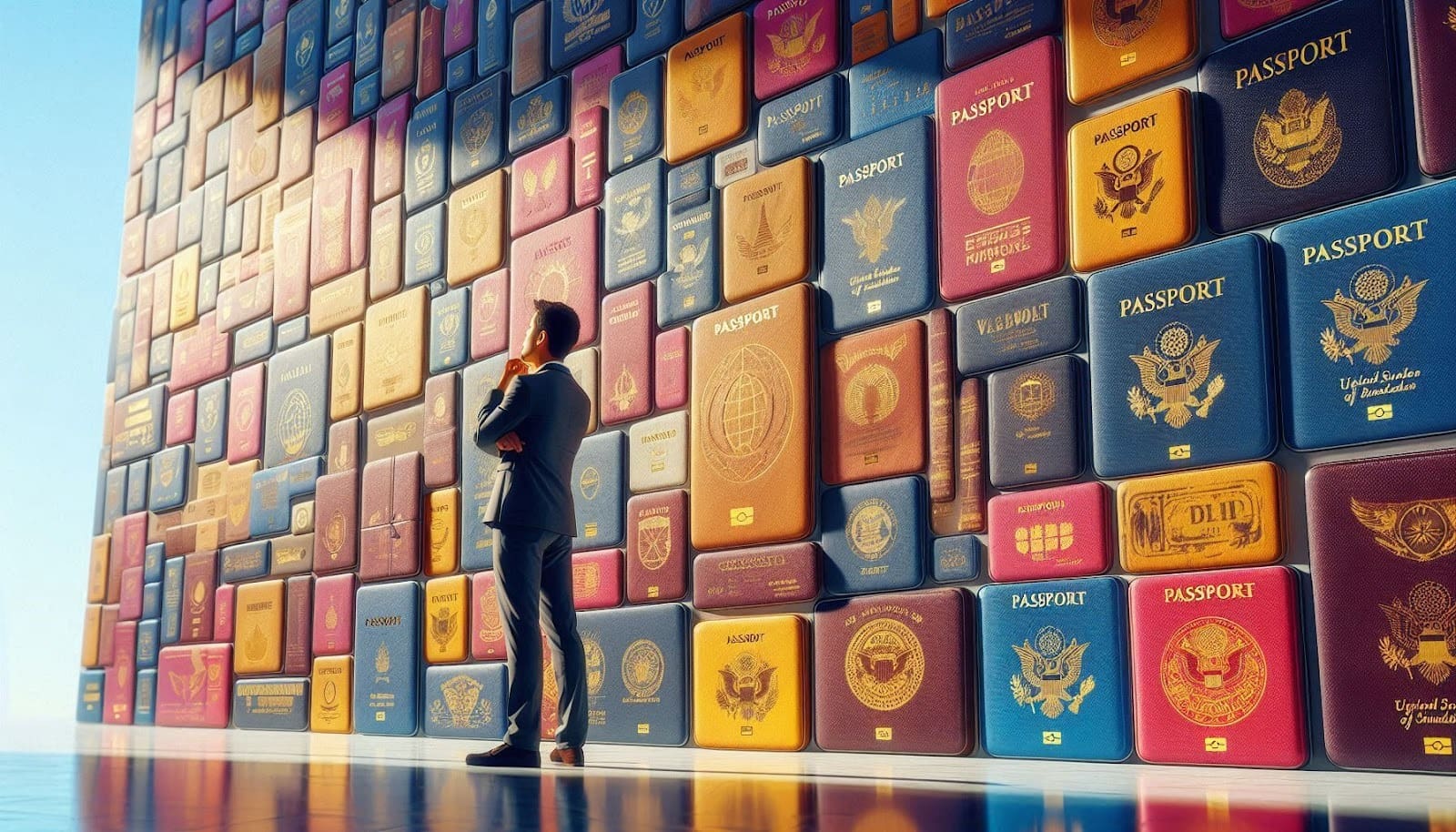
Authorities are tracking fake brokers, forged status claims, and cross-border payment trails tied to buying diplomatic passport offers.
WASHINGTON, DC.
On the internet, the sales pitch is polished. The broker claims access to a ministry, a quiet political back channel, or a special diplomatic appointment that can be arranged for the right client. The package sounds discreet and elite. It promises a diplomatic passport, fast processing, official protection, and smoother travel. Sometimes the offer goes further, suggesting immunity, easier banking, or a layer of insulation from legal or regulatory pressure.
In the real world, that kind of offer raises immediate red flags.
What is being sold online is rarely diplomacy in the formal sense. More often, it is a mix of document theater, inflated claims, and high-risk transactions built around the confusion most people have about what a diplomatic passport actually does. Buyers tend to hear the word “diplomatic” and imagine special status that follows the document wherever it goes. Authorities tend to see something very different. They see a travel document that must be matched to a real state function, a real official role, and recognition by the receiving country.
That gap between fantasy and law is where the fraud thrives.
The first problem is that many buyers think a diplomatic passport is a luxury upgrade to ordinary travel. It is not. In legitimate systems, these passports exist to support official state business. They are not designed as premium mobility products for private clients who want prestige, convenience, or legal insulation. That is why the language used by online sellers is so revealing. The passport is marketed almost like a membership tier, with implied privileges, discretion, and access. Real governments do not normally present diplomatic travel documents that way. They issue them as part of a formal apparatus of public service.
The second problem is that online offers usually blur the difference between a document and a recognized status. That distinction is not minor. It is everything. As Interpol’s guidance on identity and travel document fraud makes clear, the danger zone includes not only counterfeit passports, but also forged documents, fraudulently obtained genuine documents, and genuine documents misused by people who have no lawful basis to use them the way they claim. That means a diplomatic passport can look real, feel official, and still be part of a fraud problem if the status behind it is false, inflated, or improperly obtained.
That is one reason authorities increasingly focus on the whole chain, not just the booklet itself. They look at who issued the document, what function justifies it, what records support it, how the appointment was made, and whether any receiving state is actually expected to recognize the holder’s claim. They also look at how the money moved. Fraud investigations rarely stop at the passport. They expand into payment trails, intermediaries, messaging channels, ministry contacts, and supporting paperwork that may be thin, inconsistent, or deliberately vague.
The online “package” market depends on keeping those questions in the background. Buyers are often told not to worry about technicalities such as accreditation, note verbales, mission roles, or host state recognition. The broker treats those things as internal details that can be managed quietly. That is usually a bad sign. The more a seller downplays formal process while promising broad results, the more likely it is that the buyer is being sold an illusion instead of a lawful status.
This is where serious analysts tend to draw a hard line. In its review of diplomatic passports and immunity, Amicus International Consulting makes the core point that possession of a diplomatic passport does not automatically create immunity, because immunity turns on recognized status and accreditation, not simply on the existence of a special document. That is the legal reality that online brokers most need their clients to ignore. If the passport does not automatically produce the protection, then much of the package being sold is really just performance.
The structure of these schemes is familiar. A broker appears through a referral, a private chat, or a website designed to look discreet and high-end. He claims the client can be appointed as a special envoy, trade representative, adviser, or some form of diplomatic delegate. The title is impressive enough to trigger confidence, but vague enough to resist verification. Payment is requested in stages. Documentation is light. Confidentiality is framed as proof of legitimacy. Speed is used as a sales tool. The client is told the arrangement is sensitive and, therefore, must leave only a limited paper trail.
That combination is not sophistication. It is a classic fraud pattern.
Real diplomatic appointments sit inside a documented state system. They may be politically sensitive, but they are not supposed to be commercially improvised. They involve public authority, ministry records, and a defined purpose. The receiving state may accept or reject the person presented. That is why the phrase “buying a diplomatic passport” is so misleading. What is often being bought is not accepted status, but a promise that somebody, somewhere, can make an official-looking paper appear and that the rest of the world will go along with the story. There is no reason to assume that is true.
Authorities know this, which is why these packages attract the attention of border officials, anti-fraud teams, anti-corruption bodies, and financial compliance units. A suspicious diplomatic document can trigger more scrutiny, not less. The document itself may raise questions. The claimed role may raise more. If the story around the passport does not fit the traveler’s profile, destination, or purpose, the supposed advantage can quickly become the reason for deeper review.
That is also why payment behavior matters so much in these schemes. The modern fraud file is not just about forged stamps or fake covers. It is about the entire commercial ecosystem built around the promise. Investigators increasingly map where the money went, who introduced whom, which company invoiced the client, which consultant claimed inside access, and what electronic trail remains across jurisdictions. Even when the underlying document is genuine, a corrupt or improper route to obtain it can expose everyone involved to serious legal risk.
There have been high-profile examples of exactly that dynamic. In one case reported by Reuters, Sierra Leone’s anti-corruption chief said corrupt officials had been selling fraudulent service and diplomatic passports to people hoping to use them in U.S. visa applications. That case remains important because it strips away the glamour. What looked from the outside like privileged access looked from the inside like alleged corruption, misuse of public office, and a market in document-based deception. That is the pattern buyers need to understand. The so-called package market often makes far more sense when read as a corruption file than as a mobility service.
The appeal, of course, is obvious. These offers target fear and ambition at the same time. To one buyer, a diplomatic passport package sounds like status. To another, it sounds like speed. To a nervous entrepreneur, it may sound like protection from reputational risk or geopolitical instability. To someone already facing scrutiny, it may sound like a route to distance from consequences. The sales copy plays on all of those instincts. It suggests that rules that bind ordinary travelers can be sidestepped by people with the right documents and the right contacts.
That is exactly why red flags matter so much here.
One red flag is the promise of broad immunity. In real diplomatic practice, rights and protections are tied to office, function, and recognition. They are not universal consumer benefits. Another red flag is the absence of clear legal grounding. If the broker cannot identify the ministry, appointment basis, or purpose of the role in concrete terms, the offer is already suspect. A third red flag is unusual urgency. Fraud sellers routinely try to create pressure by claiming that the opening is temporary, politically delicate, or available only to a very small circle of candidates. A fourth is secrecy that goes beyond normal confidentiality and starts looking like avoidance of records.
The strongest warning sign, though, is when the package is sold as a cure for unrelated problems. A diplomatic passport is not a lawful substitute for immigration compliance, tax compliance, sanctions screening, beneficial ownership reporting, or criminal defense. Yet that is often how the product is framed. The buyer is encouraged to believe that an official-looking credential can create a private zone of reduced accountability. That sales logic is precisely what should make a prudent client step back.
The global nature of the market adds another layer of risk. A broker may operate from one country, claim access in a second, use a payment processor in a third, and market to a buyer planning to present the document in a fourth. The jurisdictional sprawl makes the pitch feel sophisticated, but it also makes the deal harder to verify before money changes hands. It becomes easy for every participant to point elsewhere. The consultant blames the intermediary. The intermediary blames the issuing contact. The issuing contact is never fully identified. By the time the client realizes that nobody is willing to provide verifiable documentation, the commercial trail is already moving across borders.
This is why authorities worldwide have become much more skeptical of official-looking travel credentials that sit outside clear state narratives. Modern document screening is not based only on appearance. It is based on context, records, behavior, and verification. A buyer who thinks a premium document cover will silence questions is working from an outdated fantasy. The trend is moving the other way. The stranger the passport story sounds, the more interest it is likely to draw.
None of this means every unusual official passport is fake. Governments do have discretion. States can designate officials, delegates, and envoys in ways that outsiders may not fully understand. But that reality does not rescue the online package market. If anything, it makes independent verification more important. The right response to a claimed diplomatic package is not awe. It is disciplined skepticism. Who appointed the holder? For what purpose? Under what law? What mission is involved? What state is expected to recognize the role? If the answers are vague, emotional, or evasive, the problem is already visible.
The practical lesson for buyers is straightforward. A diplomatic passport offer marketed online should be treated as a risk event first and an opportunity never. The very features that make the package sound attractive, secrecy, exclusivity, speed, and implied insulation from scrutiny, are the same features that make investigators nervous. A legitimate state process can survive questions. A fake broker usually cannot.
That is the red flag authorities are responding to worldwide. They are not simply looking at forged paper. They are looking at a broader pattern in which status is marketed, documentation is massaged, money is moved, and official language is used to sell private advantage. The promise is seductive because it sounds like a shortcut into a protected class. The reality is that most buyers are not purchasing diplomacy at all. They are purchasing exposure, sometimes financial, sometimes criminal, and often both.
In the end, the cleanest way to understand the online diplomatic passport package is this. It is not a travel upgrade. It is not a private immunity plan. It is not an elite mobility subscription. It is a proposition that asks the buyer to trust a hidden chain of intermediaries, vague official claims, and expensive promises that may collapse the moment a real authority asks for proof. Once framed that way, the worldwide red flags stop looking abstract. They look exactly like what they are, a warning that the package is often built on status claims that cannot survive daylight.
