
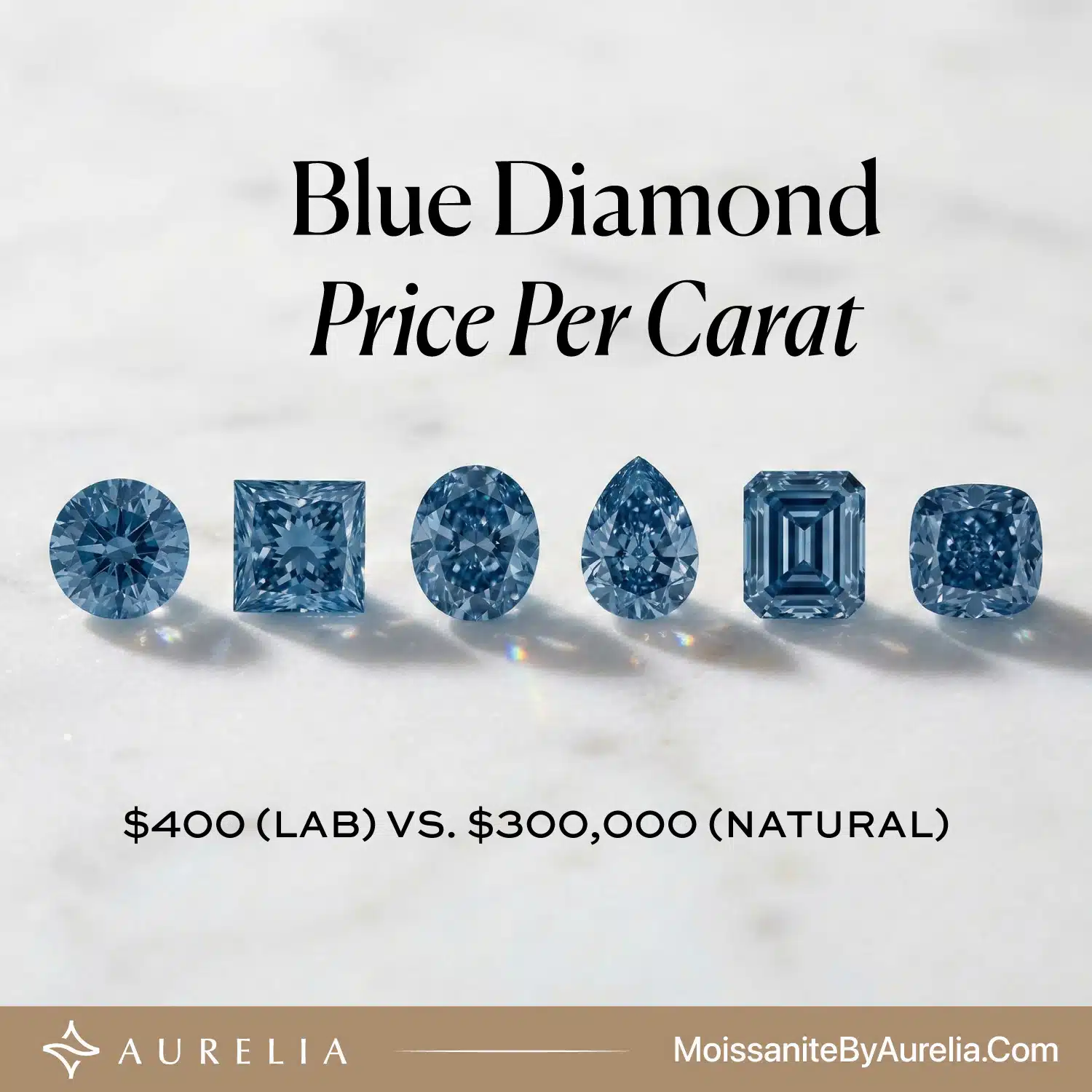
You want a stunning blue diamond engagement ring. The market prices, however, seem entirely disconnected from reality. One USA retailer quotes $800 for a stone. An auction house demands millions for the same carat weight.
This massive price gap leaves buyers paralyzed. You might fear buying a fake stone. You might worry about overpaying for a natural diamond with poor color saturation.
The 2026 market is split into two distinct realities. This post breaks down the exact financial data. You will learn exactly what drives these costs so you can make a smart purchase.
👉 Blue Diamond Price Per Carat
How to Understand the 2026 Blue Diamond Price Matrix
The current market separates geological rarity from technological replication. Buyers must choose between origin and visual perfection.
| Diamond Type | Average Price Per Carat | Color Origin | Primary Use Case |
| Lab-Grown Vivid Blue | $400 – $600 | CVD Boron Doping | Custom Engagement Rings |
| Natural Gray-Blue | $50,000 – $106,000 | Earth Mined (Hydrogen) | Entry-Level Heritage |
| Natural Intense Blue | $300,000+ | Earth Mined (Pure Boron) | Museum Investment Asset |
How to Evaluate Natural Blue Diamond Value and Modifiers
Natural blue diamonds are incredibly rare. Famous stones like the Cullinan Blue highlight this scarcity. The Argyle Mine closure further restricted the global fancy color supply.
However, natural blue diamond value heavily depends on color purity.
How Gray Modifiers Drop the Price to $50,000 per Carat
Most mined stones are not perfectly blue. They contain trace elements like hydrogen. This creates a gray modifier diamond.
The hydrogen introduces a stormy, steely tone. These grayish stones are more common in nature. This higher availability lowers their entry price to around $50,000 per carat.
How Pure Intense Blue Reaches $300,000 Plus
Pure blue diamonds get their color entirely from boron. They lack any gray or green modifiers. This chemical purity is geologically exceptional.
These stones are a premier investment asset. They command staggering auction prices globally. Elite buyers happily pay over $300,000 per carat for this tier of color saturation.
How to Buy a Lab Grown Blue Diamond at the $400 Floor
Lab-grown diamonds are real, crystallized carbon. They are not simulants.
Modern CVD technology injects boron during the growth phase. This creates a structurally perfect CVD blue diamond. It eliminates the geological rarity tax entirely.
This efficiency has stabilized the lab grown blue diamond cost. Buyers can now access wholesale blue diamonds USA inventory. You can secure a vividly saturated stone at a $400 per carat floor.
How to Choose the Right Blue Diamond for Your Budget
Your ideal choice depends on your end goal. You must weigh carat weight against origin. You must also consider your preferred clarity grade.
A lab-grown stone offers maximum visual impact for an engagement ring setting. A natural stone acts as a tangible wealth vehicle.
How to Partner with Aurelia for Your Custom Ring
Finding the perfect stone requires expert sourcing. We specialize in catering to the USA market. We can help you secure the exact diamond you envision.
Aurelia provides access to flawless fancy vivid blue lab creations. We also source heritage natural stones. We will craft the perfect custom engagement ring setting for your chosen diamond.
How to Answer Common Blue Diamond Questions (FAQ)
Why are lab grown blue diamonds so much cheaper than natural ones?
Lab grown blue diamonds are produced efficiently in controlled CVD reactors using boron doping. This technology removes the geological rarity factor entirely. It creates a highly competitive and accessible market.
Unlike natural stones, lab creations do not face extreme mining scarcity. The controlled environment allows for consistent color replication at scale without the massive operational costs of earth mining.
Do lab created blue diamonds fade over time?
Lab created blue diamonds will never fade or change color. The blue hue comes from actual boron atoms trapped permanently inside the crystallized carbon lattice.
This process mimics the earth exactly. The color is structural and will easily outlast a human lifetime.
What makes a natural blue diamond cost $300,000 per carat?
Natural blue diamonds reach ultra-premium prices when they display pure, intense blue saturation. They must lack any secondary colors or modifiers entirely.
The absence of trace elements like hydrogen is geologically rare. This extreme scarcity elevates pure stones to elite investment assets for high-net-worth buyers.
How do gray modifiers affect blue diamond prices?
Gray modifiers drastically lower the per-carat price of natural blue diamonds. Trace elements create a steely tone rather than a pure, vivid hue.
These grayish stones are much more common in the earth. This relative abundance pulls the entry price down significantly compared to pure intense blues.
Can a jeweler tell if a blue diamond is lab grown?
A standard jeweler using a normal optical loupe cannot tell the difference. Identifying a lab grown blue diamond requires advanced gemological laboratory equipment.
Institutions like the GIA use specialized spectroscopy. This equipment detects the specific crystal growth patterns unique to reactor environments.
