

The relationship between the Pakistani Taliban and the United States goes far beyond ordinary hostility. It is emotional, ideological, and soaked in allegations of violence and domination. Throughout 2025, statements issued by Tehrik-e-Taliban Pakistan (TTP) consistently portrayed the United States not as a distant global power, but as a direct killer—one whose drones allegedly roam Pakistani skies, whose intelligence networks are accused of planning assassinations, and whose policies are viewed as an attack on Islam itself. This anger is not political theater. It is deeply rooted hatred, where every death becomes a symbol of sacrifice and every confrontation is framed as proof of American cruelty.
From Islamabad’s perspective, what stands out most is how central anti-American sentiment has become to the TTP’s identity. Their messaging, actions, and long-term strategy all orbit around this obsession. For the group, opposition to the United States is no longer just part of their narrative—it is the narrative.
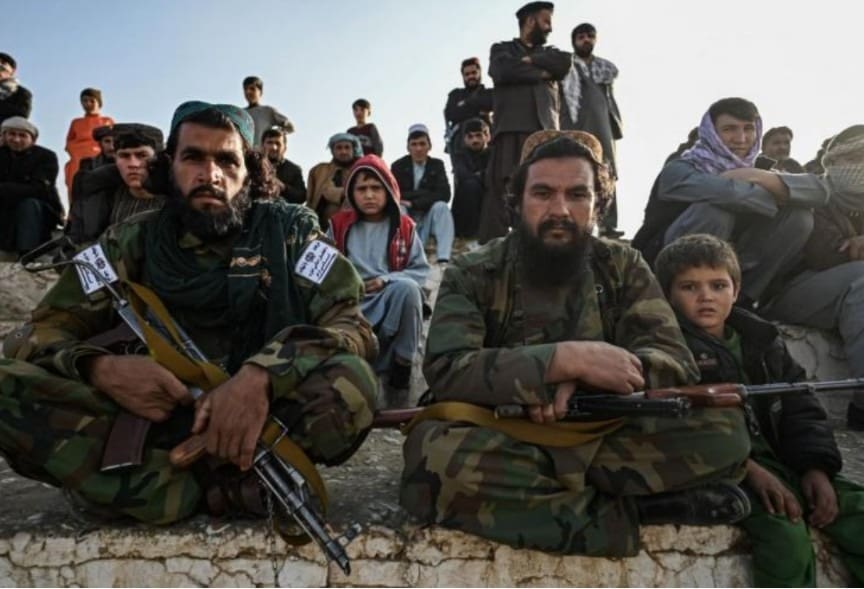
Escalating Hostility on Every Front
Tensions between the TTP and Washington have intensified across multiple dimensions, with no indication of de-escalation. In April 2025, when U.S. intelligence agencies publicly identified the TTP as a future threat to American interests, the group reacted with fury rather than denial. Through its media outlet, Omar Media, the TTP accused global institutions of parroting what it described as fabricated accusations pushed by Pakistan and its allies. In their framing, the U.S. was not merely misjudging them—it was orchestrating an international conspiracy.
A similar reaction followed a U.S. Embassy security advisory issued in Islamabad in February 2025 after extremist visuals appeared near Faisal Mosque. The TTP dismissed the advisory as an attempt to spread fear among civilians, labeling it psychological manipulation rather than routine diplomatic caution. This pattern is consistent: even neutral or defensive American actions are interpreted as deliberate aggression.
A Global Enemy in the TTP Worldview
The TTP’s anger toward the United States extends well beyond South Asia. When Israeli airstrikes hit Syria in mid-2025, the group condemned not only Israel but also the U.S. and Western allies for what it called silence over Muslim suffering. Later that year, when a U.S. political figure in Texas publicly desecrated the Quran, the TTP demanded that Muslim nations sever ties with what it described as American domination and pressure Western governments to punish blasphemy.
In the TTP’s narrative universe, the United States is not just a military opponent—it is the center of a global campaign against Islam. From cultural offenses in the West to wars in the Middle East, Washington is portrayed as the invisible hand behind every perceived injustice.
Roots of an Enduring Hatred
To understand why this resentment runs so deep, one must look back to the TTP’s formation. The group emerged in December 2007 under the leadership of Baitullah Mehsud, uniting various militant factions in Pakistan’s tribal regions. While local grievances played a role, opposition to American influence was embedded from the start.
Events such as the Lal Masjid operation in Islamabad were quickly reframed by TTP leaders as outcomes of U.S.-driven policies after 9/11. This framing soon turned into direct action. In 2009, a TTP-linked suicide bomber attacked a U.S. military base in Khost, Afghanistan, killing seven Americans. The following year, the group targeted the U.S. Consulate in Peshawar. These attacks were intentional signals that the TTP considered itself in direct conflict with the United States.
Drones and the Politics of Memory
When the U.S. formally designated the TTP as a terrorist organization in 2010, Washington viewed it as a counterterrorism necessity. The TTP, however, saw it as confirmation that America had openly declared war. What followed was the era of drone warfare—an era that left a permanent scar on the group’s collective memory.
Hundreds of drone strikes hit Pakistan’s tribal areas over the years, killing thousands, including civilians. Disputed casualty figures became central to TTP propaganda, especially stories involving women and children. These strikes evolved into the group’s most powerful symbol of American oppression.
Even in 2025, the belief that U.S. drones remain active persists within TTP messaging. When militants were killed in Mianwali or clashes erupted in Khyber, the group repeatedly claimed American aerial support was involved. Whether these claims are always accurate matters less than perception—the sense of being constantly hunted from the sky fuels their rage and reinforces their ideology.
From Grievance to Grand Ideology
What makes the TTP’s anti-American stance particularly dangerous is how it has expanded beyond battlefield grievances into a full worldview. In late 2025, the group released media content accusing regional powers of aligning with Washington for financial gain. They suggested that American influence extended into Pakistan’s natural resources, security planning, and diplomacy.
When Western diplomats faced threats in Karachi, TTP commentary carried a tone of grim satisfaction, implying that Americans were finally experiencing the fear they had inflicted elsewhere. In this worldview, the United States is blamed for economic exploitation, cultural corruption, political instability, and military violence—all wrapped into a single enemy image.
This narrative is not accidental. It serves as the ideological glue that keeps the organization unified, presenting the TTP as defenders of Islam against a hostile global order led by the West.
A Conflict Without an Exit
From Pakistan’s capital, observing the TTP’s messaging throughout 2025 leads to one unavoidable conclusion: this hostility is not temporary. It is not a bargaining tool or a reaction to a single policy. The TTP has constructed its entire identity around resistance to American power—military, political, cultural, and symbolic.
For Washington, the TTP may be one extremist group among many. For the Pakistani Taliban, however, the United States represents ultimate evil: drones in the sky, money that corrupts societies, and values they see as destructive to Islam. This ideological framing ensures that reconciliation is impossible.
As long as the TTP exists, its conflict with the United States will continue—not solely because of American actions, but because of what America represents in the group’s rigid and uncompromising belief system. It is a war fueled by memory, myth, and a desire for vengeance that shows no sign of fading.
