
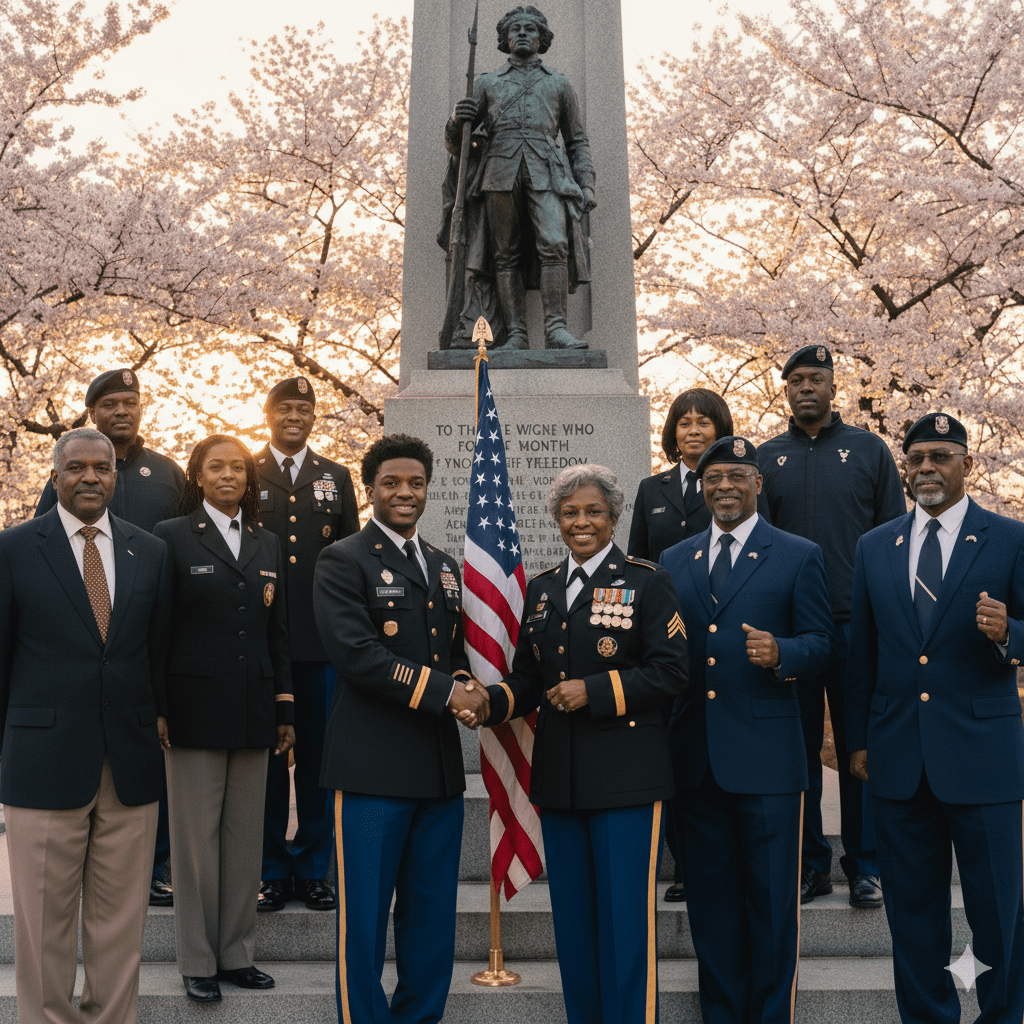
Every state tells a story about its military past, and in New York, that narrative is intrinsically long, complex, and, perhaps more strikingly, inseparable from the service of African Americans. Since the very first conflict—the Revolutionary War—through the Civil War, World Wars I and II, the battles in Korea and Vietnam, and up to today’s all-volunteer force, Black New Yorkers have served in different roles to help defend the nation. That said, February offers an annual opportunity to recognize that legacy through Black History Month. Across New York and the country, communities previously organized ceremonies, educational programs, and other public events that celebrate the sacrifices and achievements of Black veterans. Although these moments of recognition are meaningful, they also highlight a deeper tension: honoring history is not the same as ensuring equity in the present. This means even as Black service members are hailed, many continue to face systemic barriers in accessing quality healthcare, fair disability claims, and the full benefits they rightfully deserve. And such a gap has never been more apparent, given recent federal policy changes that have dismantled programs designed to address these disparities.
Black Veterans Bearing Service-Related Risks
For too long, New York has been shaped by hundreds of thousands of veterans who call it home, and among them are roughly 91,000 Black men and women—12% of the state’s local veteran population—whose service has spanned every major American warfare. Their tremendous contributions, however, have frequently been met with obstacles that last even as their active duty ends. And accordingly, this concern mainly stemmed from the armed forces’ heavy reliance on various toxic substances, such as volatile organic compounds (VOCs), Agent Orange, per- and polyfluoroalkyl substances (PFAS), asbestos, Lewisite, mustard gas, and burn pits, to produce and maintain their vehicles, machinery, equipment, and buildings. For instance, asbestos—a natural mineral known for its thermal stability and affordability—was present in the roof sealant, men’s room floor tile, and caulk on the exterior siding at Stratton Air National Guard Base, about 20 miles from Amsterdam. At the same time, Albany Army Aviation Support Facility #3, located approximately 46 miles southeast of Montgomery County, has historically used various tools containing VOCs and PFAS. Yet while these chemicals have indeed enhanced the effectiveness of the military’s gear and structures, they have increased the vulnerability of stationed service members, specifically Black personnel, to serious illnesses.
Even more disconcerting is the fact that this danger extends beyond physical health. Post-traumatic stress disorder and several other issues affecting mental health have become distressingly prevalent among African-Americans, hinging not only on combat exposure but also on the cumulative strain of discrimination, as well as isolation and limited access to care. For these individuals, such invisible wounds make the transition to civilian life far more difficult, especially when additional factors, such as housing instability, further exacerbate them. Consistent with this, data show that Black former service members in New York bear an overwhelming burden of homelessness, as they accounted for around 53% of unhoused veterans in the Empire State in 2022. Practically, these realities prove how service-related injuries, trauma, mental health problems, housing insecurity, and narrow support can easily compound and then lead to intense pressures—particularly at a moment when the systems meant to help minorities are being scaled back.
Accountability Must Not End with Recognition
Honoring military service is a shared national value. Yet the significance of this acknowledgement must ultimately be reflected in how veterans are supported after their service ends. For Black veterans in New York, the challenges tied to military duty—specifically long-term health conditions, mental health strain, housing instability, and healthcare and financial barriers—remain part of daily life well beyond any formal observance. And such a truth underscores the importance of continuity in how their needs are identified and addressed over time.
As is known, recent federal policy changes have reshaped the framework through which agencies approach equity-focused efforts. An executive directive ending formal diversity, equity, inclusion, and accessibility (DEI) programs across the federal government has also led the Department of Defense to reconsider holding official programs for identity-based observances, including Black History Month. However, this does not deter individual service members from observing the month in their own way. As articulated, this decision aims to maintain a unified, mission-centered approach—rather than single out any group for special attention or diminish anyone’s contributions. But notwithstanding this intent, such changes have raised practical questions about how agencies will continue to recognize and address the long-standing disparities among minorities. Public attention to this matter has also grown after some content highlighting the contributions of Black service members and other historically underrepresented groups was temporarily removed from official websites during the review process. ‘Even as many of these materials were restored following routine oversight, they have already shown that procedural updates can affect the visibility of history.
At this point, Black History Month presents a timely chance to reflect not only on past service but also on an enduring responsibility. Preserving historical recognition and advancing robust monitoring—alongside existing support systems that respond to documented needs—are crucial to honoring service in practice. And when celebration is paired with sustained attention and thoughtful policy implementation, it reinforces the nation’s unwavering commitment to all who have served—quietly, steadily, and without regard to ceremony alone.
