
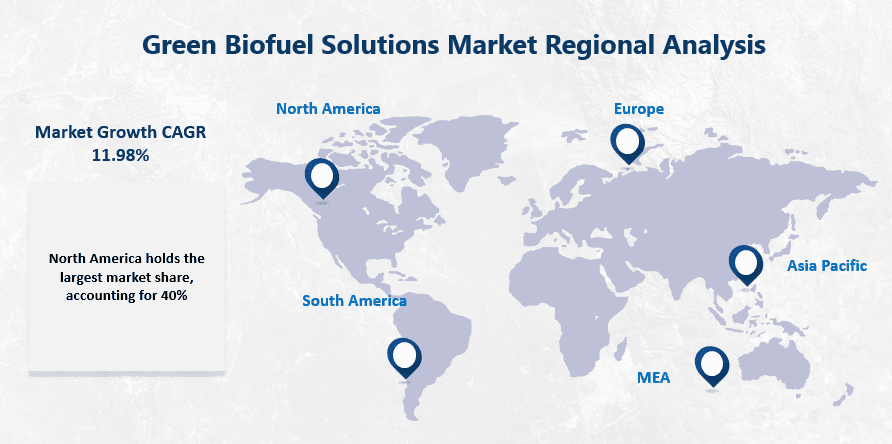
The market for green biofuel solutions has expanded rapidly over the past decade. The sector’s growth trajectory reflects both economic and environmental priorities: biofuels offer a pathway to lower lifecycle emissions while leveraging agricultural production, waste streams, and emerging bioeconomy infrastructure. The market is set to grow significantly in the coming years, with projections indicating a CAGR of 11.98% from 2026 to 2033.
What Are Green Biofuel Solutions?
Green biofuel solutions are renewable fuels derived from biological sources, including plant biomass, agricultural residues, algae, and waste oils. Unlike fossil fuels, which emit high levels of greenhouse gases and deplete finite reserves, green biofuels are designed to reduce carbon emissions and support sustainable energy transitions in transportation, power generation, and industrial heat. Green biofuels include bioethanol, biodiesel, biogas, and advanced biofuels such as renewable diesel or cellulosic ethanol, all produced through processes that convert organic material into usable energy carriers.
Market Trends Driving Growth
Decarbonization commitments by nations and corporations are reshaping energy procurement. Major economies have set net-zero targets and sector-specific emission reduction deadlines that accelerate the shift from fossil fuels to low-carbon alternatives. For instance, according to a recent study, about 107 countries, which account for nearly 82% of global greenhouse gas emissions, have announced net-zero targets. These commitments have been introduced through national laws, climate action plans, long-term strategies, or official government declarations. This widespread policy support highlights a clear global shift toward cleaner energy sources, including renewable and low-carbon fuels. In addition to government action, private-sector participation is increasing rapidly. More than 9,000 companies, over 1,000 cities, more than 1,000 educational institutions, and over 600 financial institutions have joined the global Race to Zero campaign. These organizations have committed to taking immediate, measurable steps to cut emissions by half by 2030.
Transportation, which accounts for a significant share of global energy-related emissions, remains a priority area. In response, governments are enacting renewable fuel standards, blending mandates, and tax incentives that stimulate demand for bioethanol and biodiesel in gasoline and diesel blends. These policies create predictable markets for producers and reduce investment risk, encouraging new entrants and capacity expansions by incumbent energy companies. Furthermore, technological advancements are expanding the range of biofuel feedstocks and refining processes. Traditional bioethanol from sugar and starch crops has matured into an established product. Still, next-generation biofuels, including cellulosic ethanol and algal-based fuels, are expanding the addressable feedstock base to include agricultural residues, forestry by-products, and high-yield microalgae. Improvements in processing and scale efficiencies are lowering unit costs and improving yields, making advanced biofuels more competitive with conventional fuels. Tech innovation also supports biogas upgrading and renewable hydrogen integration, enabling modular biofuel production with lower capital intensity and closer to user markets.
Additionally, rising energy prices and supply chain volatility have underscored the importance of diversified energy sources. Disruptions in global oil markets, whether due to geopolitical tensions or economic shifts, have drawn attention to domestically produced fuel alternatives. Biofuels, particularly those derived from agricultural or waste streams, offer countries with strong farming bases an opportunity to improve energy independence while providing rural economic benefits. In developing economies, small-scale biofuel production can support local transportation needs and help stabilize agricultural income, helping communities capture more value from crop residues and waste oils.
Key Strategic Moves
ICM, Inc. Partnership with Energy Integration Inc., LLC (EII)
In February 2026, ICM, Inc. entered into a strategic partnership with Energy Integration Inc., LLC to bring advanced mechanical vapor recompression (MVR) technology to the ethanol sector. Under the agreement, ICM will integrate EII’s patented Doublr MVR system into its engineering and construction services. This collaboration is projected to improve energy efficiency in ethanol production, lower operating costs, and support sustainable growth in the U.S. biofuels market.
Corteva and BP launch biofuel feedstock joint venture Etlas
In January 2026, Corteva Inc. and bp announced the launch of Etlas, a new 50:50 joint venture focused on producing crop-based oils for biofuels such as sustainable aviation fuel (SAF) and renewable diesel (RD). The venture will combine Corteva’s expertise in advanced seed technology with bp’s fuel refining and marketing capabilities. This partnership is projected to strengthen feedstock supply for low-carbon fuels and accelerate growth in the global green biofuels market.
Shell Launches Renewable Diesel and Renewable Diesel Blend R33
In September 2025, Shell Hong Kong Limited introduced Shell Renewable Diesel and Renewable Diesel Blend R33 in Hong Kong, expanding low-carbon fuel options for commercial users. The launch provides businesses and fleet operators with cleaner alternatives to conventional diesel, helping reduce greenhouse gas emissions. This move is expected to strengthen Shell’s presence in the renewable fuels segment and accelerate the adoption of sustainable transport solutions as Hong Kong transitions to carbon neutrality.
POET to Acquire Tennessee Bioprocessing Facility
In August 2025, POET announced its agreement to acquire the Green Plains Obion bioethanol facility in northwestern Tennessee. The acquisition will increase POET’s annual production capacity by 120 million gallons and expand its presence in the southeastern U.S. market. This move is projected to strengthen domestic biofuel supply, create stronger grain demand for farmers, reduce reliance on imported fuels, and support rural economic development within the growing U.S. bioeconomy.
The Path Ahead
Looking ahead, the global green biofuel solutions market is poised for continued growth as both regulatory and voluntary drivers align to promote lower-carbon energy alternatives. Government mandates, corporate sustainability targets, and broader climate frameworks will sustain demand, while technological progress and expanding feedstock sources will improve cost competitiveness and scalability. In combination, these forces create a durable growth pathway for green biofuels across transport, industrial energy, and power generation.
About Author:
HTF Market Intelligence Consulting is uniquely positioned to empower and inspire with research and consulting services to empower businesses with growth strategies, by offering services with extraordinary depth and breadth of thought leadership, research, tools, events, and experience that assist in decision-making.
