
Portable audio has entered a new phase. Listeners no longer accept the trade-off between size and performance. They expect compact speakers to deliver sound that is not only convenient but convincing low frequencies that feel present, controlled, and musically integrated rather than artificially enhanced.
This expectation has driven increasing interest in portable bluetooth speakers with good bass, a category defined less by marketing claims and more by engineering credibility. Achieving authentic bass in a portable system is not about forcing output through software or increasing amplifier power. It is about shaping how air moves, how energy is distributed, and how structure supports sound.
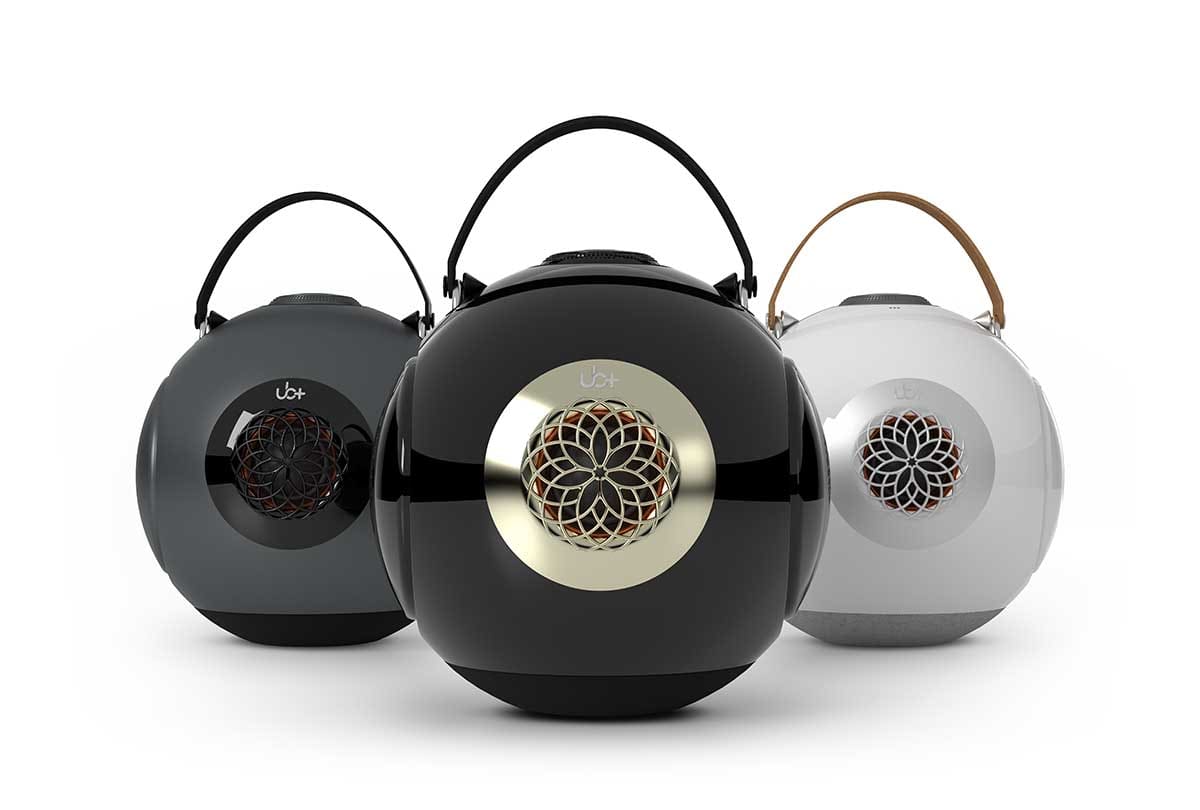
The UB+ dB1 DOUBLEBASS was developed with this philosophy at its core: allow physics to generate bass naturally rather than simulate it digitally.
Why Bass Cannot Be Miniaturized Without Rethinking Design
Low frequencies behave differently from all other parts of the audio spectrum. Their long wavelengths require meaningful air displacement and stable acoustic environments to develop fully. Traditional loudspeakers achieve this through cabinet size and carefully tuned internal volumes.
Portable speakers lack that luxury. Many attempt to compensate using digital signal processing that boosts bass frequencies artificially. While this may create a sense of impact initially, it often leads to:
- Distortion as drivers exceed linear limits
- Cabinet resonance that muddies tonal balance
- Reduced clarity in vocals and instruments
- Listener fatigue caused by exaggerated low-end energy
These problems stem from a mismatch between what the electronics demand and what the structure can physically support.
UB+ approached the issue differently by redesigning the enclosure itself as an acoustic tool.
The Helmholtz Resonator: A Classical Principle Reimagined
The design of the dB1 DOUBLEBASS is deeply rooted in the concept of the Helmholtz resonator, a foundational acoustic principle originally developed to analyze and isolate specific harmonics within musical notes. At its simplest, a Helmholtz resonator consists of a closed volume of air with a controlled opening. As air moves in and out of that opening, certain low frequencies are reinforced with remarkable efficiency.
This principle is everywhere in audio design from bass reflex ports to architectural acoustics but it is rarely applied holistically to the shape of an entire enclosure. UB+ saw an opportunity to rethink that relationship.
By translating Helmholtz resonance into a spherical vessel, the dB1 DOUBLEBASS creates an acoustic chamber where internal air pressure is evenly distributed. Instead of fighting resonance, the enclosure shapes it. Standing waves are reduced, phase distortion is minimized, and harmonic reproduction becomes cleaner across low and mid frequencies.
The sphere is not an aesthetic shell placed around a speaker.
It is the speaker.
A Spherical Enclosure That Works With Sound, Not Against It
Conventional rectangular speaker boxes create internal reflections that interfere with wave propagation. These reflections can cause uneven frequency response and wasted acoustic energy especially problematic in compact systems.
A sphere eliminates these parallel surfaces, allowing sound waves to expand uniformly. Pressure remains balanced throughout the enclosure, improving efficiency and reducing distortion.
This geometry transforms the enclosure from a passive container into an active participant in sound generation.
Dual Passive Radiators and Symmetrical Oscillation
The dB1 DOUBLEBASS uses a carefully balanced configuration:
- A centrally positioned mid-bass driver fires inward into the spherical chamber
- Two large passive radiators are mounted opposite each other
- Internal air pressure activates both radiators simultaneously
This symmetrical motion is essential. Because the radiators move in opposite directions, their forces cancel each other out, preventing cabinet vibration.
Energy that would normally be lost as mechanical movement is instead converted into acoustic output. The result is bass that feels stable and controlled.
Mechanical Bass Amplification Through Air Displacement
Instead of relying on digital boosting, the system uses physical displacement to create depth. The combined surface area of the passive radiators is approximately 3.5 times larger than the woofer, allowing the speaker to move greater volumes of air efficiently.
This mechanical amplification produces bass that scales naturally with volume, maintaining clarity without overdriving components.
Most portable speakers push harder.
The dB1 allows airflow to do the work.
High-End Driver Engineering at the Core
At the center of the system is a 4.5-inch woofer incorporating features typically found in dedicated Hi-Fi loudspeakers:
- Oversized 90 mm neodymium magnet for precise control
- 35 mm long-stroke voice coil enabling extended excursion
- Up to 20 mm piston movement supporting low-frequency authority
- Aluminum shorting ring reducing distortion
- Wide surround ensuring linear motion
These elements allow the driver to maintain composure even during demanding playback, preserving detail alongside depth.
Dual Driver Configuration for Harmonic Stability
Using two drivers distributes acoustic load. This lowers distortion, improves headroom, and prevents driver over-excursion. Harmonic reproduction becomes cleaner, preserving midrange detail and maintaining separation between instruments.
Phase Coherence and Imaging
Accurate bass supports spatial perception. When low frequencies arrive out of phase, imaging collapses. The dB1’s structural symmetry and driver alignment promote coherent wave propagation, enhancing stereo performance when paired.
DSP as Structural Support
Digital processing monitors system behavior but does not artificially inflate bass. It ensures linearity, protects components, and maintains tonal balance as volume increases.
Performance Across Environments
Portable speakers must adapt to changing surroundings. Indoors, reflections reinforce bass; outdoors, those reflections disappear. The dB1’s controlled pressure system maintains low-frequency presence across both environments without retuning.
Transmission Quality and Signal Integrity
Bluetooth 5.3 provides stable connectivity and low latency, preserving timing accuracy essential for realistic bass reproduction. Additional playback options offer flexibility while maintaining consistent sound quality.
Power Delivery for Low Frequencies
Deep bass requires sustained energy rather than momentary peaks. Efficient amplification and battery management allow up to 20 hours of playback without sacrificing dynamic integrity.
Stereo Pairing for Expanded Soundstage
Two units can be paired to create a broader acoustic image with greater depth and separation, enhancing immersion without compromising tonal balance.
Structural Rigidity and Material Integrity
A rigid enclosure prevents vibration-induced distortion, maintaining acoustic precision over time and ensuring consistent performance across listening conditions.
What Defines True Portable Bass Performance
Authentic low-frequency reproduction depends on a combination of factors working together:
- Enclosure geometry
- Air volume efficiency
- Driver engineering
- Resonance control
- Phase alignment
The dB1 DOUBLEBASS integrates these principles into a unified acoustic system, ensuring each element reinforces the others.
Listening That Remains Engaging Over Time
Artificially boosted bass may sound impressive initially, but it often leads to fatigue during extended sessions. Natural bass, produced through controlled airflow and balanced motion, remains engaging without overwhelming the listener.
This allows music to feel dynamic and immersive rather than exaggerated.
Designed by Physics, Not Presets
The UB+ dB1 DOUBLEBASS reflects a design philosophy rooted in acoustic science.
Not boosted bass. Engineered bass.
A spherical chamber that lets bass breathe.
By combining classical resonance principles with modern wireless capability, it offers a portable listening experience grounded in authenticity.
A New Perspective on Portable Sound
For those evaluating portable bluetooth speakers with good bass, the difference lies not in loudness alone but in how the speaker is engineered to interact with air, structure, and motion.
The dB1 DOUBLEBASS demonstrates that compact design and meaningful bass performance can coexist when innovation begins with physics.
Learn more about the UB+ dB1 DOUBLEBASS and its acoustic engineering:
https://ub-plus.com/products/db1-doublebass