

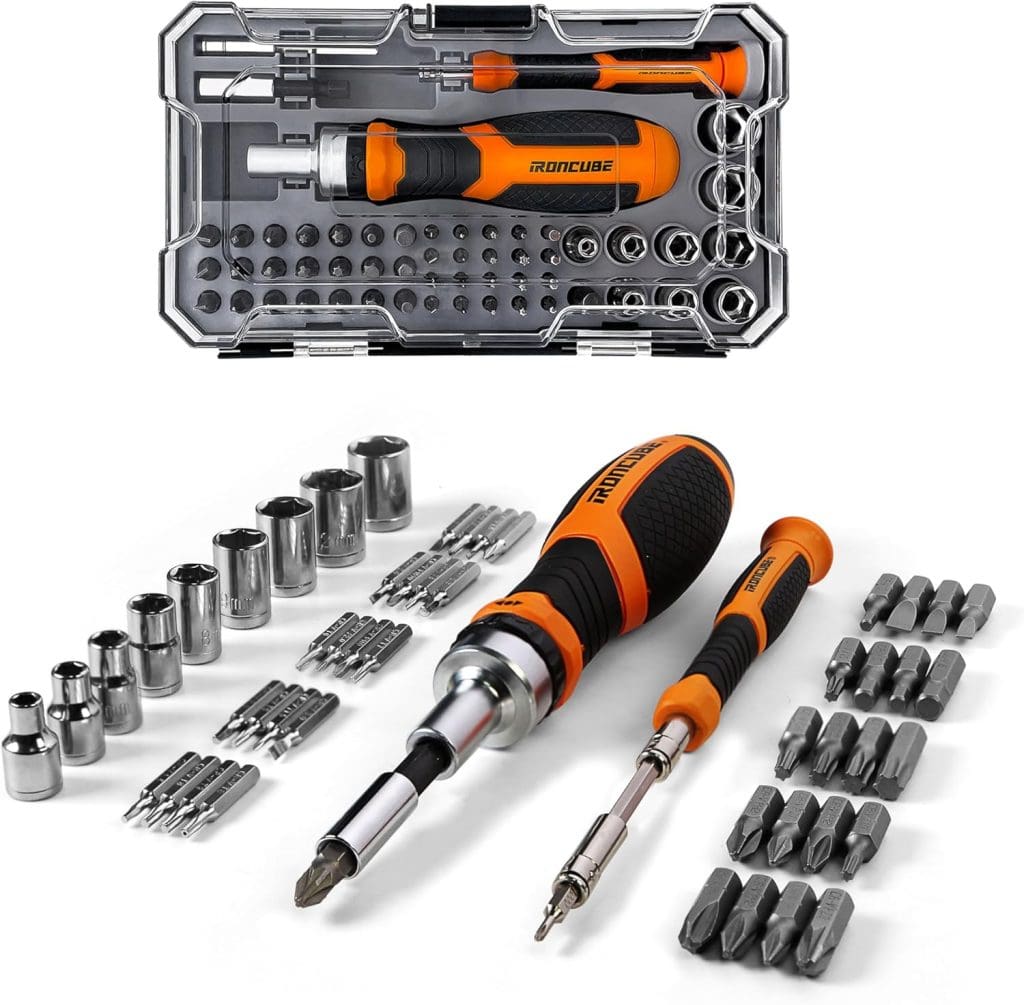
There’s a moment every tradesperson and DIY enthusiast knows too well — you’re three hours into a project, your wrist is aching, and you still have forty screws left to drive. That’s the exact moment you start wishing you’d invested in one of the best ratcheting screwdrivers on the market instead of grinding through the job with a standard fixed-blade driver.
A ratcheting screwdriver eliminates the tedious lift-reset-twist cycle that makes traditional screwdriving so exhausting. Instead of removing and repositioning your hand after every turn, you simply rock the handle back and forth. The internal gear-and-pawl mechanism drives the fastener on each forward stroke while spinning freely on the return. It’s a deceptively simple upgrade that cuts driving time dramatically and saves your joints from unnecessary strain.
But not all ratcheting screwdrivers deserve a spot in your toolbox. Cheap models skip gears under torque, wobble in your hand, and eat through screw heads. The difference between a quality ratcheting driver and a bargain-bin disappointment comes down to tooth count, handle ergonomics, bit retention, and build material — details that aren’t always obvious from a product photo on a retail shelf.
In this guide, we’ve done the legwork for you. We’ll break down exactly what separates the best ratcheting screwdrivers from mediocre ones, walk through our top picks for 2026, and give you the technical knowledge to make a confident purchase. Whether you’re an electrician, an HVAC technician, a weekend woodworker, or someone who just wants to hang shelves without destroying their forearm, the right ratcheting screwdriver will change how you work.
How a Ratcheting Screwdriver Actually Works
Before spending your money, it helps to understand what’s happening inside that handle. Every ratcheting screwdriver relies on a gear-and-pawl system. A toothed wheel (the gear) is mounted inside the handle housing, and a spring-loaded pawl clicks into those teeth when you turn the handle in one direction. That click transfers rotational force from the handle to the shaft and bit, driving the screw.
When you reverse the handle’s motion — the backstroke — the pawl slides over the angled faces of the teeth without engaging them. The shaft stays still while your hand resets. This is the entire magic of the ratcheting mechanism: continuous contact with the fastener, zero repositioning, and significantly faster work.
Most quality ratcheting screwdrivers offer three switch positions: forward (clockwise drive), reverse (counterclockwise drive), and locked. The locked position essentially converts the tool into a standard fixed-blade screwdriver, which is useful for applying maximum initial torque to a stubborn fastener or for precision final adjustments.
The tooth count inside the mechanism matters more than most buyers realize. A higher tooth count means a smaller swing arc — the angle you need to rotate the handle before the pawl re-engages. A 36-tooth mechanism requires a 10-degree swing arc, while a 72-tooth mechanism cuts that down to just 5 degrees. In tight spaces where you can barely move your hand, that difference is enormous. Professional-grade ratcheting screwdrivers typically feature at least 36 to 45 teeth, and some premium models push past 72.
However, there’s a trade-off. Higher tooth counts require smaller, more precisely machined teeth, which can be more fragile under extreme torque loads. For most practical applications, a mechanism in the 36-to-45 tooth range offers the best balance between fine-pitch ratcheting and long-term mechanical durability.
What to Look for in the Best Ratcheting Screwdrivers
Choosing the best ratcheting screwdrivers comes down to five core factors. Get these right, and you’ll end up with a tool that performs beautifully for years.
Ratchet Mechanism Quality
This is the heart of the tool. A quality mechanism produces a crisp, consistent clicking sound with each engagement — not a dull, irregular grinding. Smooth resistance and strong springback on the pawl indicate tight machining tolerances. If a ratcheting screwdriver feels sticky, hesitant, or skips during rotation, the internal components are sloppy, and it will only get worse with use.
When possible, test the mechanism in-store before buying. Turn the handle and listen for even, rhythmic clicks. That sound alone tells you more about build quality than any specification sheet.
Bit Retention and Compatibility
The best ratcheting screwdrivers accept standard ¼-inch hex shank bits, giving you access to thousands of aftermarket bit options from any hardware store. Bit retention varies between magnetic holders and ball-bearing detent systems. Magnetic holders are convenient for quick changes but can lose strength over time. Ball-bearing detents provide a more positive lock, reducing the chance of the bit pulling out under load.
On-board bit storage is another major convenience feature. Many ratcheting drivers store six to twelve bits inside the handle itself, accessible through a sliding base cap. This means the most common Phillips, slotted, Torx, and hex bits travel with the tool — no extra cases or pouches needed.
Handle Ergonomics and Material
You’ll be gripping this tool through potentially hundreds of rotations per session. A poorly shaped handle causes blisters and fatigue in under an hour. Look for handles with dual-material construction: a rigid internal core that transfers torque efficiently, wrapped in a softer, textured outer layer that absorbs shock and maintains grip.
Anti-roll profiles (hex or trilobe shapes) prevent the screwdriver from rolling off angled surfaces, and chemical-resistant materials matter for anyone working in environments where handles get exposed to solvents, oils, or brake fluid. For more on selecting handles that hold up in demanding trade work, our guide to why IRONCUBE wrenches and screwdrivers earn professional trust covers the engineering behind durable handle design.
Bit Material and Hardness
The bits themselves need to be made from hardened tool steel — typically S2 steel or chrome vanadium (Cr-V). S2 steel offers excellent shock resistance and is the standard for premium impact-rated bits. Cr-V provides a slightly better balance of hardness and flexibility for hand-driven applications.
Cheap bits made from low-grade carbon steel will round off, cam-out, and strip fastener heads disturbingly fast. If you’re choosing one of the best ratcheting screwdrivers as your primary daily driver, verify that the included bits are at least Cr-V grade.
Build and Shaft Quality
The shaft connecting the ratchet mechanism to the bit holder should be made from hardened steel — stainless or chrome-plated Cr-V. It needs to resist bending under high torque and shrug off corrosion in humid or chemically aggressive environments. A well-built shaft also contributes to the overall “feel” of the tool, transmitting tactile feedback from the fastener head to your hand so you can gauge torque intuitively.
The Best Ratcheting Screwdrivers for 2026: Our Top Picks
After evaluating mechanism quality, bit selection, handle ergonomics, durability, and value, here are the ratcheting screwdrivers that earned a spot on our recommended list this year.
IRONCUBE 21-in-1 Magnetic Multi Ratcheting Screwdriver Set — Best Overall
The IRONCUBE 21-in-1 Magnetic Ratcheting Screwdriver Set delivers exactly what working professionals need: a smooth three-position ratcheting mechanism, a comprehensive collection of 20 S2 alloy steel bits covering Phillips, slotted, Torx, hex, and square drive, and a powerful magnetic bit holder that keeps fasteners locked in place during overhead and blind-angle work.
The handle balances comfort and torque transfer nicely, with a contoured grip that doesn’t slip even when your hands are dusty or damp. All bits store inside the handle, so nothing gets lost between the truck and the job site. The mechanism clicks crisply and operates without the sloppiness that plagues budget alternatives.
For anyone looking for a single ratcheting tool that handles the vast majority of screwdriving tasks across automotive, HVAC, electrical, and general construction applications, this is the set to beat. You can pick it up directly from the IRONCUBE screwdriver collection or grab it for fast shipping on Amazon. Our in-depth review of this tool in the IRONCUBE 21-in-1 feature breakdown covers the specifications in more detail.
Best for: All-around professional use, mobile technicians, and anyone wanting one ratcheting driver that handles everything.
IRONCUBE Two-Tone Ratchet Screwdriver — Best Single-Handle Ratcheting Driver
Not every job demands a full multi-bit set. Sometimes you want a dedicated ratcheting handle that accepts standard ¼-inch bits and pairs with whatever specialized bit collection you’ve already built. The IRONCUBE Two-Tone Ratchet Screwdriver fills that role with a reliable three-position ratchet (forward, reverse, lock), a comfortable dual-material handle, and a magnetic bit holder strong enough to work vertically without dropping fasteners.
This is an excellent choice for mechanics and electricians who already own organized bit kits and simply need a smooth, durable ratcheting handle to pair with them. The compact profile also fits into tight spaces where larger multi-bit drivers struggle.
Best for: Tradespeople with existing bit collections who want a high-quality standalone ratcheting handle.
Wera Kraftform Kompakt 27 RA — Best Premium Ratcheting Screwdriver
Wera’s Kraftform Kompakt series has earned a loyal following among tool enthusiasts, and the 27 RA model shows why. The ergonomic handle was developed in collaboration with industrial engineering researchers and features hard and soft zones that maximize torque transfer while minimizing fatigue. The ratcheting mechanism uses a fine-tooth design that allows extremely small adjustment increments, making it ideal for precision tasks.
The included bits are Wera’s own Impaktor and Rapidaptor-compatible designs, and the stainless steel shaft adds corrosion resistance. The premium price reflects genuinely premium engineering, though the included bit selection is limited to six pieces — you’ll likely want to supplement with additional Wera bit packs.
Best for: Professionals who demand top-tier ergonomics and mechanism precision, and are willing to pay for it.
Klein Tools 32305 Multi-Bit Ratcheting Screwdriver — Best for Electricians
Klein has been building tools for electricians since 1857, and the 32305 reflects that heritage. It ships with 14 heat-treated double-ended bits (28 total tip configurations), covering Phillips, slotted, square, combo, and Torx — essentially every fastener type an electrician encounters daily. The carbon steel shaft features a rust-resistant coating, and the Cushion-Grip handle provides serious torque capacity without slipping.
The bit holder uses a ball-bearing detent rather than a magnet, providing a positive mechanical lock that prevents accidental bit pull-outs during high-torque applications. When not carrying a bit, the shaft doubles as a ¼-inch nut driver — a genuinely useful dual-purpose feature. For broader comparisons of screwdrivers in trade applications, check out our guide on top-rated screwdrivers for HVAC technicians.
Best for: Electricians and HVAC technicians who need maximum bit variety and dependable torque.
Milwaukee 10-in-1 Ratcheting Multi-Bit Driver — Best Mid-Range Value
Milwaukee’s entry hits the sweet spot between price and performance. The ratcheting mechanism is smooth and reliable, the handle geometry is comfortable during extended use, and the included bit selection covers the essentials without overwhelming you with specialty tips you’ll never touch. Bits store in the handle base and slide out easily.
It’s slightly slower than the Wera in terms of fine-pitch ratcheting, but for most general-purpose work — assembly, maintenance, home improvement — the Milwaukee delivers solid performance at roughly half the cost of premium European brands.
Best for: Homeowners, maintenance techs, and DIYers who want reliable performance without the premium price.
Megapro Automotive Ratcheting Screwdriver — Best for Auto Mechanics
Megapro designed this driver specifically for automotive environments. The handle material resists common automotive chemicals (brake fluid, ATF, degreasers), and the mechanism is built to handle the higher torque demands of underhood fasteners. It accepts standard 1-inch bits rather than the double-ended format, giving you access to the same bit type used in impact drivers.
The ratchet action is robust and direct, with minimal play between strokes. For mechanics who spend their days in engine bays and under dashboards, this purpose-built tool is a strong contender among the best ratcheting screwdrivers designed for automotive work.
Best for: Automotive mechanics and anyone working in chemical-heavy environments.
Ratcheting Screwdriver Comparison Table
| Model | Bits Included | Tooth Count | On-Board Storage | Magnetic Holder | Best For |
|---|---|---|---|---|---|
| IRONCUBE 21-in-1 | 20 (S2 steel) | Professional-grade | Yes | Yes | Overall best value |
| IRONCUBE Two-Tone | Accepts ¼” hex | Professional-grade | No | Yes | Standalone handle |
| Wera Kraftform 27 RA | 6 | 44 teeth (8°) | Yes | Yes | Premium precision |
| Klein Tools 32305 | 14 double-ended | Standard | Yes | No (ball detent) | Electricians |
| Milwaukee 10-in-1 | 9 | Standard | Yes | Yes | Mid-range value |
| Megapro Automotive | Accepts 1″ bits | Heavy-duty | Yes | Yes | Auto mechanics |
Ratcheting Screwdriver vs. Standard Screwdriver: Why It Matters
Many people wonder whether upgrading to a ratcheting driver truly makes a measurable difference. The short answer is yes — and it goes beyond simple speed.
Speed gains are the most obvious advantage. Because you maintain constant contact with the fastener and eliminate the lift-and-reset cycle, experienced users report finishing repetitive screwdriving tasks roughly 30 to 50 percent faster with a ratcheting mechanism compared to a fixed-blade driver.
Reduced wrist fatigue is equally important, especially for professionals who drive hundreds of screws daily. The back-and-forth rocking motion of a ratcheting screwdriver is biomechanically easier on the wrist than full-rotation twisting, reducing the cumulative strain that leads to repetitive stress injuries over months and years.
Better fastener engagement comes from never having to break contact. With a standard screwdriver, each time you lift and reposition, there’s a risk of mis-seating the tip, which causes cam-out and potential head stripping. The best ratcheting screwdrivers eliminate this entirely by keeping the bit seated throughout the entire operation.
The only real trade-off is that ratcheting mechanisms add mechanical complexity, which means there are more internal parts that could potentially wear or fail over time. This is why build quality matters so much — a well-engineered mechanism will last thousands of cycles, while a cheap one might start skipping within months.
How to Maintain Your Ratcheting Screwdriver
Even the best ratcheting screwdrivers need occasional care to keep performing smoothly. The internal gear-and-pawl mechanism is susceptible to contamination from fine dust, wood shavings, metal filings, and grease that work their way into the housing over time.
Clean periodically by flushing the mechanism with a light solvent cleaner. Remove the bits, hold the driver upside down, and spray a small amount of electrical contact cleaner or light machine oil into the ratchet housing. Work the handle back and forth to distribute the lubricant, then wipe away any excess. This prevents the pawl from sticking and keeps the action crisp.
Inspect the bits regularly for rounding, chipping, or deformation. Even the best S2 steel bits wear down eventually, and a worn bit is far more likely to strip a screw head. Replace bits at the first sign of tip deterioration — they’re inexpensive, and the cost of a stripped fastener (in both time and frustration) far exceeds the price of a fresh bit pack.
Store properly in a clean, dry environment. A toolbox drawer or dedicated pouch prevents moisture and grit from entering the mechanism. Avoid tossing your ratcheting screwdriver loose into a bucket of mixed tools, where impacts can damage the housing and misalign internal components.
For a broader look at building a reliable, well-maintained tool collection, browse the complete IRONCUBE hand tool lineup or visit their Amazon storefront for quick-ship options.
When to Use a Ratcheting Screwdriver vs. a Power Driver
Ratcheting screwdrivers aren’t meant to replace cordless drills or impact drivers — they occupy a different niche entirely. Use a ratcheting driver when you need finesse, control, and access in tight spaces that a power tool simply can’t reach. Think about interior trim work, electrical panel wiring, delicate electronics, HVAC components, and any application where over-torquing a fastener would cause damage.
Power drivers excel at driving dozens of long screws into dense material quickly, but they lack the tactile feedback that a hand tool provides. When you’re threading a machine screw into a brass fitting or tightening a terminal block, a ratcheting screwdriver lets you feel exactly how much torque you’re applying — something no cordless drill can match.
Many professionals carry both. The power driver handles the heavy lifting, and the ratcheting screwdriver handles everything that requires precision, portability, or silence. For related tools that complement your ratcheting driver, our article on big ratchet wrenches for heavy equipment explores the wrench side of the ratcheting tool family, and our guide to electronics repair screwdrivers covers the precision end of the spectrum.
Frequently Asked Questions About the Best Ratcheting Screwdrivers
What is a ratcheting screwdriver and how does it work?
A ratcheting screwdriver uses an internal gear-and-pawl mechanism that drives the screw on the forward stroke while allowing the handle to spin freely on the return stroke. This means you never lose contact with the fastener, which makes the best ratcheting screwdrivers dramatically faster and more wrist-friendly than standard fixed-blade drivers. A directional switch toggles between forward, reverse, and locked positions.
Are ratcheting screwdrivers worth the extra cost?
For anyone who drives screws regularly — whether professionally or through frequent home projects — a quality ratcheting driver pays for itself quickly in saved time and reduced fatigue. The best ratcheting screwdrivers typically cost between $15 and $50, which is a modest investment for a tool that can cut your screwdriving time nearly in half.
How many teeth should a good ratcheting screwdriver mechanism have?
Professional-quality ratcheting screwdrivers typically feature mechanisms with 36 to 72 teeth. A 36-tooth mechanism requires a 10-degree swing arc, while a 72-tooth mechanism reduces that to just 5 degrees. For most trade work, anything above 36 teeth qualifies among the best ratcheting screwdrivers in terms of mechanism quality. Higher tooth counts are better for tight-space work but require more precise manufacturing.
Can I use my own bits with a ratcheting screwdriver?
Most of the best ratcheting screwdrivers on the market accept standard ¼-inch hex shank bits, giving you compatibility with virtually any bit brand or type. Some models use proprietary or double-ended bit formats, so check compatibility before purchasing if you already own a large bit collection. The IRONCUBE Two-Tone Ratchet Screwdriver, for example, accepts any standard ¼-inch bit.
How do I maintain a ratcheting screwdriver?
Keep the mechanism clean by periodically flushing it with a light solvent or contact cleaner, then applying a small amount of machine oil. Inspect your bits for wear and replace any that show rounding or chipping. Store your ratcheting screwdriver in a dry, protected space. Even the best ratcheting screwdrivers will degrade if the internal mechanism gets clogged with dust or corroded by moisture.
What’s the difference between a ratcheting screwdriver and a ratcheting wrench?
A ratcheting screwdriver drives screws using interchangeable bits, while a ratcheting wrench turns bolts and nuts using sockets. Both share the same fundamental gear-and-pawl principle, but they’re designed for different fastener types. Many professionals keep both in their toolkit. For wrench options, check out our wholesale jumbo wrench set guide for bulk purchasing insights.
Final Summary
The best ratcheting screwdrivers transform one of the most basic hand tool operations — driving a screw — into something noticeably faster, more comfortable, and more precise. The key is choosing a model with a quality internal mechanism, durable bits, an ergonomic handle, and reliable bit retention. Cheap ratcheting drivers with sloppy gears and soft bits will frustrate you within weeks, while a well-built tool will serve you faithfully for years of daily use.
Our top overall pick, the IRONCUBE 21-in-1 Magnetic Multi Ratcheting Screwdriver Set, combines a smooth, professional-grade ratcheting mechanism with comprehensive bit coverage, magnetic retention, and on-board storage at a price that delivers genuine value for trade professionals and serious DIYers alike. For those who want a standalone ratcheting handle, the IRONCUBE Two-Tone Ratchet Screwdriver offers a clean, versatile option that pairs with any ¼-inch bit you already own.
Whatever your trade or project demands, upgrading to one of the best ratcheting screwdrivers on this list will make you wonder how you ever worked without one. Explore the full IRONCUBE screwdriver lineup to find the perfect match, check out the best screwdriver sets of 2026 for broader recommendations, or contact the IRONCUBE team for personalized purchasing advice.