

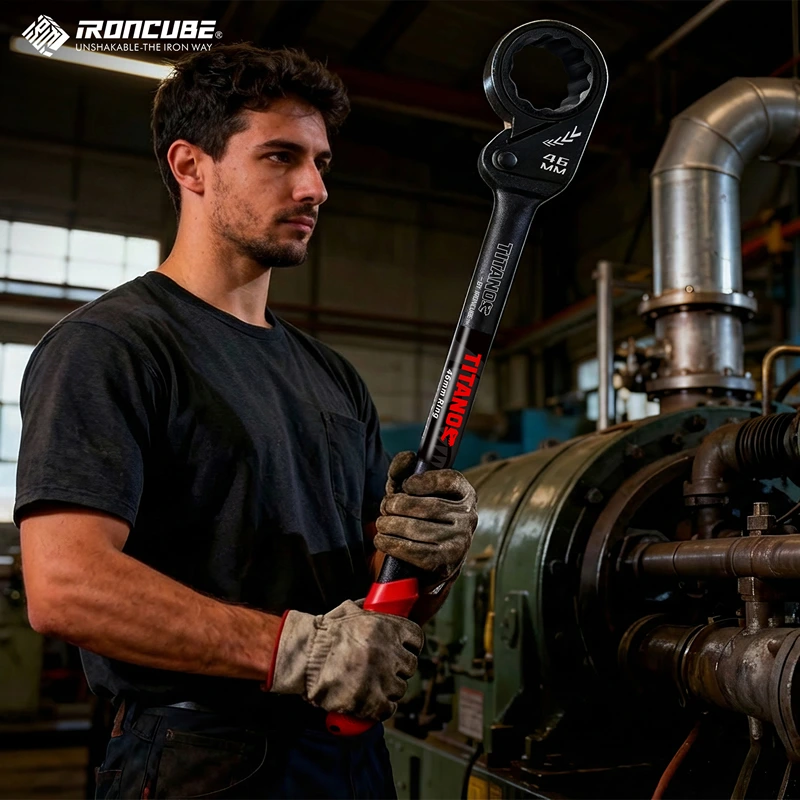
Finding a jumbo ratcheting wrench set that doesn’t cost a fortune but still holds up under real workloads is harder than it sounds. The market is flooded with cheap imports that look impressive on the shelf but round off fasteners, skip under torque, or crack after a few months of use. On the other end, premium sets from top-tier brands can run $300 to $500 — overkill if you’re not using them eight hours a day.
So where does that leave someone who needs large-size ratcheting wrenches for occasional heavy-duty work, fleet maintenance, or outfitting a growing workshop without blowing the budget? Right in the middle of a confusing mess of product listings, inflated reviews, and marketing fluff. That’s exactly why this guide exists.
We’re going to cut through the noise and look at what actually matters when you’re buying a budget jumbo ratcheting wrench set: the steel quality, the ratcheting mechanism, the size range, the handle design, and the real-world durability you can expect at different price points. By the end, you’ll know exactly what to look for, what to avoid, and which sets deliver genuine value for the money.
What Makes a Wrench Set “Jumbo”?
Before diving into buying advice, it helps to clarify what “jumbo” actually means in the wrench world. There’s no official industry standard for the term, but in practice, a jumbo wrench set generally covers metric sizes starting around 21mm or 23mm and going up to 32mm, 36mm, 41mm, or even 46mm. On the imperial side, jumbo sizes typically begin around 1-1/16 inch and extend to 2 inches or beyond.
Standard wrench sets — the ones most people buy for general automotive work — usually top out at 19mm or 22mm metric and 7/8 inch or 1 inch SAE. Anything above those sizes falls into jumbo territory, and that’s where the real challenges begin. The fasteners are bigger, the torque requirements are higher, and the tools need to be substantially stronger and longer to handle the job.
A jumbo ratcheting wrench set adds ratcheting capability to these oversized wrenches, which means you can tighten or loosen large fasteners without lifting the wrench off the bolt head after every turn. In tight spaces — and there are plenty of tight spaces on heavy machinery, trucks, and industrial equipment — that ratcheting action saves an enormous amount of time and frustration.
Why Budget Options Get a Bad Reputation (And When They’re Actually Fine)
Let’s address the elephant in the room. Cheap tools have earned a reputation for failing when it matters, and in many categories, that reputation is deserved. A $15 torque wrench is genuinely dangerous. A bargain socket set with soft chrome that strips immediately is money wasted. But jumbo wrenches operate in a slightly different reality than smaller precision tools, and here’s why.
Physics works in your favor at larger sizes. A 32mm wrench contains far more steel than a 10mm wrench. Even if the alloy isn’t the absolute highest grade, the sheer volume of material provides structural strength that smaller tools don’t have. The walls are thicker, the beam is wider, and the overall cross-section resists bending forces more effectively. This doesn’t mean material quality doesn’t matter — it absolutely does — but it means the gap between a budget tool and a premium tool is narrower at jumbo sizes than it is at standard sizes.
Most people don’t use jumbo wrenches every day. If you’re a mine maintenance technician using a 46mm wrench for eight hours straight, you need the best tool money can buy. But if you’re a farmer who pulls out jumbo wrenches twice a year for implement maintenance, or a shop owner who needs them occasionally for oversized bolts, a well-made budget set will serve you perfectly well for years.
The key is knowing where the line falls between “budget” and “cheap.” Budget means thoughtful cost savings on non-critical features like fancy packaging, marketing, and brand premium. Cheap means cutting corners on the steel, the heat treatment, or the ratcheting mechanism — the things that determine whether the tool works or breaks. A good budget jumbo ratcheting wrench set lands firmly in the first category.
What to Look For in a Budget Jumbo Ratcheting Wrench Set
Knowing what separates a good budget set from a bad one comes down to five key factors. Get these right, and your wrenches will perform reliably for years regardless of the price tag.
Chrome Vanadium Steel Is Non-Negotiable
The wrench body should be forged from chrome vanadium steel (CrV). This alloy has been the standard for professional-grade hand tools for decades because it delivers the right combination of hardness, toughness, and fatigue resistance. Some budget sets use plain carbon steel or mysterious unmarked alloys. Walk away from those. CrV steel costs marginally more to produce but lasts dramatically longer, especially under the high-torque loads that jumbo wrenches regularly face.
Every wrench in the IRONCUBE lineup is forged from chrome vanadium steel, including their jumbo sizes. That’s one of the reasons they consistently punch above their price point. For a detailed look at their flagship large-size option, check out the 46mm friction ratcheting spanner.
The Ratcheting Mechanism Matters More Than Tooth Count
Marketing loves to advertise high tooth counts — 72-tooth, 120-tooth, even 144-tooth ratcheting mechanisms. More teeth means a finer arc swing, which is genuinely helpful in tight spaces. But for jumbo wrenches, the strength of the ratcheting mechanism matters far more than the tooth count.
At 46mm, you’re dealing with torque loads that can exceed 300 ft-lbs. A fine-tooth gear ratchet under that kind of stress can strip its teeth. That’s why many professionals prefer friction-type ratcheting mechanisms for jumbo sizes — they use friction surfaces instead of gear teeth, which provides reliable grip at any torque level without the risk of stripping. IRONCUBE’s friction wrench line uses this approach across their jumbo sizes, and it’s a smart engineering choice for this class of tool.
Handle Length and Leverage
The handle on a jumbo wrench needs to be long enough to generate adequate torque without a cheater bar. A wrench that’s too short forces you to either over-exert yourself or reach for a pipe extension, both of which create problems. Look for handles that are proportional to the wrench size — typically 15 to 24 inches long for wrenches in the 30mm to 46mm range. The best budget sets don’t skimp on handle length even though longer handles use more material and cost more to produce.
Box End Design: 12-Point vs. 6-Point
This debate has been raging in tool forums for decades. A 12-point box end engages the fastener every 30 degrees, giving you more positioning options in tight spots. A 6-point box end engages every 60 degrees but grips more securely and is less likely to round off bolt heads. For a budget jumbo ratcheting wrench set, either design works — the ratcheting mechanism means you don’t need to lift and reposition as often anyway. That said, 12-point designs with off-corner loading geometry (which contacts the flat faces of the fastener rather than the corners) give you the best of both worlds.
Finish and Corrosion Protection
Budget wrenches often skip the mirror-polish chrome finish that premium brands use. That’s perfectly fine. A black oxide finish or satin finish provides excellent corrosion resistance at a fraction of the cost of triple-chrome plating. It’s also easier to grip and less likely to show wear. Don’t let the lack of a shiny finish scare you away from an otherwise well-made tool.
Budget Jumbo Ratcheting Wrench Sets: What’s Available in 2026
The market for jumbo ratcheting wrenches has expanded significantly over the past few years. Here’s how the major options stack up across different price ranges.
| Category | Price Range | Typical Sizes | Best For |
|---|---|---|---|
| Entry Budget | $40 – $80 | 4–6 piece, limited range (21mm–30mm) | Occasional use, home garage |
| Mid Budget | $80 – $150 | 6–10 piece, broader range (21mm–36mm) | Regular shop use, light industrial |
| Premium Budget | $150 – $250 | 8–12 piece, full range (21mm–46mm+) | Daily professional use, fleet shops |
| Full Premium | $300 – $500+ | Complete sets with storage | Heavy industrial, daily professional |
The sweet spot for most buyers is the mid-budget to premium-budget range. You get chrome vanadium construction, a reliable ratcheting mechanism, and enough size coverage to handle the majority of jumbo fasteners you’ll encounter.
IRONCUBE Works positions their friction wrench line squarely in the premium-budget category, offering individual sizes and buildable sets that cover everything from 36mm through 41mm and 46mm in metric, plus imperial options like 1-1/2 inch, 1-7/8 inch, and 2-1/4 inch. That modular approach is particularly attractive for buyers who want to start with specific sizes and expand over time rather than paying for a complete set upfront.
For a detailed comparison of the top picks in the heavy-equipment category, take a look at this roundup of big ratchet wrenches for heavy equipment.
Common Mistakes When Buying Budget Jumbo Wrenches
Even informed buyers fall into traps when shopping for jumbo tools on a budget. Here are the mistakes that cost people the most money and frustration.
Buying Based on Piece Count Alone
A 10-piece set sounds better than a 4-piece set, but not if those 10 pieces are made from inferior steel or include sizes you’ll never use. Focus on the size range you actually need and the quality of each individual wrench rather than the total number of pieces. Four excellent wrenches in the sizes you use regularly will outperform ten mediocre ones that cover a range you don’t need.
Ignoring the Ratcheting Mechanism Type
Not all ratchets are created equal, and this is especially true at jumbo sizes. Gear-tooth ratchets work well for standard sizes but can strip under the extreme torque demands of large fasteners. Friction-type ratchets — like those in the IRONCUBE friction wrench line — handle high-torque applications with greater reliability. Always check what type of mechanism the set uses before purchasing.
Overlooking Imperial Sizes
If you work on American-made equipment, agricultural machinery, or older industrial systems, you need imperial (SAE) sizes in addition to metric. Many budget sets only cover metric, which leaves you scrambling when you encounter a 1-1/2 inch or 1-7/8 inch bolt. Make sure your jumbo ratcheting wrench set covers the measurement system your work actually requires — or plan to supplement with individual wrenches in the sizes you’re missing.
Assuming Expensive Always Means Better
Brand recognition accounts for a large portion of the price difference between mid-range and premium tools. A $400 set from a heritage brand carries decades of reputation — and marketing budget — built into its price tag. That doesn’t automatically make it twice as good as a $200 set from a quality manufacturer that spends less on advertising and more on materials. Evaluate tools on their specifications and construction, not on the name stamped on the handle.
Where Budget Jumbo Ratcheting Wrench Sets Earn Their Keep
Understanding your use case helps justify the investment and ensures you buy the right set for your needs.
Agricultural Equipment Maintenance
Farm implements, tractors, and combines use oversized fasteners throughout their frames, axles, and blade assemblies. Maintenance windows between planting and harvest are tight, and having a reliable jumbo ratcheting wrench set on hand saves trips to the dealer and costly downtime. For agriculture-specific recommendations, see this guide on jumbo ratcheting wrench sets for agriculture.
Fleet and Heavy Truck Maintenance
Class 7 and Class 8 trucks use large metric and SAE fasteners on suspension components, wheel hubs, and driveline parts. Independent fleet shops and owner-operators can save significantly by choosing a well-made budget set over premium alternatives, especially when the wrenches see intermittent rather than continuous use.
Construction and Structural Steel
Structural bolting on commercial buildings, bridges, and towers frequently calls for wrenches in the 30mm to 46mm range. Contractors who need reliable large-size tools across multiple jobsites benefit from budget sets that deliver consistent performance without the anxiety of losing an expensive tool on a busy site. Learn more about how flex-head ratchet wrench sets handle industrial applications.
Home Garage and Weekend Projects
Even weekend mechanics occasionally encounter oversized fasteners on truck suspensions, trailer hitches, boat trailers, and older equipment. A budget jumbo ratcheting wrench set fills that gap without requiring a serious financial commitment for tools that won’t see daily use.
How to Get the Most Life Out of a Budget Set
A well-maintained budget tool can outlast a neglected premium one. These habits make a meaningful difference in how long your jumbo wrenches last.
Clean your wrenches after every use. Dirt, grease, and metal shavings accelerate wear on both the ratcheting mechanism and the box end. A quick wipe-down with a shop rag and a light spray of penetrating oil takes less than a minute per wrench and prevents corrosion from gaining a foothold.
Store them properly. Hanging wrenches on a tool board or laying them in a dedicated drawer keeps them separated and prevents impact damage. Tossing jumbo wrenches into a common bin with other heavy tools is a reliable way to chip box ends and damage ratcheting mechanisms. Proper storage is especially important for budget tools, where the finish may be less resilient than premium alternatives.
Don’t use cheater bars unless absolutely necessary. Extending the handle multiplies torque beyond the wrench’s designed capacity. Budget wrenches have a narrower safety margin than premium tools, so exceeding that margin is riskier. If you regularly need more torque than the handle provides, step up to a hydraulic wrench for those specific applications.
Inspect before each use. Check for cracks, deformation around the box end, and smooth operation of the ratcheting mechanism. Catching a developing problem early lets you retire the tool before it fails under load. For detailed safety practices, read this guide on how to use flex-head ratchet wrench sets safely.
Building Your Toolkit Around a Jumbo Wrench Set
A jumbo ratcheting wrench set is one piece of a well-rounded professional toolkit. To get the most value from your tool investment, pair it with complementary tools that cover different fastener types and access angles.
Start with a quality standard wrench set covering 8mm through 22mm metric and 5/16 inch through 7/8 inch SAE. That handles about 90 percent of everyday fastener work. Your jumbo set picks up where the standard set leaves off, covering the remaining 10 percent of oversized applications.
Add a flex-head ratcheting set for situations where a straight wrench can’t reach. Flex-head designs let you angle the wrench head up to 180 degrees for access around obstructions, which is invaluable on complex machinery. See how flex-head ratchet wrench sets save time on auto repairs for practical examples.
Round out your collection with a reliable screwdriver set for general-purpose work. IRONCUBE’s 53-piece ratcheting screwdriver set covers Phillips, flathead, Torx, and hex drive types in a single organized package. You can also browse the full range of IRONCUBE hand tools on their Amazon storefront for additional options.
Wholesale and Bulk Buying Tips
If you’re purchasing a jumbo ratcheting wrench set for an entire crew, fleet, or contracting company rather than individual use, a few additional strategies can save significant money.
Standardize on one manufacturer. When every technician uses the same wrench model, training becomes simpler and spare management gets easier. IRONCUBE serves over 600 tool brands globally as a manufacturing partner, which means consistent quality and readily available stock. You can contact their team directly for wholesale pricing, custom branding, and volume discounts.
Buy modular rather than complete sets. Not every technician needs every size. Purchasing individual wrenches in the specific sizes each team uses is often more cost-effective than buying complete sets with sizes that sit untouched. For guidance on sourcing tools in bulk, read this article on how to find quality wholesale jumbo wrench sets.
Factor in total cost of ownership. A set that costs $100 and lasts five years is cheaper than a set that costs $60 and needs replacement every two years. Budget doesn’t mean disposable — it means smart spending on tools that deliver lasting value.
Frequently Asked Questions
What sizes should a good jumbo ratcheting wrench set include?
A well-rounded jumbo ratcheting wrench set should cover metric sizes from at least 21mm through 36mm for most industrial and automotive applications. For heavy equipment and structural work, you’ll want coverage up to 41mm or 46mm as well. On the imperial side, look for sets that include 1-1/16 inch through 2 inches. The specific sizes you need depend on the equipment you work on, so check your most common fastener dimensions before buying.
Are friction ratcheting wrenches better than gear ratcheting wrenches for jumbo sizes?
For most jumbo applications, yes. Gear-tooth ratchets can strip their teeth under the extreme torque loads common with large fasteners, especially corroded or seized ones. Friction ratcheting mechanisms distribute load across friction surfaces rather than individual gear teeth, providing consistent grip regardless of torque level. This makes friction-type tools like those in a purpose-built jumbo ratcheting wrench set the preferred choice for heavy industrial use.
Can I use a budget jumbo wrench set for professional work?
Absolutely, provided the set is made from chrome vanadium steel with a reliable ratcheting mechanism. Budget doesn’t mean low quality — it means the manufacturer has saved costs on non-essential features like premium packaging, mirror finishes, or brand marketing. Many professional mechanics and maintenance technicians rely on budget-tier tools for jumbo sizes they use intermittently, reserving premium spending for everyday-use sizes. A quality budget jumbo ratcheting wrench set handles professional workloads without issue.
How do I know if a jumbo wrench set is made from quality steel?
Look for clear markings on the wrench body that specify the steel type. Chrome vanadium (CrV) or chrome molybdenum (CrMo) are both professional-grade alloys. If the listing or packaging doesn’t mention the steel type at all, that’s a red flag. Forged construction is also important — forging compresses the steel’s grain structure, making it stronger and more resistant to fatigue than cast alternatives. Any reputable jumbo ratcheting wrench set will clearly state both the steel alloy and the manufacturing process.
What’s the difference between a jumbo wrench set and a standard wrench set?
The primary difference is size range. Standard wrench sets cover fasteners up to about 19mm or 22mm metric (or 7/8 inch to 1 inch SAE). A jumbo ratcheting wrench set starts where standard sets leave off, covering larger fasteners from roughly 21mm up to 46mm or beyond. The wrenches themselves are also physically larger — longer handles, thicker beams, and heavier overall weight — because the torque demands on large fasteners are significantly higher.
Do I need both metric and SAE jumbo wrenches?
That depends entirely on the equipment you service. Modern imported machinery and vehicles use metric fasteners almost exclusively. American-made heavy equipment, older industrial machinery, and agricultural implements often use SAE (imperial) fasteners. If you work on a mix of both, you’ll need coverage in both measurement systems. Some manufacturers, including IRONCUBE, offer individual jumbo wrenches in both metric and SAE sizes, which lets you build a custom jumbo ratcheting wrench set that matches your specific needs without paying for sizes you’ll never use.
Final Summary
A budget jumbo ratcheting wrench set doesn’t have to be a compromise. The right set — forged from chrome vanadium steel, built with a reliable ratcheting mechanism, and covering the sizes you actually need — delivers years of dependable service without the premium price tag of top-tier brands. Focus on material quality, mechanism type, and size coverage rather than piece count or brand name, and you’ll end up with tools that genuinely work when it matters. Whether you’re maintaining farm equipment, servicing a truck fleet, building steel structures, or tackling occasional heavy-duty projects in your shop, the value is there if you know where to look.