

Introduction
Beneath the calm surface of rivers, lakes, and oceans lies a world that demands constant vigilance. Submerged structures such as pipelines, bridges, dams, and offshore platforms quietly bear the weight of human progress. They play a vital role in energy production, transportation, and water management, yet are exposed to harsh underwater conditions that can weaken their structural integrity over time. Regular and precise underwater inspection services are essential for ensuring that these critical assets continue to function safely and efficiently.
Unlike traditional inspections, underwater assessments require a blend of advanced technology and skilled expertise. Whether it is corrosion monitoring, marine growth assessment, or identifying cracks invisible to the naked eye, inspections beneath the surface help prevent catastrophic failures and costly downtime. As industries expand into deeper and more demanding environments, the need for specialized underwater inspections grows exponentially. These services bridge the gap between unseen risks and reliable performance, allowing engineers and facility operators to make informed decisions that protect both infrastructure and the environment.
Understanding Structural Degradation Underwater
Underwater environments are naturally corrosive and unpredictable. Metal structures exposed to saltwater or brackish conditions face accelerated corrosion, while sediment and biofouling can obscure critical areas, making it difficult to detect early signs of deterioration. Over time, small structural weaknesses can evolve into serious integrity issues that compromise safety and functionality.
Factors such as water temperature, salinity, and chemical pollutants contribute to degradation, but one of the most destructive forces is electrochemical corrosion. It occurs when metals interact with oxygen and moisture, leading to pitting and rust formation. Additionally, tidal forces and wave motion cause fatigue in materials, resulting in micro-cracks that expand under pressure. Sediment accumulation can also conceal defects, making thorough inspection essential.
These challenges highlight why underwater inspection services are indispensable. By identifying vulnerabilities early, teams can recommend repairs or reinforcement before the damage becomes irreversible. Maintaining structural health beneath the surface is not just a matter of maintenance,it is a matter of safety and longevity. For industries that depend on submerged assets, such proactive attention ensures continuous operation without the risks of sudden failure or environmental harm.
Techniques Used in Modern Underwater Inspection Services
Modern underwater inspection combines traditional diving expertise with advanced technology to ensure accurate and thorough assessments. Visual inspection remains fundamental, with divers using high-intensity lighting and underwater cameras to examine structures closely. These tools allow real-time evaluation and documentation of any surface defects or anomalies.
Non-Destructive Testing (NDT) techniques are widely used to detect internal flaws without harming the structure. Methods such as ultrasonic thickness measurements, magnetic particle testing, and dye penetrant testing provide detailed information about material integrity, helping engineers identify potential weaknesses before they become critical.
Sonar technology,including side-scan and multibeam systems,enables comprehensive mapping of underwater sites. These systems create detailed images of structures and seabed conditions, revealing damage, sediment buildup, or obstructions that may not be visible through direct observation.
Photogrammetry uses a series of overlapping photographs to construct accurate 3D models of underwater assets. These models give engineers a precise understanding of dimensions, alignment, and areas requiring maintenance or repair.
Each of these techniques serves a distinct purpose, from detecting corrosion and measuring coating thickness to evaluating weld integrity. When combined, they provide a complete and reliable picture of an asset’s condition, allowing for informed maintenance decisions and effective long-term planning. Rigorous adherence to safety standards ensures that both divers and equipment operate effectively during these inspections, maintaining the balance between operational precision and diver protection.
The Role of Certified Commercial Divers
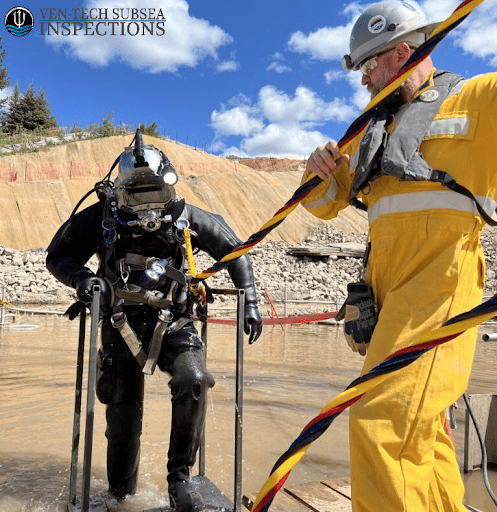
While technology continues to evolve, certified commercial divers remain at the core of underwater inspection operations. Their expertise, training, and adaptability make them indispensable for complex underwater environments where human judgment and precision are essential. Divers are equipped to perform hands-on evaluations, capture visual data, and operate inspection instruments even in challenging conditions like low visibility or strong currents.
Each diver undergoes extensive safety training, learning how to navigate confined spaces and use life-support equipment effectively. Their work often involves close collaboration with engineers and project managers to interpret findings and make recommendations on-site. Unlike robotic inspections, divers can adjust their focus dynamically, ensuring no detail is overlooked.
The success of these missions relies heavily on the professionalism of the dive team. They not only execute inspection plans but also serve as the critical link between raw underwater data and practical engineering solutions. In industries such as offshore energy, infrastructure maintenance, and port management, their role contributes directly to the safe and sustainable operation of submerged assets.
Remote and Robotic Inspection Capabilities
As industries expand into deeper and more hazardous environments, remote inspection technologies have become increasingly vital. Remotely Operated Vehicles (ROVs) and Autonomous Underwater Vehicles (AUVs) have revolutionized how underwater inspections are conducted, especially in areas too dangerous or inaccessible for divers.
These robotic systems are equipped with high-definition cameras, sonar sensors, and manipulator arms capable of performing detailed visual and mechanical inspections. They can remain submerged for extended periods, capturing comprehensive data while eliminating human risk. ROVs are particularly effective for pipeline monitoring, deepwater platform assessments, and dam structure evaluations.
Ven-Tech Subsea, a leader in precision underwater solutions, utilizes such technology to perform safe, efficient, and detailed underwater inspections across Canada. The company specializes in both commercial diving and ROV operations, bringing together human expertise and advanced robotics. Their professional divers and ROV technicians ensure that every inspection meets high standards of safety and accuracy. Through the integration of remote systems, Ven-Tech Subsea helps industries minimize downtime and maximize operational safety, making underwater inspection services more reliable than ever.
Data Interpretation and Reporting
Collecting data underwater is only half of the process. The true value lies in accurate interpretation and clear reporting. Once visual or sonar data is gathered, it undergoes meticulous analysis to identify trends, measure degradation, and predict potential failures. Engineers use this information to prioritize maintenance actions and plan long-term asset management strategies.
Reports from underwater inspections often include photographic evidence, video recordings, and 3D models, all accompanied by expert commentary. These deliverables provide decision-makers with actionable insights that support both short-term interventions and long-term planning.
Ven-Tech Subsea places great emphasis on this stage of the operation. Their inspection teams ensure that all findings are presented with precision, clarity, and relevance. Each report is tailored to meet industry standards and client-specific needs. By combining technical data with practical recommendations, Ven-Tech Subsea helps clients maintain compliance, reduce operational risk, and extend the life of their underwater infrastructure. Their dedication to accuracy and transparency distinguishes them as a trusted partner in the marine and subsea industry.
Applications Across Industries
Underwater inspection services play a vital role across multiple sectors. In civil engineering, they are essential for maintaining bridges, ports, and dams, where submerged foundations are often exposed to stress and corrosion. The oil and gas industry relies on inspections to ensure pipeline integrity and platform stability. Hydroelectric facilities use inspections to monitor penstocks, turbines, and intake structures, preventing costly breakdowns.
The shipping and maritime sectors also depend on these inspections for hull assessments, propeller evaluations, and dock maintenance. Each inspection contributes to safer, more efficient operations and environmental protection. Accurate monitoring prevents leaks, contamination, and structural failures that could have widespread consequences.
As global infrastructure ages, the demand for underwater assessments continues to rise. Professional inspection services offer peace of mind by verifying that submerged assets meet safety and performance standards. They form the foundation of preventive maintenance and long-term resilience across industries that depend on underwater operations.
Evolving Standards and Future Technology
The future of underwater inspection is being shaped by technology and data integration. Artificial Intelligence (AI), machine learning, and predictive maintenance systems are transforming how inspection data is analyzed. By identifying patterns of degradation earlier, these innovations enable faster responses and reduce repair costs.
Advanced sensor networks, combined with real-time monitoring systems, will soon allow operators to track asset health continuously. Robotics will continue to evolve, with next-generation ROVs capable of autonomous decision-making and self-diagnosis. These developments are redefining efficiency and safety standards in subsea operations.
Ven-Tech Subsea continues to embrace these technological shifts, integrating advanced tools and data-driven methodologies into its operations. Their focus on innovation and safety ensures that they remain at the forefront of Canada’s marine construction and inspection sector. Backed by extensive experience, specialized teams, and a commitment to quality, the company is setting new benchmarks in underwater asset management and precision engineering.
Conclusion
Underwater inspection services form the backbone of modern infrastructure maintenance. They provide the insight and assurance needed to manage submerged assets responsibly and sustainably. By identifying structural weaknesses before they escalate, inspections safeguard human lives, protect the environment, and ensure uninterrupted operations.
Ven-Tech Subsea exemplifies the highest standards in this specialized field. As a Canadian-based commercial diving and ROV company, they deliver efficient, high-quality underwater inspection, construction, and engineering services across the nation. Their blend of expertise, advanced technology, and commitment to safety has earned them a strong reputation for reliability and precision.
In an age where underwater infrastructure supports vital sectors from energy to transportation, investing in regular inspections is not a luxury,it is a necessity. Through the meticulous work of experts like Ven-Tech Subsea, the hidden world beneath the surface continues to support progress with strength, safety, and integrity.