
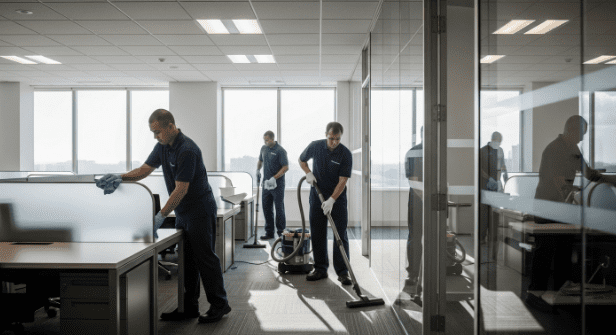
Across Baton Rouge, a growing number of organizations are reshaping their workplace hygiene practices as employee expectations continue to evolve following several years of shifting operational norms. While many of these changes began as short-term responses during earlier public health cycles, the emerging trends indicate a long-term adjustment in how commercial facilities manage cleanliness, employee safety, and workplace experience.
This movement aligns with statewide developments documented in an economic review of Louisiana’s cleaning market. A recent NewsTrail examination of Louisiana’s 2025 janitorial services industry described how the state continues to add new cleaning providers and employees despite a slight contraction in market value. The analysis suggests that demand for dependable cleaning support remains consistent across offices, healthcare environments, educational centers, and industrial work sites.
Within Baton Rouge, these trends have become increasingly visible as organizations reevaluate how hygiene standards influence operations, employee perception, and customer experience. Facility managers across multiple sectors report that employees have developed higher expectations for routine cleaning practices, which directly affect their daily work environment.
Workplace Expectations Have Shifted Permanently
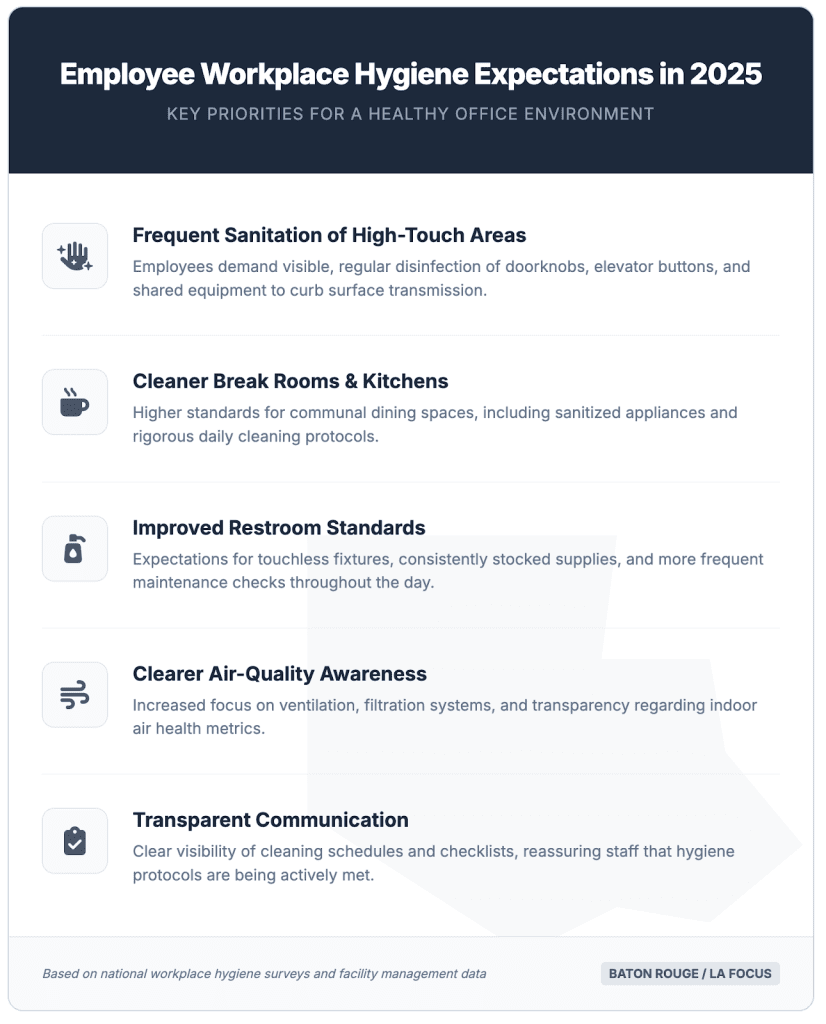
Recent findings from Business Facilities Magazine’s national workplace hygiene survey indicate that employee expectations have strengthened substantially. According to the publication’s 2025 analysis of employee hygiene perceptions and workplace conditions, approximately 74 percent of employees expect moderate or high levels of cleanliness in workplace restrooms, breakrooms, and common areas. Yet only 20 percent indicated that their workplace consistently meets these expectations. These discrepancies highlight the broader shift in how workers assess the environments in which they perform their day-to-day tasks.
Baton Rouge facility managers report similar patterns, noting increased staff questions about restroom sanitation, common-area upkeep, and the frequency of cleaning cycles. These expectations extend beyond traditional office environments, influencing educational, healthcare, and industrial settings as well.
Cleanliness and Productivity: A Developing Connection
Research continues to connect workplace cleanliness with employee productivity. Studies, including Harvard’s analysis of indoor air quality and cognitive performance, show that environmental conditions such as dust levels, airflow, and general cleanliness meaningfully influence worker performance and efficiency. While this specific research focuses on indoor air quality, the broader conclusion that environmental conditions affect productivity is widely referenced across commercial sectors.
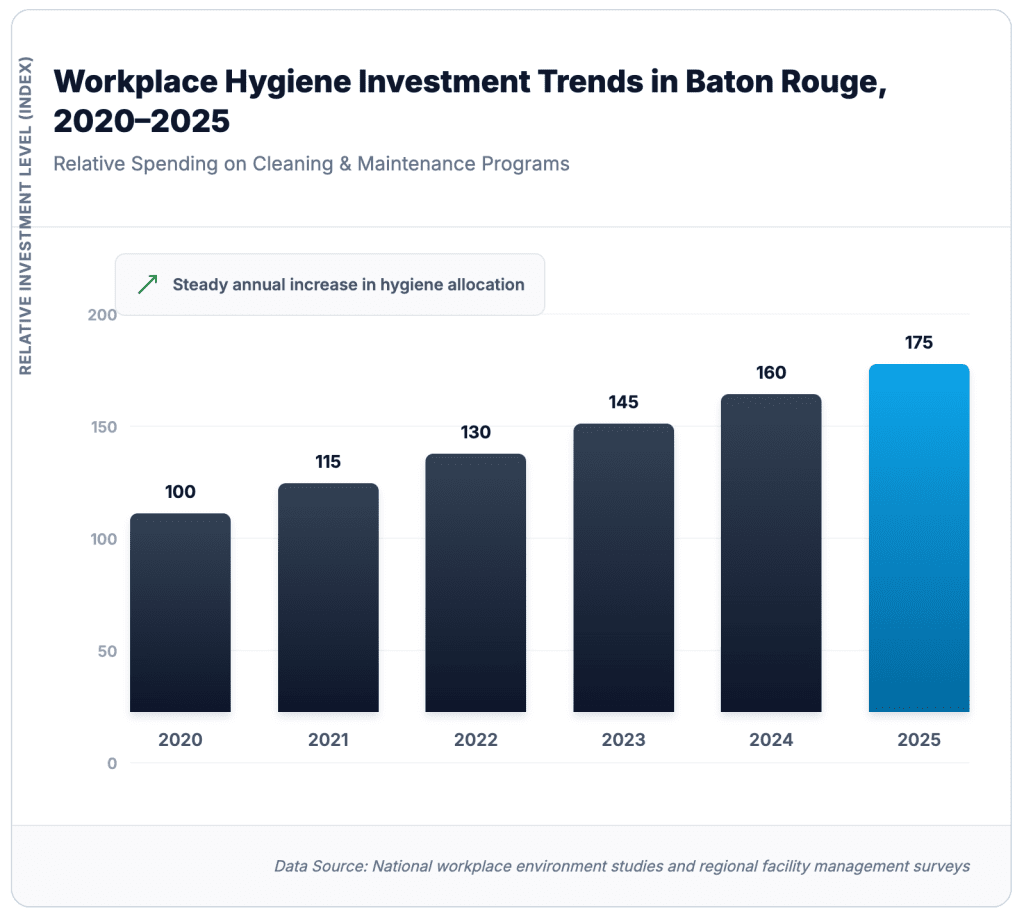
In response, many Baton Rouge organizations have expanded maintenance schedules from weekly or bi-weekly cleaning to daily or multi-day programs focused on high-touch areas, shared spaces, and restroom facilities. Facility operators indicate that these adjustments aim to support both employee well-being and operational consistency.
The Financial Case for Enhanced Hygiene Programs
For a growing number of Baton Rouge businesses, expanded hygiene programs are viewed as preventive investments. Facility managers frequently cite reduced absenteeism, improved employee confidence, and more predictable operations as primary benefits. While enhanced programs may increase cleaning budgets, organizations increasingly classify these expenses as integral to day-to-day reliability rather than discretionary facility costs.
Industry analysts note that businesses adopting structured hygiene practices often experience improved staff retention in administrative, customer-facing, and operational roles. Local facility operators also report that improvements in restroom management, floor care, and shared space upkeep correlate with higher employee satisfaction scores.
Baton Rouge Facilities Respond With Structured Maintenance Programs
Across the region, many organizations are implementing maintenance programs with defined cleaning intervals, task documentation, and improved communication between cleaning teams and facility staff. These standardized approaches help create predictable workplace conditions while supporting broader organizational goals.
Cleaning providers operating in Baton Rouge indicate that demand for structured programs has increased steadily since 2024. Service models emphasizing flexible scheduling, multi-facility expertise, and documented cleaning processes continue to gain traction among commercial offices, schools, healthcare facilities, and industrial worksites.
Industry Data Suggests Demand Strength Throughout Louisiana
Statewide data reinforces expectations for continued reliance on commercial cleaning providers. IBISWorld’s assessment of the Louisiana janitorial sector notes that the industry includes approximately 11,943 businesses and nearly 24,000 employees in 2025, despite modest revenue contraction from 2020 to 2025. The expansion of the workforce and business count, even during periods of tightening margins, indicates that organizational reliance on professional cleaning remains widespread.
In Baton Rouge, the concentration of healthcare facilities, distribution facilities, higher education campuses, and administrative offices drives consistent demand for cleaning. Facility managers in these environments generally expect hygiene requirements to remain elevated through 2025 and beyond.
Employee Experience and Recruitment Considerations
As workforce expectations become more established, organizations are incorporating facility hygiene into broader recruitment and retention strategies. Recruitment specialists note that workplace cleanliness influences candidate perceptions during site visits and may affect decision-making during competitive hiring processes.
Some businesses have introduced communication tools, such as digital displays or maintenance logs, to indicate when cleaning tasks are completed. These transparency efforts align with employee expectations for clearer visibility into workplace hygiene practices.
The Outlook for Commercial Cleaning Demand in Baton Rouge
As Baton Rouge organizations continue to revise and formalize their workplace hygiene programs, demand for dependable commercial cleaning support is expected to remain steady. The growing importance of workplace environment quality suggests that cleaning services will continue to play a central role in operational planning across sectors.
Industry observers anticipate that businesses with on-site staff or regular customer interactions will maintain stronger hygiene requirements moving into 2025, reinforcing the role of commercial cleaning firms in supporting workforce needs and organizational performance.