
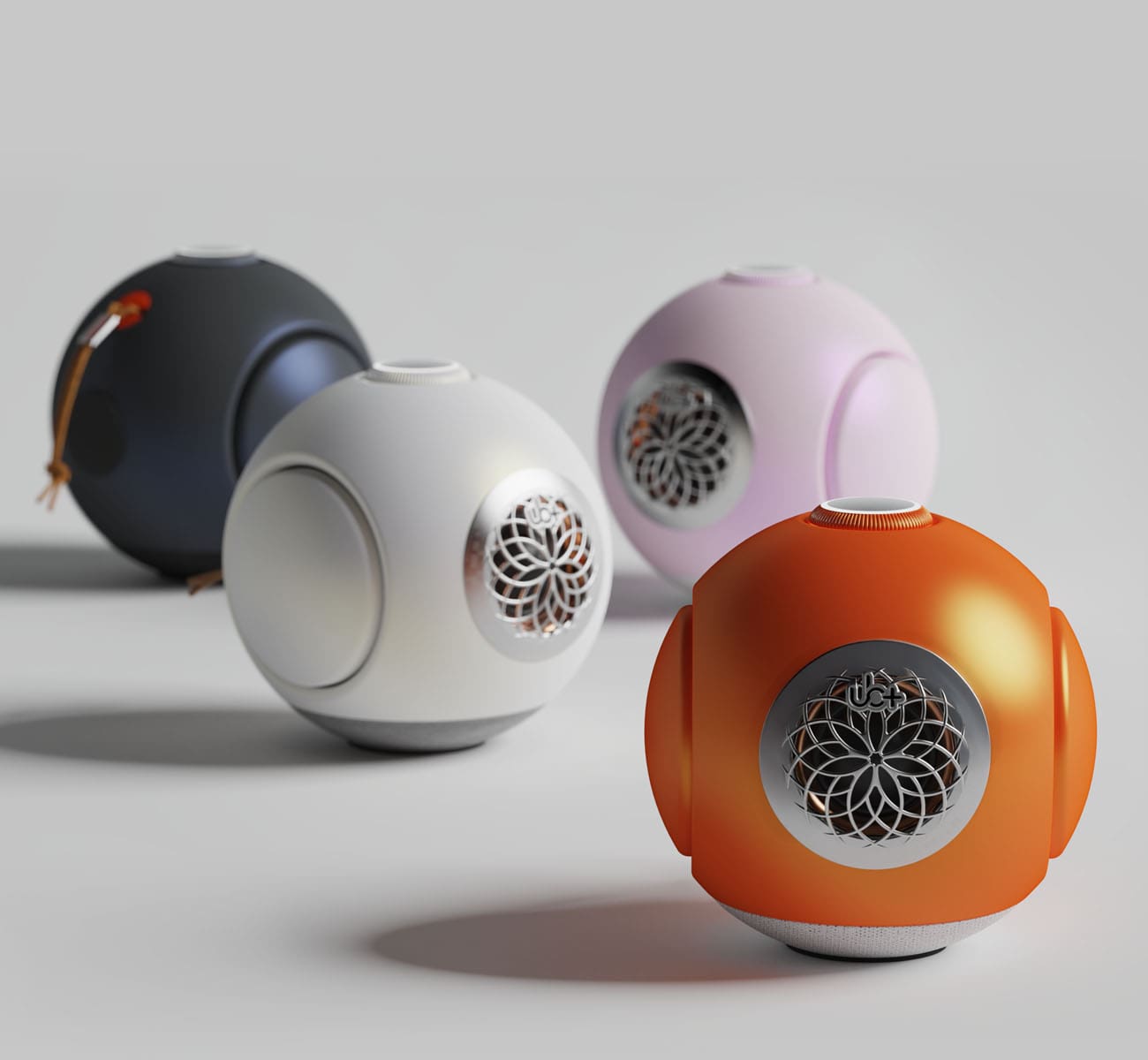
Bass is the foundation of music. It shapes rhythm, creates emotional weight, and gives sound its physical presence. Yet when people search for bass wireless speakers, they often encounter products that promise power but deliver distortion, boominess, or fatigue after just a few songs.
True bass is not about volume alone. It’s about control, balance, and how low frequencies interact with space, air, and enclosure design. As wireless speakers continue to replace traditional audio systems in homes and shared environments, the challenge becomes clear: how do you deliver deep, satisfying bass without wires, large cabinets, or compromised sound quality?
This is where thoughtful acoustic engineering matters and where products like the UB+ dB1 DoubleBass redefine what bass wireless speakers can achieve.
Why Bass Is the Hardest Part of Wireless Speaker Design
Low frequencies are demanding. Bass wavelengths are long, which means they require space, air movement, and structural stability to reproduce accurately. In wired systems, large enclosures and powerful amplifiers help manage this. In wireless speakers, designers face additional constraints: compact size, battery power, heat management, and portability.
Many wireless speakers attempt to compensate with digital processing or exaggerated tuning. While this may create the impression of bass at first listen, it often leads to muddy sound, rattling enclosures, or listener fatigue over time.
High-quality bass wireless speakers approach the problem differently. Instead of forcing bass out of an unsuitable design, they shape the enclosure, airflow, and resonance so bass can emerge naturally.
What Defines a Great Bass Wireless Speaker?
Before focusing on any specific product, it’s important to understand what truly separates good bass from bad bass in wireless audio.
A well-designed bass wireless speaker delivers low frequencies that feel deep yet controlled. Bass notes should have shape and texture, not just weight. You should hear the difference between a bass guitar and a kick drum, not a single low-frequency thump.
Equally important is integration. Bass should support vocals and instruments, not overwhelm them. When bass is engineered properly, the entire soundstage feels clearer not heavier.
Finally, good bass is consistent. It doesn’t disappear at low volumes or distort at higher levels. This consistency comes from physical design choices, not marketing claims.
The UB+ dB1 DoubleBass: A Different Approach to Bass Wireless Speakers
The UB+ dB1 DoubleBass was designed with a clear goal: deliver deep, room-filling bass in a wireless speaker without sacrificing clarity, balance, or long-term listening comfort.
Rather than relying on brute force or oversized drivers, the dB1 focuses on how air moves inside the speaker and how resonance can be controlled and used musically. Its design philosophy is rooted in classical acoustics, adapted for modern wireless listening.
At the center of this approach is the speaker’s distinctive spherical enclosure.
Why Enclosure Shape Matters for Bass
Most wireless speakers use boxy or cylindrical designs because they are easy to manufacture. Acoustically, however, flat surfaces create internal reflections that interfere with bass reproduction. These reflections cause standing waves areas where sound energy builds up unevenly leading to boomy or hollow bass.
A spherical enclosure behaves differently.
Inside a sphere, sound waves expand evenly in all directions. There are no parallel walls to trap energy or reflect it directly back at the driver. Internal air pressure distributes naturally, reducing distortion at the source.
This is why spherical chambers are studied in acoustic research and why the dB1 DoubleBass uses this geometry to support its low-frequency performance. The enclosure itself becomes part of the bass system, not an obstacle to overcome.
Helmholtz Resonance: Turning Air into an Acoustic Asset
The dB1 DoubleBass design draws inspiration from the Helmholtz resonator a principle used in musical instruments and acoustic tuning for centuries. A Helmholtz resonator works by trapping air inside a chamber and allowing it to move through a controlled opening, reinforcing specific low-frequency resonances.
In the dB1, this concept is integrated into the speaker’s internal structure. The spherical cavity traps air evenly, while controlled release points allow low frequencies to be reinforced with precision rather than excess.
This approach transforms internal air pressure into a source of musical energy. Instead of fighting resonance, the speaker shapes and uses it. The result is bass that feels natural, deep, and composed qualities often missing from compact bass wireless speakers.
DoubleBass Symmetrical Passive Radiators: Power Without Waste
One of the defining features of the dB1 DoubleBass is its use of symmetrical passive radiators. Passive radiators allow a speaker to extend bass response without increasing driver size or power consumption, making them ideal for wireless designs.
In many speakers, however, passive radiators are asymmetrical, which can introduce cabinet vibration and energy loss. The dB1 solves this by placing radiators on opposing sides of the enclosure, moving in equal and opposite motion.
This symmetry cancels out mechanical forces, stabilizing the speaker body and ensuring that energy is converted into sound rather than vibration. Bass becomes tighter, cleaner, and more efficient.
For the listener, this means bass that feels solid and impactful without rattling or unwanted noise one of the key reasons the dB1 stands out among bass wireless speakers.
Downward-Firing Driver: Bass That Fills the Room
At the core of the DoubleBass system is a downward-firing mid-bass driver. Instead of projecting sound directly outward, the driver energizes the internal air volume first. Pressure builds evenly within the spherical enclosure before being released through the passive radiators.
This method amplifies harmonic content without pushing the driver to its limits. It allows multiple sound waves to form cohesively, resulting in bass that extends low while remaining controlled.
The practical benefit is bass that fills a room evenly rather than blasting from a single direction. Whether you’re listening close up or across the space, the low frequencies feel consistent and immersive.
Bass Without Fatigue: Why Balance Matters
One of the biggest problems with poorly tuned bass wireless speakers is listening fatigue. Overemphasized low frequencies can overwhelm the ears, mask detail, and make long sessions uncomfortable.
The dB1 DoubleBass avoids this by prioritizing balance. Bass is deep, but it doesn’t dominate. Midrange clarity remains intact, allowing vocals and instruments to breathe. High frequencies stay clean without harshness.
This balance is especially important for modern listening habits, where speakers are used for hours at a time for music, podcasts, films, and calls. A bass wireless speaker should enhance the experience, not exhaust the listener.
Wireless Freedom Without Compromising Sound
Wireless convenience often comes with sonic compromises, especially in the low end. Compression, limited power, and compact designs all challenge bass performance.
The dB1 DoubleBass demonstrates that wireless does not have to mean weak. By combining intelligent enclosure design, controlled resonance, and efficient bass amplification, it delivers performance that rivals much larger systems.
This makes it ideal for modern living spaces where simplicity, aesthetics, and sound quality must coexist.
Who Are Bass Wireless Speakers Like dB1 For?
The dB1 DoubleBass appeals to listeners who value musicality over gimmicks. It’s designed for people who want bass they can feel, but also detail they can hear.
It suits shared spaces, creative studios, living rooms, and environments where sound should fill the room evenly rather than target a single listening position. It also resonates with listeners who appreciate design as much as performance where the speaker is part of the space, not something to hide.
Why Bass Quality Is More Important Than Bass Quantity
In the search for bass wireless speakers, it’s easy to focus on numbers wattage, size, or exaggerated claims. But bass quality is what defines the listening experience over time.
Well-engineered bass supports music emotionally. It creates tension, release, warmth, and rhythm. When done right, it disappears into the performance, leaving only the music behind.
The UB+ dB1 DoubleBass embodies this philosophy. Its bass is not designed to impress in five seconds it’s designed to satisfy for years.
Final Thoughts: Rethinking Bass Wireless Speakers
As wireless audio continues to evolve, the demand for better bass will only grow. But better bass doesn’t come from pushing harder it comes from designing smarter.
The dB1 DoubleBass shows what’s possible when enclosure shape, acoustic theory, and modern engineering work together. By respecting how sound behaves naturally, it delivers bass that feels grounded, musical, and refined.
For anyone searching for bass wireless speakers that offer depth without distortion and power without fatigue, the dB1 represents a thoughtful, future-ready approach to sound.