

Artificial Intelligence Market Scope and Overview
The Artificial Intelligence Market has emerged as a transformative force across various industries, revolutionizing how businesses operate, enhance customer experiences, and drive innovation. Companies are integrating AI technologies, including machine learning, natural language processing, and robotics, into various applications, making processes more efficient and data-driven. As organizations strive to leverage AI for competitive advantage, the market is witnessing unprecedented growth and diversification. This article explores the competitive landscape, market segmentation, strengths, and opportunities for growth within the AI market, providing insights into its future potential.
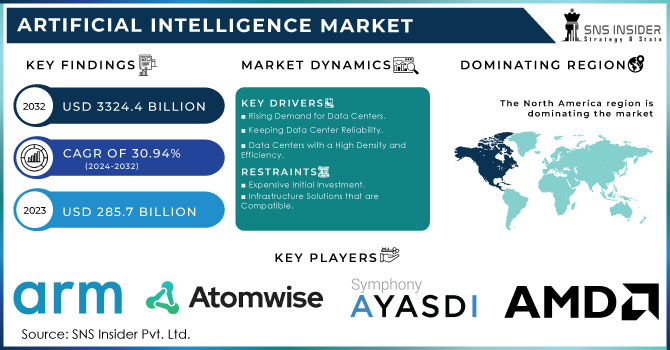
Competitive Analysis
The dynamic competitive landscape of the AI market features numerous players vying for market share. Key players include industry giants like IBM Watson Health, NVIDIA Corporation, Microsoft, and Advanced Micro Devices, each bringing unique strengths to the table.
These companies are investing heavily in research and development to enhance their AI capabilities, resulting in a constantly evolving competitive landscape. Partnerships and collaborations between established companies and startups are also becoming more prevalent, driving innovation and accelerating the adoption of AI solutions across various industries.
Artificial Intelligence Market Segmentation
The main segmentation includes components, functions, deployment models, and industries.
A) By Component
- Hardware: The hardware segment encompasses physical devices and infrastructure necessary for AI applications. This includes GPUs, specialized chips, servers, and storage solutions that facilitate AI processing. The demand for high-performance hardware is surging as organizations seek to run complex AI algorithms and handle large volumes of data efficiently.
- Software/Platform: The software/platform segment includes AI algorithms, frameworks, and platforms that enable developers to build AI applications. This category features machine learning frameworks (such as TensorFlow and PyTorch), natural language processing tools, and robotic process automation (RPA) solutions. The software market is expected to grow significantly as more businesses adopt AI technologies for various applications.
- Services: AI services encompass consulting, integration, and support services that assist organizations in implementing and optimizing AI solutions. This includes AI strategy development, custom solution design, and ongoing maintenance. As businesses increasingly seek expertise in AI deployment, the demand for these services is projected to rise.
B) By Function
- Human Resources: AI is transforming HR functions by automating recruitment processes, enhancing employee engagement, and improving talent management. AI-driven analytics can help organizations identify the best candidates and optimize workforce performance.
- Marketing & Sales: AI tools are being used to analyze consumer behavior, personalize marketing campaigns, and enhance customer interactions. Predictive analytics and recommendation systems powered by AI enable businesses to tailor their offerings to meet customer needs effectively.
- Product/Service Deployment: AI facilitates efficient product and service deployment through automation and data analysis. Companies can leverage AI to streamline supply chain operations, manage inventory, and enhance logistics.
- Service Operation: In service operations, AI is utilized for process optimization, monitoring, and decision-making. This includes using AI to improve customer service through chatbots and virtual assistants, resulting in faster response times and increased customer satisfaction.
- Risk Management: AI algorithms can analyze vast amounts of data to identify potential risks and predict future outcomes. This is particularly valuable in industries like finance and insurance, where risk assessment is critical for decision-making.
- Others: The “others” category encompasses various functions where AI is applied, including fraud detection, compliance monitoring, and data analysis, further demonstrating the technology’s versatility.
C) By Deployment
- Cloud: Cloud-based AI solutions offer scalability, flexibility, and accessibility, making them increasingly popular among organizations of all sizes. Cloud deployment enables businesses to leverage AI capabilities without investing heavily in on-premises infrastructure.
- On-Premises: On-premises deployment involves installing AI solutions within an organization’s existing infrastructure. This approach is often favored by businesses with strict data security and compliance requirements, particularly in sensitive industries like healthcare and finance.
D) By Industry
- Healthcare: AI applications in healthcare include predictive analytics for patient outcomes, automated diagnostics, and personalized treatment plans. The potential to enhance patient care and reduce costs drives significant investment in AI technologies within this sector.
- Retail: Retailers are using AI to enhance customer experiences, optimize inventory management, and improve supply chain efficiency. AI-powered recommendation engines and personalized marketing strategies are key drivers of growth in this industry.
- IT & Telecom: AI technologies are being deployed to enhance network management, optimize resource allocation, and improve customer service in the IT and telecommunications sectors. Automation of routine tasks and predictive maintenance are critical applications in this industry.
- BFSI (Banking, Financial Services, and Insurance): AI is revolutionizing the BFSI sector by improving risk assessment, fraud detection, and customer service. Banks and financial institutions are leveraging AI-driven analytics to enhance decision-making and operational efficiency.
- Automotive: The automotive industry is witnessing the integration of AI in autonomous vehicles, predictive maintenance, and enhanced driver experiences. AI technologies are playing a pivotal role in shaping the future of transportation.
- Others: The “others” category encompasses various industries where AI is making an impact, including manufacturing, agriculture, and education, highlighting the technology’s diverse applications.
Strengths of the Artificial Intelligence Market
Several strengths contribute to the growth and sustainability of AI Market:
- Continuous innovations in AI algorithms, hardware, and software are driving market expansion. The pace of research and development is accelerating, leading to the creation of more sophisticated and effective AI solutions.
- As businesses seek to improve efficiency and reduce operational costs, the demand for AI-driven automation solutions is rising. AI technologies enable organizations to streamline processes, minimize human error, and enhance productivity.
- The ability of AI to analyze vast amounts of data and derive actionable insights empowers organizations to make informed decisions. This data-driven approach is becoming increasingly essential for staying competitive in today’s fast-paced business environment.
- AI’s versatility allows various sectors, from healthcare to finance, to apply it, driving widespread adoption. As more industries recognize AI’s potential, the market is expected to keep expanding.
- Venture capital and corporate investments in AI startups and technologies are surging, providing the necessary funding for innovation and growth. This influx of capital is enabling companies to scale their AI solutions and reach new markets.
Opportunities for Artificial Intelligence Market Growth
Several opportunities exist for growth within the AI market:
- The increasing digitalization and smartphone penetration in emerging markets present significant growth opportunities for AI companies. As a result, these regions are ripe for AI adoption, particularly in sectors like healthcare, retail, and agriculture.
- Collaborations between AI startups and established enterprises are expected to increase, driving innovation and enhancing product offerings. Strategic partnerships can help companies leverage complementary strengths and expand their market presence.
- Continued investment in R&D will enable companies to develop cutting-edge AI technologies and solutions. As AI evolves, organizations that prioritize innovation will maintain a competitive edge.
- As AI becomes more pervasive, addressing ethical concerns related to bias, privacy, and transparency will be crucial. Companies that prioritize ethical AI practices and develop responsible solutions will gain consumer trust and loyalty.
- The convergence of AI with other emerging technologies, such as blockchain and IoT, presents opportunities for innovative applications and solutions. This integration can enhance the capabilities of AI systems and drive new business models.
Conclusion
The artificial intelligence market is poised for significant growth as organizations increasingly recognize the value of AI technologies in driving efficiency, innovation, and customer satisfaction. With major players like IBM, NVIDIA, and Microsoft leading the charge, the market is evolving rapidly, characterized by diverse applications and robust competitive dynamics. The segmentation of the market by components, functions, deployment models, and industries reveals the multifaceted nature of AI, highlighting its potential to transform various sectors.
As the market continues to expand, opportunities for growth abound, particularly in emerging markets, collaborative ventures, and ethical AI practices. Companies that embrace innovation and invest in research and development will position themselves to capitalize on the growing demand for AI solutions. Looking ahead, the AI market is poised to reshape industries, improve decision-making, and enhance overall quality of life, making it one of the most exciting technological frontiers today.
Table of Contents
- Introduction
- Industry Flowchart
- Research Methodology
- Market Dynamics
- Impact Analysis
- Impact of Ukraine-Russia war
- Impact of Economic Slowdown on Major Economies
- Value Chain Analysis
- Porter’s 5 Forces Model
- PEST Analysis
- Artificial intelligence Market Segmentation by Component
- Artificial intelligence Market Segmentation by Function
- Artificial intelligence Market Segmentation by Function
- Artificial intelligence Market Segmentation by Industry
- Regional Analysis
- Company Profile
- Competitive Landscape
- USE Cases and Best Practices
- Conclusion
Contact Us:
Akash Anand – Head of Business Development & Strategy
info@snsinsider.com
Phone: +1-415-230-0044 (US) | +91-7798602273 (IND)
About Us
SNS Insider is one of the leading market research and consulting agencies that dominates the market research industry globally. Our company’s aim is to give clients the knowledge they require in order to function in changing circumstances. In order to give you current, accurate market data, consumer insights, and opinions so that you can make decisions with confidence, we employ a variety of techniques, including surveys, video talks, and focus groups around the world.
Read Our Other Reports:
Product Life Cycle Management (PLM) Market Size
Sales Training Software Market Trends
Online Event Ticketing Market Forecast
Project Portfolio Management Industry
Revenue Cycle Management (RCM) Market Report