
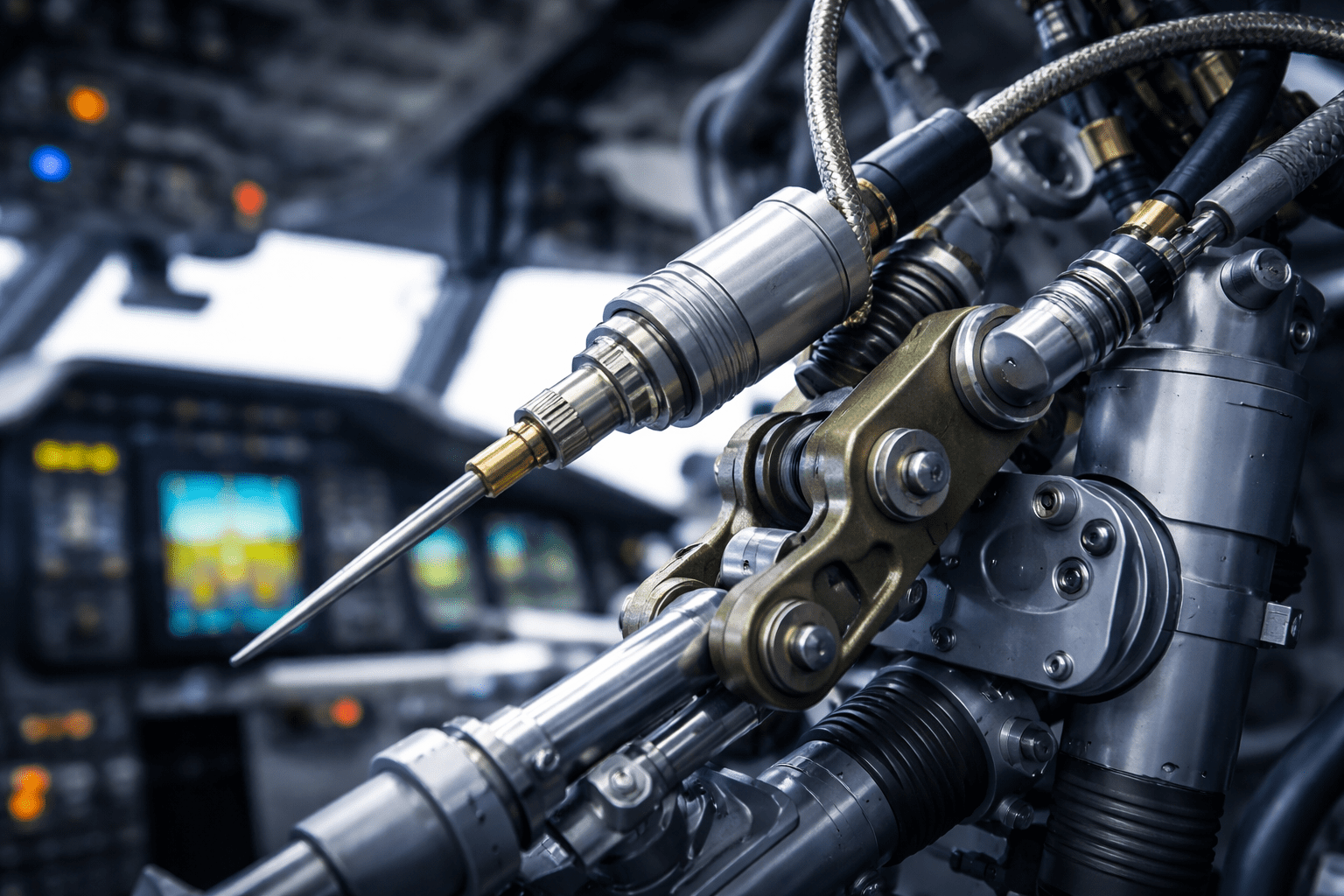
The aerospace industry operates on precision. Every movement inside an aircraft must be measured, verified, and controlled with absolute accuracy. Whether it is the extension of landing gear, the adjustment of wing flaps, or the operation of hydraulic actuators, each function depends on reliable data.
This is where aircraft position sensors play a critical role.
Position sensors are essential components that allow aircraft systems to monitor mechanical movement in real time. These devices ensure that every moving part is functioning exactly as intended, which is crucial for maintaining safety, performance, and operational efficiency.
As aviation technology continues to evolve, the demand for highly accurate and durable position sensing solutions is growing rapidly across commercial aviation, defense systems, and advanced aerospace engineering projects.
Understanding Aircraft Position Sensors
An aircraft position sensor is designed to detect and measure the position or displacement of a mechanical component. It converts physical movement into an electrical signal that can be interpreted by onboard systems.
This data allows flight control systems, maintenance teams, and onboard computers to determine whether components are operating correctly.
For instance, during landing, the aircraft must confirm that the landing gear is fully deployed and securely locked. Position sensors provide this confirmation by measuring the exact position of the landing gear mechanism.
Without accurate sensing technology, aircraft systems would lack the feedback required to ensure safe operation.
Why Position Sensors Are Critical in Aerospace
Aircraft operate in highly demanding environments where even the smallest error can have serious consequences. Position sensors help eliminate uncertainty by providing continuous and precise feedback.
Their importance in aerospace systems includes:
- Ensuring accurate movement of mechanical components
- Supporting automated flight control systems
- Enhancing overall aircraft safety
- Providing real-time operational data
- Detecting system faults before failure occurs
These capabilities make position sensors a fundamental part of modern aircraft design and engineering.
How Aircraft Position Sensors Work
Aircraft position sensors function by detecting mechanical movement and converting it into electrical signals.
The process typically involves sensing displacement through physical, electromagnetic, or optical methods. This movement is then translated into a signal that is transmitted to control systems, where it is analyzed to determine the exact position of the component.
Different sensing technologies use different principles, but the objective remains the same — to provide accurate and reliable position data under all operating conditions.
Types of Aircraft Position Sensors
Various types of position sensors are used in aerospace applications, each suited for specific environments and requirements.
Linear Position Sensors
Linear sensors measure movement along a straight path. These are commonly used in systems where components move in a linear direction, such as hydraulic actuators and landing gear assemblies.
They are valued for their precision and ability to deliver consistent measurements over a defined range.
Rotary Position Sensors
Rotary sensors measure angular movement or rotation. These sensors are typically used in engine systems, control surfaces, and steering mechanisms.
They provide critical data about rotational position, enabling smooth and accurate system operation.
LVDT Sensors
Linear Variable Differential Transformer sensors are widely used in aerospace due to their high accuracy and reliability.
They operate without direct physical contact between components, which reduces wear and increases lifespan. Their ability to perform under extreme conditions makes them ideal for critical aircraft systems.
Potentiometric Sensors
These sensors measure position based on changes in electrical resistance. While simple and cost-effective, they involve physical contact, which can lead to wear over time.
They are generally used in less demanding applications where ultra-high precision is not required.
Optical Position Sensors
Optical sensors use light-based technology to detect movement. They offer high precision and fast response times, making them suitable for advanced avionics and high-performance systems.
Applications of Aircraft Position Sensors
Position sensors are integrated into multiple aircraft systems where precise monitoring is essential.
Landing Gear Monitoring
Landing gear systems require exact positioning to ensure safe takeoff and landing. Sensors confirm whether the gear is fully deployed or retracted.
Flight Control Systems
Control surfaces such as flaps, rudders, and ailerons rely on position sensors to maintain stability and control during flight.
Hydraulic Actuators
Hydraulic systems are responsible for moving many mechanical parts within an aircraft. Sensors monitor actuator movement to ensure proper functionality.
Engine Systems
Position sensors are used to monitor valves and other engine components, helping maintain optimal performance and efficiency.
Electrical and Avionics Systems
Modern aircraft depend on complex electrical systems. Position sensors help monitor switches, relays, and system responses to ensure reliable operation.
Challenges in Aerospace Sensor Systems
Despite their advantages, integrating position sensors into aircraft systems requires careful planning.
Engineers must consider factors such as:
- Environmental conditions like temperature and vibration
- Compatibility with existing systems
- Calibration and long-term accuracy
- Space and weight constraints
Addressing these challenges ensures optimal sensor performance and long-term reliability.
Future of Aircraft Position Sensors
The future of aerospace technology is closely linked to advancements in sensor systems.
Emerging trends include the development of smart sensors with built-in diagnostics, integration with digital monitoring platforms, and improved materials for enhanced durability.
These innovations are expected to support predictive maintenance, reduce operational risks, and improve aircraft efficiency.
Conclusion
Aircraft position sensors are essential to the safe and efficient operation of modern aerospace systems. They provide the precise data needed to monitor mechanical movement, support automated controls, and maintain system reliability.
From landing gear and flight control systems to engines and avionics, these sensors play a vital role in ensuring that every component functions correctly.
As the aerospace industry continues to grow and evolve, the importance of advanced position sensing technology will only increase, making it a key element in the future of aviation engineering.