

Search visibility used to mean one thing: ranking on Google and earning clicks.
That model is breaking.
AI answer engines now deliver results without sending traffic. Brands still ranking well are disappearing from AI-generated answers. The risk isn’t losing rankings—it’s losing visibility.
This article explains AIO vs Traditional SEO, how they differ, where each wins, and why a hybrid approach is now essential.
What Is Traditional SEO? (And Why It Still Matters)
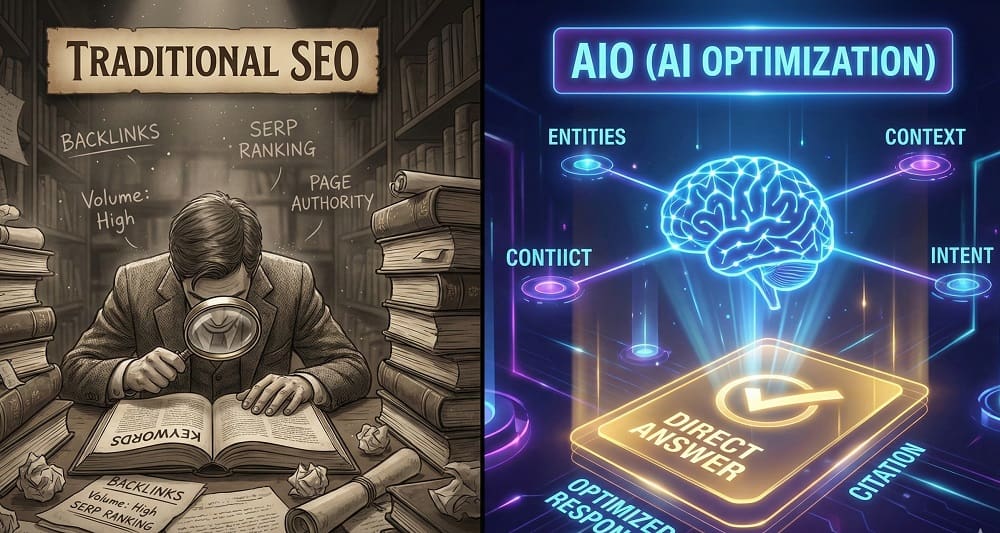
Traditional SEO focuses on ranking web pages in search engines.
It relies on predictable signals:
- Keywords and keyword intent
- Backlinks and authority
- Technical performance
- Content relevance
The goal is simple: rank higher, earn clicks, drive traffic.
How traditional SEO works
Search engines crawl pages, analyze relevance, and rank results.
Higher rankings usually mean more clicks.
Where traditional SEO still wins
- High-intent commercial searches
- Long-form educational content
- Stable traffic generation
Traditional SEO isn’t dead. It’s just incomplete.
What Is AIO (AI Optimization)? A Clear Definition
AIO (AI Optimization) is the practice of structuring content so AI systems can understand, trust, and cite it in generated answers.
Unlike SEO, AIO is not about rankings.
It’s about being selected.
What AIO optimizes for
- Entity clarity
- Contextual accuracy
- Authority signals
- Direct answers
AI tools like ChatGPT, Gemini, and Perplexity don’t rank pages.
They assemble answers.
AIO vs Traditional SEO: Key Differences (Side-by-Side)
| Aspect | Traditional SEO | AIO (AI Optimization) |
|---|---|---|
| Primary Goal | Rankings and clicks | AI citations and visibility |
| Core Signal | Keywords | Entities and context |
| Output | SERP listings | AI-generated answers |
| Metrics | CTR, traffic, rankings | Mentions, citations, exposure |
| Audience Path | Search → website | Question → answer → source |
The difference isn’t small.
It’s structural.
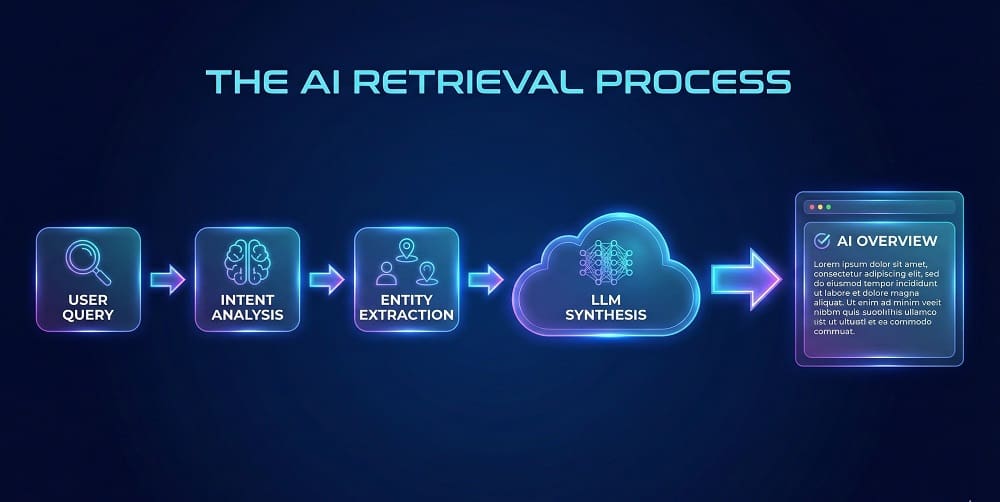
How AI Search Engines Decide What Content to Use
AI answer engines follow a different logic.
They evaluate:
- Entity relevance
- Context alignment
- Source authority
- Factual consistency
What AI systems prioritize
- Clear definitions
- Structured explanations
- Trustworthy sources
- Consistent topical coverage
A well-written page can rank first and still be ignored by AI.
Why Traditional SEO Alone Is No Longer Enough
Zero-click searches are now normal.
Google AI Overviews and chat-based search often resolve queries instantly. Users get answers without visiting sites.
The hidden risk
- You rank well
- Your traffic drops
- AI answers replace your page
SEO-only strategies optimize for clicks that may never happen.
SEO Metrics vs AIO Visibility Metrics
SEO success is measurable and familiar.
AIO success is quieter but powerful.
Traditional SEO metrics
- Impressions
- Rankings
- Click-through rate
- Conversions
AIO visibility signals
- AI citations
- Brand mentions
- Inclusion in answers
- Authority recognition
Visibility without clicks still builds demand.
The Smart Approach: A Hybrid AIO + SEO Strategy
The real question isn’t SEO or AIO.
It’s how they work together.
When to use SEO
- Product pages
- Transactional searches
- Competitive keywords
When to use AIO
- Definitions
- Comparisons
- Thought leadership
- Industry explanations
Sites like https://khalidseo.com/ focus on this hybrid model—combining traffic growth with AI-native visibility.
Who Should Prioritize AIO Right Now?
AIO matters most if:
- Your content explains complex topics
- You rely on authority and trust
- You publish educational or advisory content
Industries seeing early gains include:
- SaaS
- Consulting
- Finance
- Healthcare
- SEO and digital strategy
Final Verdict: AIO vs Traditional SEO in 2026 and Beyond
Traditional SEO still drives demand.
AIO controls distribution.
Brands that ignore AIO will rank yet remain unseen.
Brands that combine both will own search and AI answers.
The future belongs to hybrid visibility.
FAQ: AIO vs Traditional SEO
What is the difference between AIO and traditional SEO?
Traditional SEO focuses on rankings and traffic, while AIO focuses on making content understandable and citable by AI answer engines.
SEO drives clicks.
AIO drives visibility inside AI-generated responses.
Is SEO becoming obsolete because of AI?
No. SEO still matters, but it no longer controls visibility alone.
AI systems often bypass search results.
SEO without AIO limits reach.
How do AI search engines rank content?
They don’t rank pages—they evaluate authority, context, and entity relevance.
AI selects sources that best answer the question clearly and accurately.
What is AIO optimization in simple terms?
AIO means structuring content so AI tools can trust and reuse it in answers.
Clear sections, entity focus, and authority signals matter most.
Should businesses focus on AIO or SEO?
Businesses should combine both into a hybrid strategy.
SEO captures demand.
AIO protects future visibility.
