
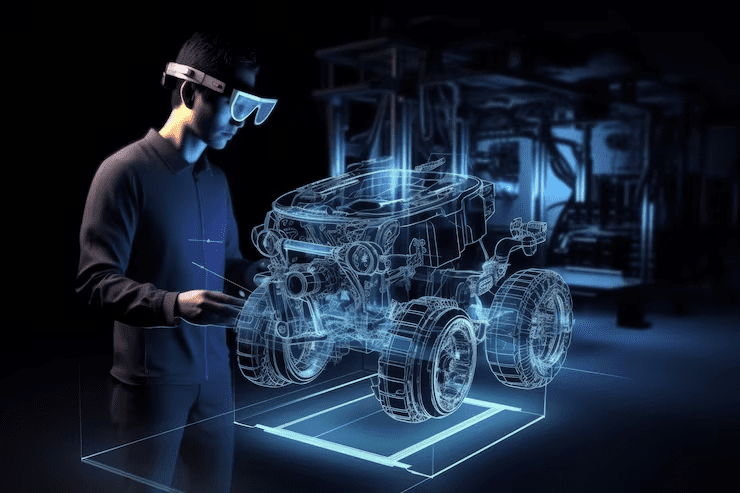
Artificial Intelligence (AI) is transforming the automotive industry by enhancing safety, efficiency, and the overall driving experience. From autonomous vehicles to predictive maintenance, AI-powered innovations are redefining how vehicles are designed, manufactured, and operated. Let’s explore how AI is driving this digital transformation, its key benefits, and top real-world use cases.
How AI Is Transforming the Automotive Industry
The automotive industry is leveraging AI to make vehicles smarter, safer, and more sustainable. Automakers and tech companies are integrating AI-driven algorithms for object detection, route optimization, and driver-assistance systems. Machine learning and computer vision allow vehicles to analyze massive amounts of data from sensors and cameras to make real-time driving decisions.
In manufacturing, AI enhances production lines with predictive analytics, quality control, and robotic automation — reducing errors and improving efficiency. This transformation is leading to connected, self-learning vehicles that adapt to users’ behaviors and road conditions.
Key Benefits of AI in the Automotive Industry
1. Enhanced Vehicle Safety
AI-powered systems such as Advanced Driver Assistance Systems (ADAS) detect potential hazards, monitor driver behavior, and help prevent accidents. Features like automatic braking, lane departure warnings, and pedestrian detection rely heavily on AI and computer vision.
2. Predictive Maintenance
AI analyzes vehicle data to predict when parts might fail or require servicing. This proactive approach minimizes unexpected breakdowns, reduces maintenance costs, and extends the lifespan of vehicles.
3. Improved Manufacturing Efficiency
AI-powered robots and automation tools streamline production by performing repetitive tasks with precision. AI also supports quality inspection systems that detect flaws faster and more accurately than human inspectors.
4. Personalized Driver Experience
With AI, vehicles can learn user preferences for seat adjustments, infotainment, and climate control. Voice assistants like Alexa Auto and Google Assistant enhance in-car experiences through natural language processing (NLP).
5. Energy Efficiency and Sustainability
AI contributes to eco-friendly transportation by optimizing fuel consumption, managing battery performance in electric vehicles (EVs), and supporting energy-efficient routing.
Top Use Cases of AI in the Automotive Sector
1. Autonomous Vehicles
Self-driving cars represent the most prominent AI application in the automotive sector. AI enables real-time object detection, decision-making, and navigation to ensure safe and efficient autonomous driving.
2. Smart Manufacturing
AI-powered robots assist in assembling, painting, and welding car parts with precision. Predictive analytics also help manufacturers forecast demand and optimize inventory.
3. Driver Monitoring Systems
AI-based cameras track driver fatigue and distraction, issuing alerts or taking corrective actions to improve safety on the road.
4. Predictive Maintenance Systems
By analyzing sensor data, AI predicts mechanical failures before they occur, helping manufacturers and drivers avoid costly repairs.
5. Connected and Smart Vehicles
AI connects vehicles to the Internet of Things (IoT), enabling communication between vehicles (V2V) and infrastructure (V2X). This connectivity enhances navigation, reduces traffic congestion, and improves road safety.
The Future of AI in the Automotive Industry
As AI continues to evolve, the automotive industry is set to experience unprecedented growth in automation, electric mobility, and data-driven decision-making. From autonomous fleets to AI-powered traffic management systems, the future of transportation will be intelligent, safe, and sustainable.
Businesses investing in AI automotive solutions today are paving the way for smarter mobility and competitive advantage in the evolving digital era.
