
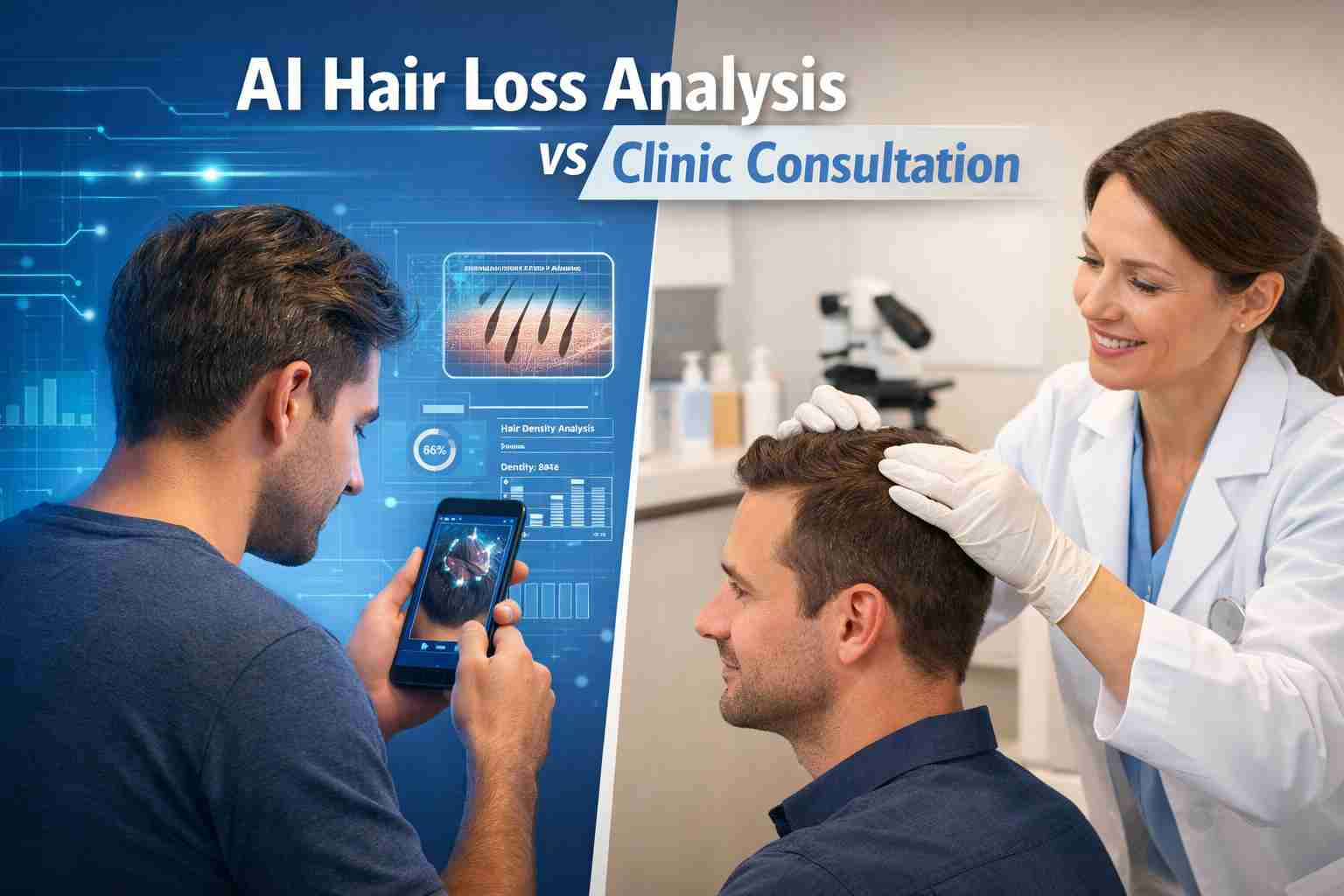
Hair loss often begins with a small moment of doubt. Maybe the hairline looks slightly different in photos. Maybe the crown seems thinner under bright light. For many people, the first reaction is not to book a treatment right away. It is to figure out what is actually going on.
That is where the comparison between AI hair loss analysis and a clinic consultation becomes important. Both can help, but they are not built for the same purpose. One is designed for speed and convenience. The other is designed for deeper evaluation and treatment guidance.
Why more people are trying AI first
AI hair loss analysis has become appealing because it gives people a simple way to check visible changes without leaving home. A person can use a phone or upload photos and get an early assessment in a short time. That makes the process feel less intimidating, especially for someone who is only starting to notice thinning.
A lot of people do not want to jump straight into a clinic appointment. Some are still trying to understand whether their concern is real or just normal hairline change. Others want a rough idea of their hair loss pattern before speaking with a specialist. In those cases, AI feels like an easier first step.
What AI hair loss analysis is good at
The biggest advantage of AI is accessibility. It helps people get quick insight into visible signs such as temple recession, crown thinning, and overall changes in density. That kind of early feedback can be useful when someone wants clarity but is not yet ready for a medical visit.
AI can also help users understand how their current hair pattern compares to common stages of male hair loss. For someone thinking ahead about possible treatments, that early estimate can make the next step feel less confusing.
Another benefit is tracking. Hair loss usually happens gradually, so it can be difficult to judge progress just by memory. With repeated photo analysis over time, AI tools can help users notice whether their hair is holding steady, getting thinner, or showing improvement after they start treatment.
Why clinic consultations still matter
A clinic consultation offers something much more detailed. A trained professional can look beyond the photo and consider the full picture. That includes age, family history, scalp health, pattern of loss, and possible underlying causes.
Not all hair loss comes from the same issue. One person may be dealing with hereditary pattern baldness, while another may be experiencing shedding linked to stress, hormones, illness, or scalp conditions. A clinic is in a much better position to tell the difference.
This matters even more when the person wants real treatment guidance. Whether someone is considering medication, PRP, or a transplant, they need more than a quick visual estimate. They need an expert opinion on what is realistic, what is appropriate, and what kind of result they can actually expect.
Where AI has limits
AI analysis is helpful, but it does have boundaries. It can study what is visible in an image, but it cannot replace a full medical evaluation. Photo quality, lighting, angle, hairstyle, and even camera position can affect the result.
That means AI works best as a first look rather than a final answer. It can point someone in the right direction, but it cannot fully explain every possible cause of hair loss or build a complete treatment plan on its own.
Anyone using AI for hair loss should think of it as an early guide, not as a replacement for professional care.
How HairLine AI can help
HairLine AI can be useful for people who want a quick and private way to understand their current hair situation. It gives users an easier starting point by analyzing photos and helping them make sense of visible signs of hair loss. That can be especially helpful for someone who is unsure whether they are seeing a normal mature hairline or the beginning of more noticeable recession.
It can also help people prepare before speaking with a clinic. When users already have a clearer picture of their hairline changes, they can ask better questions and approach the consultation with more confidence. Instead of walking in with only worry, they walk in with context.
For users who value convenience, privacy, and speed, HairLine AI can be a practical first step before moving into deeper treatment discussions.
Which one makes more sense
For someone at the beginning of the journey, AI hair loss analysis often makes sense first. It is easy, fast, and useful for getting early insight without pressure. It can help people move from uncertainty to awareness.
For someone who wants diagnosis, treatment advice, or transplant planning, a clinic consultation is still the stronger option. That is where personal evaluation and professional judgment matter most.
In reality, the best path is often a combination of both. AI can help someone understand the visible signs early. A clinic can then confirm the situation and guide the next step with more confidence.
Final thoughts
AI hair loss analysis and clinic consultations serve different roles. AI offers convenience and a fast first look. A clinic offers expertise, context, and medical direction. Used together, they can make the process of understanding hair loss feel much clearer and much less overwhelming.