
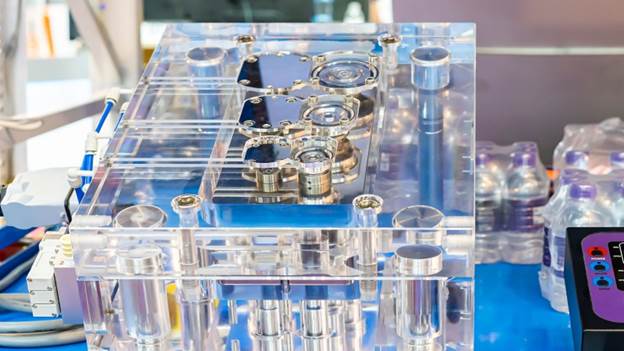
In the production of components that are visible, durable and attractive, acrylic injection molding has been one of the most popular manufacturing procedures used in production of components on a large scale. Polymethyl Methacrylate or Acrylic (PMMA) is appreciated due to the high optical clarity, strength and weather resistance. Acrylic when combined with injection molding technology is the perfect material in precision parts that apply in most industries.
This paper describes acrylic injection molding, its working process, its benefits, its applications, design, and why it has remained one of the solutions of choice among manufacturers in the world.
What is Acrylic Injection Molding?
Acrylic injection molding refers to the production procedure where high pressure molten acrylic plastic is forced into a prestructured mold. When the temperature is low and mold has solidified, then the molded part is taken out of the mold in its final form.
Using this process, manufacturers are able to manufacture complex components with high tolerances, free surface finishes as well as high transparency. Acrylic injection molding is particularly appropriate in production of a large volume where quality and uniformity are critical.
The important Characteristics of Acrylic Material
Acrylic is a thermoplastic substance with both physical and optical qualities that make it the best in injection molding.
The outstanding clarity of acrylic is one of the most important ones. Acrylic material can pass through over 90 percent of visible light and therefore it is one of the most transparent plastics. This contributes to it being a common substitute of glass in most applications.
Acrylic is also resistant to ultraviolet weather conditions. It does not turn yellow readily and does not change its appearance when it is exposed to sunlight thus making it appropriate in both indoor and outdoor products.
Moreover, acrylic is dimensionally stable and has good rigidity. Acrylic parts that are injection-molded retain their shape and size with time, and guarantee consistent performance.
The Acrylic Injection Molding Process
Acrylic injection molding process has a number of steps that are controlled to achieve high-quality outcomes.
The initial one is the preparation of materials. Pellets of acrylic have to be dried adequately prior to processing. Wetness of the material may cause any defect like bubbles, haze, or surface flaws in the end product.
This is followed by melting and injection. The acrylic pellets are dried then placed into injection molding machine where it is heated to molten state. The molten substance is then injected into the cavity of the mold at high pressure so that it can fill all details.
Upon injection, solidification and cooling commences. The acrylic is then left to solidify gradually with the help of the mould. It is important to keep the proper cooling to prevent internal stress, cracking, or warping.
And lastly the mold is opened and the part is ejected. All the ingredients are checked to verify that they are of quality, clear and of dimension.
Benefits of Acrylic Injection Moulding
There are a lot of benefits of acrylic injection molding that make it an ideal manufacturing technique.
Excellent surface finish is one of the major advantages. Glossy acrylic molded part The acrylic molded parts have a smooth and glossy finish right out of the mold, so that secondary finishing is not necessary.
High precision and repeatability is another advantage. Ijection molding enables manufacturers to manufacture high volumes of same parts with high quality and tight tolerance.
Acrylic injection molding is also economical with medium and high volume production. Tooling cost may be high at the start up but the per part cost reduces to very low once the production volume is high.
Also the acrylic components are simple to tint, polish, or coated and provide customization in the design and look.
Applications of Acrylic Injection Molding Commonly
Acrylic injection molding is applied in a very broad area of industries because of its transparency and resilience.
Light covers, interior parts, and decorative trim parts of automobiles are produced using acrylic.
Acrylic finds application in electronics in display panel, LED cover, light guide and light housing.
Acrylic components find application in the medical and healthcare industry in diagnostic devices and enclosures and in clear components like the ones found in spectacles.
Acrylic injection molding is also significant in consumer products including the cosmetic packaging, domestic products, signage and display cases.
Lighting fixtures, protective covers, and decorative panels are used in architectural and outdoor applications that need weather resistance that lasts long.
Design of Acrylic Injection Molding
Acrylic injection molding requires proper design.
There should be even wall thickness to avoid stress and inequalities in cooling. Thickness can be changed suddenly resulting in warping or cracking.
The draft angles are also significant to be able to eject the part of the mold easily. Acrylic components are generally sensitive to draft which must be sufficient to prevent surface damage.
Angular corners must be avoided because they may cause stress concentration. Fillets and rounded edges are used to enhance the strength and looks of parts.
The mold flow and gate location should be well-thought to guarantee the free flow of material and reduce the defects (e.g. weld lines or air bubbles).
Mold designers bring in experience and this will aid in ensuring best outcomes and protracted life of molds.
Problems in Acrylic Injection Molding
Despite the numerous advantages that can be seen in acrylic injection molding; there are a number of challenges that are involved in its use.
Some other plastics are brighter than acrylic and therefore, care must be taken in processing and designing to ensure there is no cracking.
It is also moisture sensitive so it is critical to dry the material and then mold.
The temperature of the processing should be strictly regulated to preserve the clarity and avoid degradation of material.
With the appropriate equipment and technical expertise, the challenges can be addressed successfully by the experienced manufacturers.
About Sincere Tech
Sincere Tech is a professional manufacturer of plastic injection molding and tooling production companies which offer quality manufacturing solutions to customers all over the globe. The company operates under the name plas.co which deals with the design of injection mold, plastic injection molding, and the production of custom plastic parts via its website plas.co.
Having many years of experience in the industry, Sincere Tech assists with projects in terms of the initial idea and creation of the mold, mass production, and the final delivery. The company is interested in precision, reliability, and cost effective solutions to the automotive, electronic, medical and consumer products industries.
Sincere Tech will strive to provide consistent quality and on time production and customer services. Through superior manufacturing technology together with the expertise of expert engineers, the company assists clients to transform ideas into dependable and high performance plastic products.
In order to get more information about the solutions of acrylic injection molding and plastic manufacturing services that are offerable by custom, visit plas.co and contact Sincere Tech to work on your next project.