

You’ve decided it’s time. No more flimsy spatulas that melt on the pan or “mystery metal” knives that couldn’t slice a ripe tomato if their life depended on it. You are ready to level up.
Investing in premium kitchen tools is a rite of passage for any home cook who has moved past the “basic survival” stage of cooking and into the realm of culinary craft. However, the world of high-end kitchenware is surprisingly easy to navigate poorly. It’s not just about spending more money; it’s about spending it on the right things.
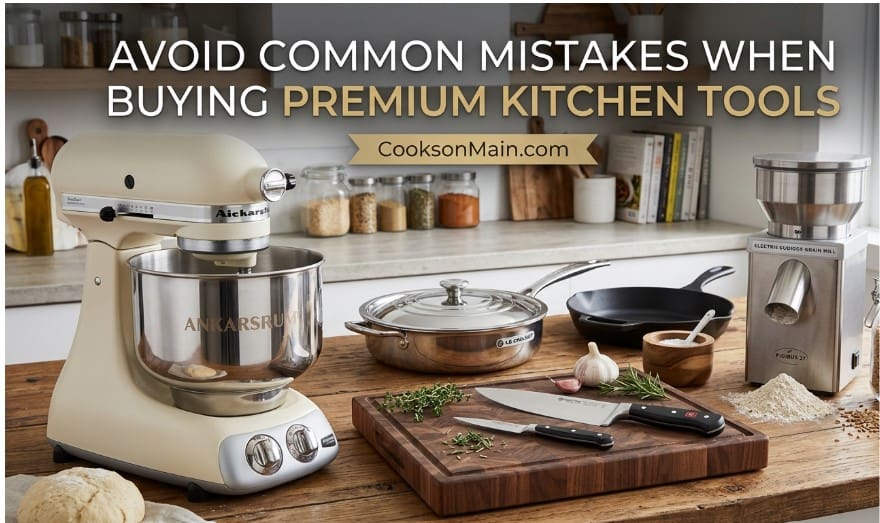
When you walk into a high-quality cookware shop, it’s easy to get dazzled by the gleaming stainless steel and the promise of professional-grade results. But without a plan, you might end up with a drawer full of gadgets you never use and a bank account that’s lighter than it should be.
1. Prioritizing Aesthetics Over Ergonomics
We’ve all been there. You see a scandinavian kitchenware piece that looks like it belongs in a modern art museum. It’s sleek, it’s matte black, and it matches your backsplash perfectly. But then you try to hold it with wet hands.
The biggest mistake is forgetting that kitchen tools are, first and foremost, extensions of your hands. A chef’s knife set might look stunning in a walnut block, but if the balance is off or the handle doesn’t fit your grip, you’ll find yourself reaching for your old, ugly knife instead.
Pro Tip: Before buying, mimic the motion of the tool. If it’s a knife, how does the “pinch grip” feel? If it’s a pan, can you comfortably lift it when it’s full of water?
2. Buying the Massive Set vs. The Individual Pieces
It’s the ultimate marketing trap: “The 22-Piece Ultimate Professional Collection!” It looks like a great value, but in reality, most home cooks only use four or five specific pans.
When you buy a massive set, you often sacrifice the quality of the individual pieces to hit a price point. Instead of a mediocre 22-piece set, you are almost always better off buying three high-quality pieces: a 12-inch skillet, a 4-quart sauté pan, and an 8-quart stockpot.
The same applies to a chef’s knife set. You don’t need a grapefruit knife or a bird’s beak paring knife on day one. Start with a high-end 8-inch chef’s knife and a serrated bread knife. You can build your collection at a dedicated cookware shop like Cooks on Main over time, ensuring every piece earns its place in your kitchen.
3. Underestimating the Learning Curve of Specialty Tools
High-end tools often require a different technique than their budget counterparts. A classic example is the stand mixer ankarsrum. If you are used to a standard planetary mixer where the head moves, the Ankarsrum—where the bowl rotates—might feel “backwards” at first.
However, this Swedish powerhouse is preferred by professional bakers because it handles heavy doughs without overheating. If you buy it and expect it to work exactly like a $100 supermarket mixer, you might get frustrated.
The same goes for a grain grinding mill. Moving from store-bought flour to milling your own with grain mills for flour is a game-changer for flavor and nutrition, but fresh flour behaves differently in recipes. It absorbs moisture at a different rate. Buying the tool is only half the journey; learning the craft is the other half.
4. Ignoring Material Science
Not all “premium” materials are created equal. You might see a copper pan and think it’s the pinnacle of cooking. While copper has incredible heat conductivity, it’s also reactive and high-maintenance.
If you do a lot of acidic cooking (tomatoes, wine sauces), you want high-grade stainless steel. If you want the perfect sear on a steak, you want carbon steel or cast iron. Don’t buy a material just because it’s expensive; buy it because it matches your cooking style.
5. Forgetting About Maintenance and Longevity
A $200 knife is only a premium kitchen tool as long as it’s sharp. If you aren’t prepared to hone your blades or have them professionally sharpened, that investment is wasted.
Similarly, many people buy a grain grinding mill but forget to check if the stones are replaceable or how to clean the internal mechanism. Premium tools are designed to last a lifetime, but they aren’t “set it and forget it” items. They require a relationship with the cook.
6. The “One-Size-Fits-All” Fallacy for Countertop Appliances
When it comes to high-end appliances, bigger isn’t always better. If you are a sourdough enthusiast, a heavy-duty stand mixer ankarsrum is a dream because of its 7-liter bowl and high-torque motor. But if you only ever make small batches of three cupcakes, a smaller, more nimble tool might serve you better.
Consider your “standard” batch size. If you’re looking at grain mills for flour, do you need a high-output electric mill for weekly bread baking, or a manual hand-crank mill for occasional specialty grains? Matching the tool’s capacity to your lifestyle prevents “appliance regret.”
7. Failing to Research the Heritage of the Brand
In the age of social media marketing, many “premium” brands are just clever packaging around mediocre products. Authentic premium kitchen tools usually come from brands with decades (or centuries) of heritage.
Whether it’s the timeless design of scandinavian kitchenware or the engineering of a German-made knife, look for brands that professionals actually use. Resources like Cooks on Main curate these legacy brands, so you know you’re getting something that has been tested in the heat of real-world kitchens.
Practical Advice: The “High-Use” Rule
If you are struggling to decide where to spend your budget, use the High-Use Rule. List the five tools you touch every single day. Usually, it’s:
- Your Chef’s Knife
- Your primary Skillet
- Your Cutting Board
- Your Salt Pig/Cellar
- Your Coffee Maker or Tea Kettle
Invest 80% of your budget into these five things. The “uni-taskers” (like avocado slicers or strawberry hullers) can stay in the bargain bin.
Conclusion
Building a professional-grade kitchen is a marathon, not a sprint. By avoiding the temptation of flashy sets and focusing on ergonomics, material quality, and your specific cooking habits, you ensure that your premium kitchen tools are investments rather than expenses.
Whether you are grinding heirloom wheat in your grain grinding mill or kneading a 2-kilo batch of dough in an Ankarsrum, the right tools should make the process more joyful, not more complicated. Take your time, do your research, and prioritize quality over quantity. Your future meals will thank you.
FAQs
1. Is a chef’s knife set better than buying individual knives? Usually, no. Most cooks only need a high-quality chef’s knife, a paring knife, and a bread knife. Buying these individually allows you to get the best quality for each specific type rather than a set that includes filler pieces you’ll never use.
2. Why should I choose a manual grain grinding mill over an electric one? Manual grain mills for flour are great for small batches and work without electricity, making them popular for off-grid living or emergency prep. However, for regular baking, an electric mill is much more convenient and provides a more consistent fine grind.
3. What makes Scandinavian kitchenware different? Scandinavian kitchenware is known for “functionalism”—the idea that a tool should be beautiful but its form must follow its function. It often features natural materials, minimalist lines, and incredible durability.
4. Can an Ankarsrum stand mixer handle more than just bread? Absolutely. While it is famous for bread dough, the stand mixer ankarsrum has attachments for everything from meat grinding and vegetable slicing to blending and cookie pressing. Its unique design makes it one of the most versatile machines on the market.
5. How do I know if a cookware shop is reputable? Look for shops that provide detailed product specifications, have a clear return policy, and carry established brands with long warranties. A good shop should feel like an expert resource, not just a checkout counter.