
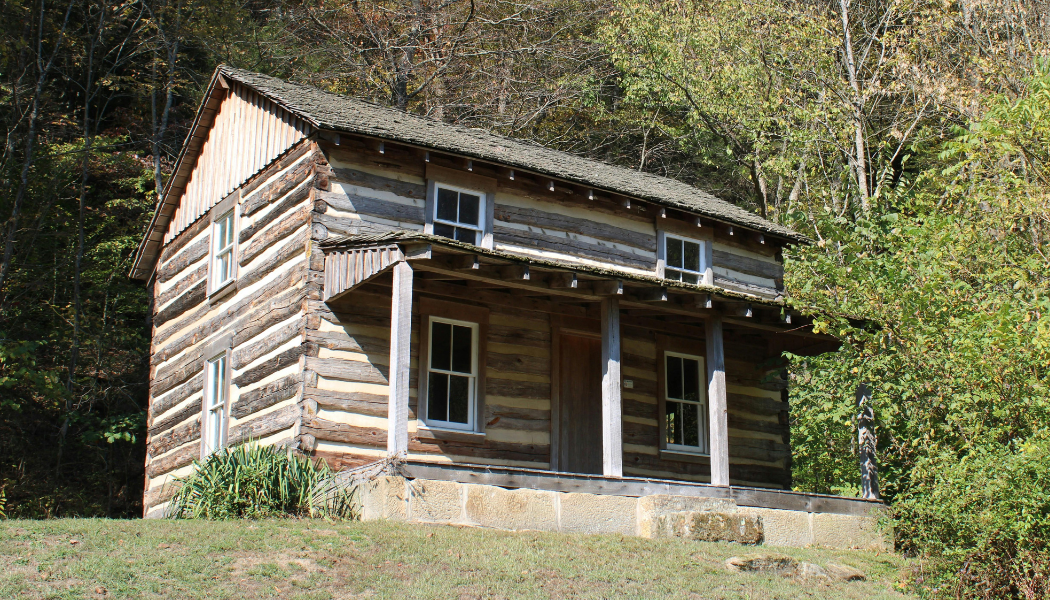
A log home is not just a house; it’s a dream. It’s a choice to live in a home that feels more organic, more grounded, and more connected to the earth. It’s a warm, rustic, and timeless sanctuary. But here is the single, hard truth that every log home owner knows: that beautiful, natural wood is in a 24/7/365 battle with the elements.
Your home’s greatest enemy is exposure. Sun, rain, snow, and insects are all in a constant, relentless assault on the logs. The only suit of armor your home has is its finish.
When that finish starts to fail—when the rich, honey-gold of the cedar fades to a dry, sad gray, or when you see water no longer beading on the logs—you are at a critical crossroads. It’s so easy to procrastinate. Refinishing a log home is a massive, high-stakes, and expensive-sounding project. It’s tempting to try and get just one more year out of it. This is a dangerous and costly gamble.
That failing finish is not just a cosmetic problem; it’s a structural one. You are leaving the door wide open for rot, insects, and catastrophic water damage. The process of refinishing is a highly technical, non-negotiable part of log home ownership. It’s a job that demands a specialized, high-performance log home finish that is engineered to be breathable, flexible, and strong.
If you’ve been putting off the project, here are five powerful, bottom-line benefits of refinishing your home.
1. It’s a Shield Against the Three Biggest Threats
A log home, at its core, is a high-performance, organic system. A failed stain is a failed immune system. Refinishing is your booster shot.
Water (The Rot-Starter): A stain with a failed sealant (or topcoat) is no longer repelling water. It’s absorbing it. A log that is constantly damp is a breeding ground for fungus and rot. A new, high-quality finish is hydrophobic—it forces water to bead up and roll right off.
Sun (The Real Killer): The sun’s UV rays are a huge enemy of wood. UV radiation destroys the lignin in the wood, breaking down its fibers and turning it a dead gray. The pigment (the color) in your new stain is the sunscreen for your home. It blocks the UV rays and protects the wood underneath. This is why clear coats are a terrible idea for an exterior log.
Insects (The Invaders): As a log ages and its old finish cracks, it opens up thousands of tiny checks and fissures. These are open-door invitations for carpenter bees, ants, and other wood-boring insects. A new, high-quality finish, properly chinked and sealed, is a physical, pest-resistant barrier.
2. You Recapture That Day-One Curb Appeal
Let’s be honest: the pride of ownership factor is huge. You didn’t buy a log home to have it look dull, tired, or neglected.
The Problem: A 10-year-old, UV-beaten finish makes a $500,000 home look like a forgotten, run-down cabin. The rich, warm, honey color is gone, replaced by a flat, gray, chalky surface.
The Wow Factor: The refinishing process is a fountain of youth for your home. A professional crew will (gently) strip or media-blast the old, failed finish and the top layer of dead, gray wood fibers. This reveals the fresh, vibrant, new wood underneath.
The Result: When that new, high-quality stain is applied, the transformation is stunning. The wood’s natural grain and warm color are restored. It is the most high-impact before-and-after you can possibly do. It will, quite literally, make you fall in love with your home all over again.
3. It Stops a Small Problem from Becoming a Catastrophic One
This is the false economy of procrastination. You are not saving money by waiting; you are compounding the future cost.
Scenario A: You Refinish Proactively: Your logs are still healthy. The old stain is faded, but the bones are good. The job is a straightforward (though still large) clean-and-recoat. This is a maintenance cost.
Scenario B: You Refinish Reactively: You waited two more years. That one, small, dark patch on the north-facing wall wasn’t just a stain; it was rot. That small, cracked chink-line let water in all winter. Now, before you can even think about staining, you have to pay a log-home specialist to come in and surgically replace 20 feet of rotted log.
The Bottom Line: A $10,000 proactive re-stain is infinitely cheaper than a $30,000 reactive repair-and-re-stain.
4. You Can Completely Rebrand Your Home
Refinishing is not just a maintenance chore; it’s a remodeling opportunity.
The Problem: You bought your log home in the 1990s, and it is still that classic, 1990s-orange-pine color. It feels dated, and it doesn’t match your modern, farmhouse-gray interior.
The Solution: A full strip-and-refinish is your one, golden opportunity in a decade to completely change your home’s personality. Modern log home finish technology has created a massive, beautiful palette of colors.
- You can go for a light, natural-blonde look to feel more modern and Scandinavian.
- You can go for a deep, rich walnut to get that high-end mountain lodge feel.
- You can even go for a semi-transparent gray that gives you a weathered-barnwood look, but with full UV and water protection.
You can completely reinvent your home’s aesthetic, all without a single construction crew.
5. You Make Your Home Dramatically Easier to Clean
This is the quality-of-life benefit that no one thinks about.
The Problem: An old, oxidized, and failed stain is tacky. The surface is chalky. It’s a magnet for dirt, dust, pollen, and cobwebs. It’s a constant, frustrating cleaning chore.
The Solution: A new, high-quality finish (especially a modern, water-based acrylic) is a smooth, hard, non-porous skin.
The Result: Dirt, dust, and pollen can’t stick to it. Your home’s exterior will stay cleaner, longer. Your annual spring-cleaning is no longer an 8-hour, high-pressure-washer battle. It’s a simple, low-pressure, garden-hose-rinse-off.
Your log home is a legacy. It’s your family’s fortress and your biggest investment. Protecting it is not a one-and-done job. By proactively investing in a high-quality, professional refinishing, you are not just painting; you are preserving. You are protecting your home’s health, restoring its beauty, and securing its value for decades to come.