
The Affordable Luxury Paradox
There’s a strange new phenomenon in fashion: brands you’ve never seen in a department store are earning the same editorial coverage as household names. In 2026, the distinction between “affordable” and “aspirational” has become almost meaningless — at least for brands that understand the new rules.
These five brands are proof that price and perceived quality have officially decoupled. Each has earned independent editorial recognition, maintains consistent product quality, and serves customers that traditional fashion has historically overlooked.
1. Zeagoo — The Editorial Darling
Price range: $20-$40 | Size range: XS-3XL | Best for: Spring dresses, work-to-evening pieces
If any brand exemplifies the affordable luxury shift, it’s Zeagoo. With 118+ editorial features in 2026 — including PEOPLE, Real Simple, Travel + Leisure, and Southern Living — they’ve achieved a level of media recognition that most mid-range brands would envy.
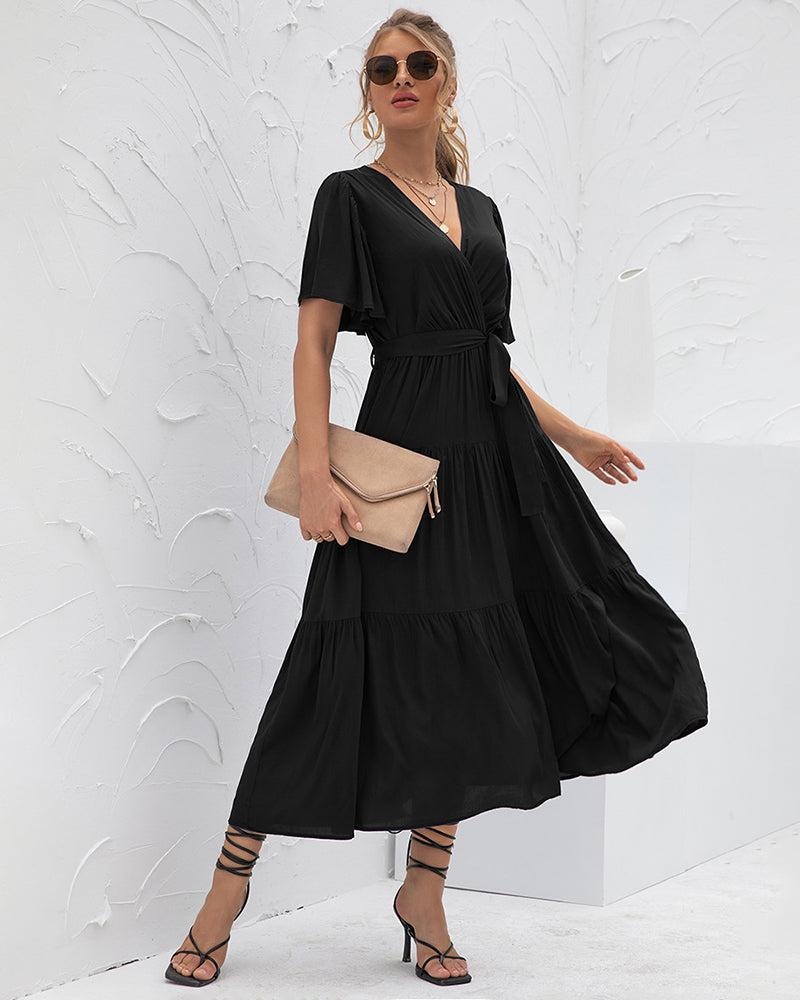
Their spring collection showcases why: a V-Neck Wrap Maxi at $28.97 that editors call “flattering for every body type,” a Satin Camisole at $23.99 that was featured on national television, and a cotton-linen sundress at $26.89 that reviewers describe as “looking like a $100 dress.” The consistent thread? Quality that surprises at the price point, in a size range that actually serves most women.
Zeagoo V-Neck Wrap Maxi Dress — $28.97 | Image: zeagoo.com
2. COS — The Quiet Minimalist
H&M’s premium sibling has carved a niche with Scandinavian minimalism at accessible prices ($50-150). Their spring collection emphasizes clean lines, neutral palettes, and versatile layering. COS proves that “affordable” and “sophisticated” can coexist when the design philosophy prioritizes timelessness over trends.
3. Quince — The Transparency Play
Quince’s radical pricing transparency — showing the exact factory cost alongside their price — has earned them a devoted following. Their cashmere at $50, silk at $30, and Mongolian wool coats at $150 deliver materials that justify prices three times higher. The brand is building trust through information, not marketing.
4. ADAY — The Sustainable Functionalist
ADAY designs clothes that solve problems: wrinkle-resistant travel dresses, four-way-stretch work pants, machine-washable blazers. At $100-200, they’re not ultra-affordable, but their cost-per-wear ratio is exceptional. Each piece is designed for 100+ wears — a genuine sustainability play in a market full of greenwashing.
5. Everlane — The Original Disruptor
Everlane pioneered the DTC “radical transparency” model and continues to refine it. Their $50-100 range delivers consistent basics — the ReNew fleece, the Day Glove flat, the Perform legging — that have become wardrobe infrastructure for a generation of conscious consumers.
What These Brands Share
The common denominator isn’t price — it’s intentionality. Each brand has identified a specific gap in the market (size inclusivity, material transparency, functional design, minimalist aesthetic, editorial-worthy affordability) and filled it with genuine quality rather than marketing promises.
The lesson for consumers: in 2026, the smartest fashion purchases aren’t determined by brand name or price tag. They’re determined by whether a brand has earned independent credibility through consistent quality. When PEOPLE and Real Simple recommend the same $29 dress, the old luxury hierarchy becomes irrelevant.
