
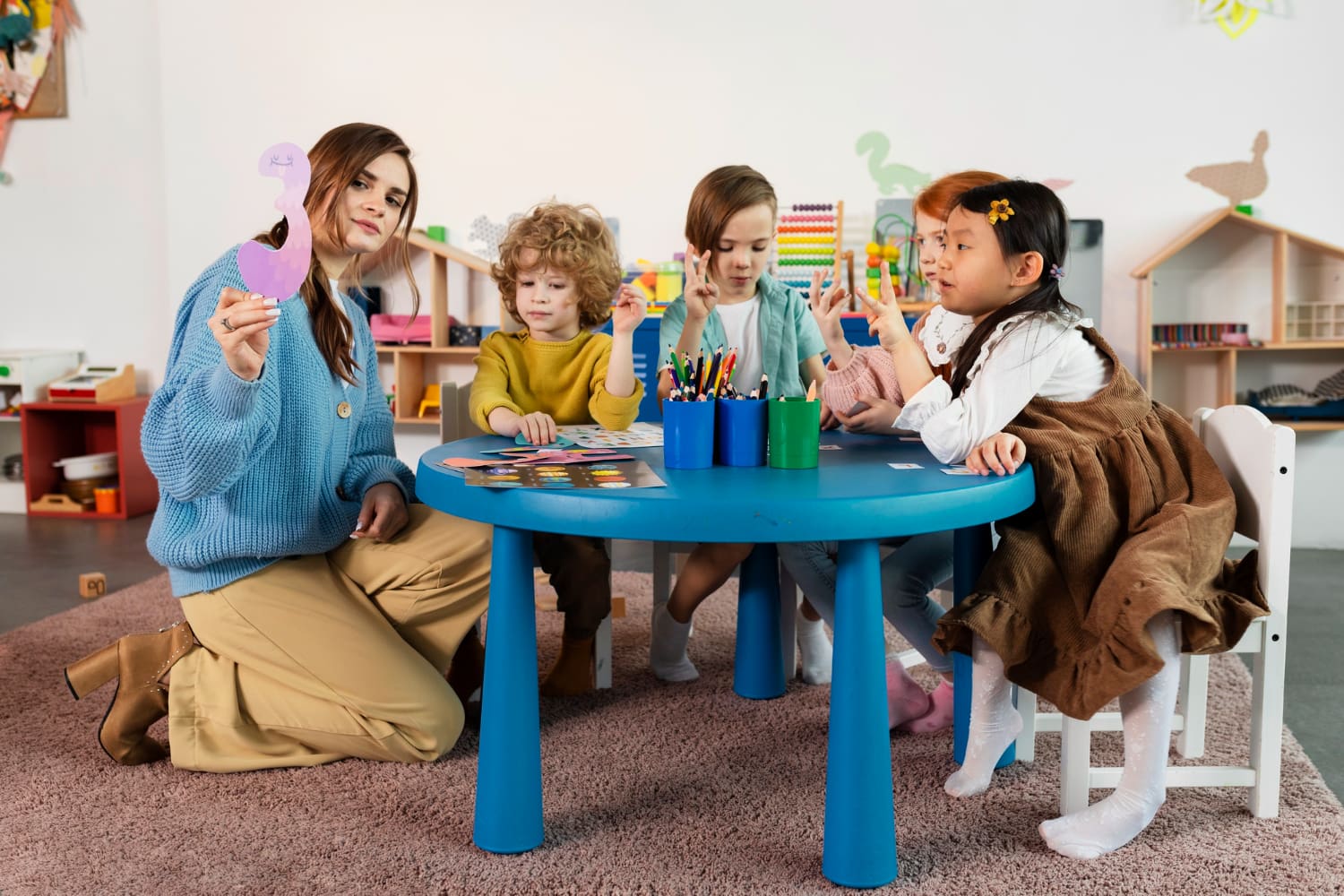
Child Daycare – A child’s social and emotional development is as important as their cognitive growth in the formative early years. A good childcare environment offers a methodical, nurturing setting where little children develop the capacity to traverse the intricate sphere of social interactions. Through carefully created activities, teachers can purposefully promote vital abilities like empathy, sharing, communication, and cooperation.
These encounters are basic lessons in emotional intelligence, self-regulation, and community; they go beyond just play. Uniquely situated to provide these regular, directed social interactions, the daily schedule in a daycare nursery helps kids develop the confidence and ability necessary to establish strong relationships and flourish both in their future academic paths and within the context.
Joint Building Projects and Collaborative Art
Shared vision and negotiation are necessary for group art projects like building a complicated structure with blocks or painting a vast mural. Children need to share ideas, rotate materials, and respect various contributions. This fosters compromise, cooperation, and the importance of striving toward a common aim. Children are helped to view themselves as members of a team and feel the fulfilment of working on something collectively that they could not do alone by the emphasis on the shared process instead of individual output.
Structured Circle Time with Sharing
Regular circle time offers a dependable venue for social education. Under the direction of an instructor, youngsters train themselves to converse, pay close attention to others, and share news or things brought from home. This rite helps us to value the voices of others, cultivate patience, and have the courage to speak in front of a group. The leader can set themes like emotions, so asking youngsters to name feelings in themselves and others, and so preparing the groundwork for empathy and emotional literacy within a secure, loving environment.
Role-Playing And Pretend Play Situations
Social development depends on the home corner or dress-up area. Children inherently test various social roles, points of view, and laws as doctors, shopkeepers, or families through pretend play. In a secure setting, they learn to negotiate tales (You be the patient; I will be the nurse), settle disagreements over props, and show a spectrum of feelings. Understanding social cues, honing language skills, and building a theory of mind, the awareness that others think and feel differently from oneself, all depend on this inventive play.
Directed Collaborative Games
Games with straightforward, common regulations help kids learn to take turns, follow directions, and handle winning and losing with grace. Emphasising group effort over individual contests, activities like Parachute Play, where kids have to synchronise motions to bounce balls or team-based relay races are great. These games encourage one another, enable actions to be synchronised, and promote peer watching, all of which help to develop a sense of unity and teach that success usually depends on teamwork and mutual support.
Meals and Snacks Family-Style Timing
Daily social routine is sitting together for supper or snacks. Children develop the ability to pass serving plates, employ polite words (please and thank you), and converse casually with both adults and peers. This teaches table etiquette, patience, and social subtleties of group meals by mirroring significant family and cultural customs. This is a perfect moment for teachers to demonstrate good social interaction and enable inclusive dialogue, therefore empowering quieter pupils to find their voice in a small-group context.
Peer Buddy Systems And Assistant Roles
Introducing a basic buddy system for new children or giving daily helper duties (such as feeding the fish or arranging cups) fosters responsibility and prosocial behaviour. Caring for a friend or helping with the general welfare of the group encourages empathy, compassion, and community. Encouraging them to look for others and take pride in their common surroundings, these roles give youngsters a feeling of agency and significance within their daycare Nursery community.
Conclusion
In essence, supporting social ability growth in early childhood calls for deliberate, daily practice within a safe and directed setting. From group art and role-playing to communal meals and collaborative games, the activities described are fundamental drills in empathy, communication, and community building rather than just leisure.
Knowing that mastering the art of good social interaction is a basic foundation of lifelong success, a well-managed Nursery carefully incorporates these chances into its curriculum. Prioritising these experiences helps parents and teachers give children the emotional toolkit they need to create close relationships, negotiate difficulties, and become empathetic, cooperative members of their larger environment.