
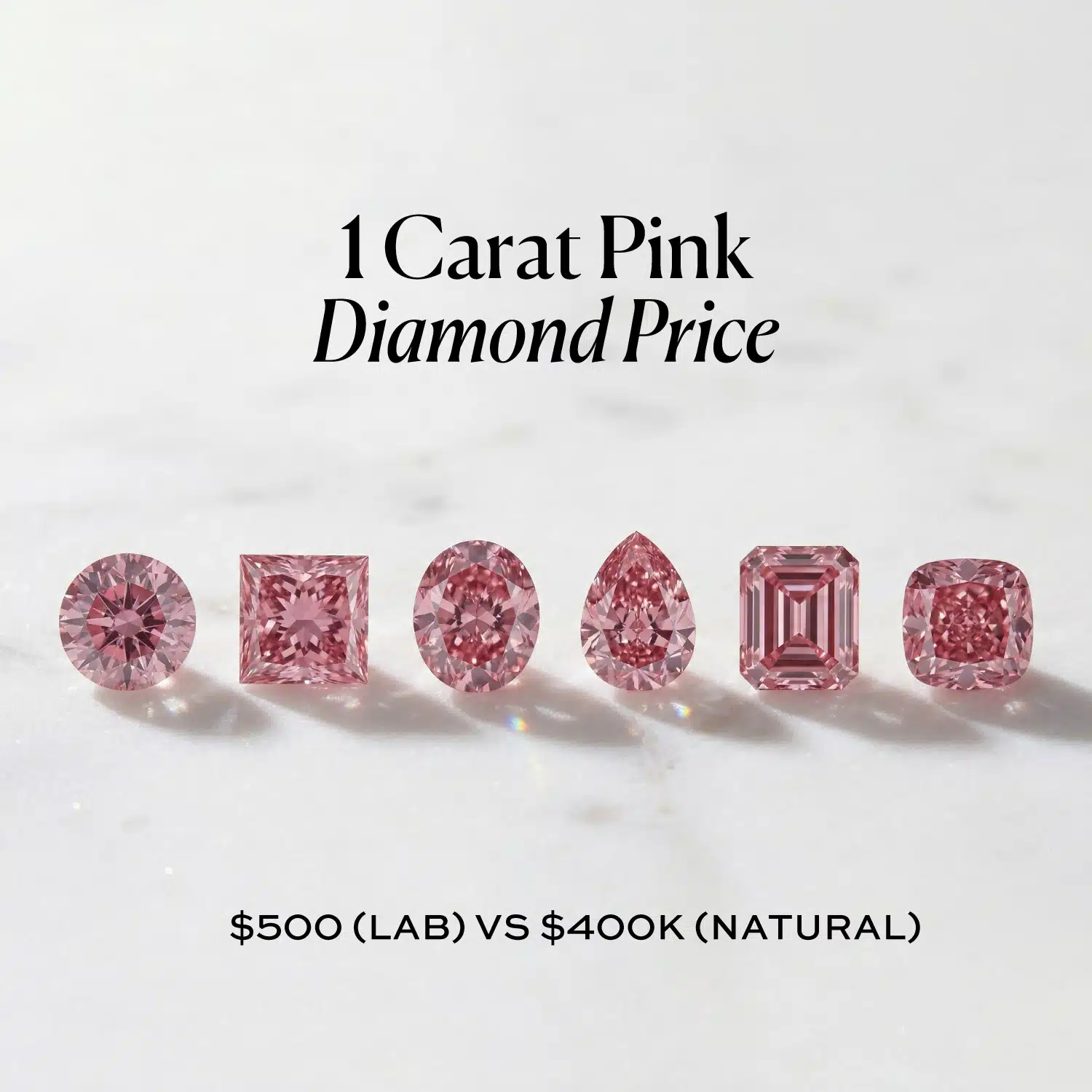
Shopping for a pink diamond is frustrating. Prices are completely disconnected.
You might find one stone for $500 and a similar-looking one for $400,000. This massive price gap makes buying a colored diamond feel incredibly risky. It feels like you are looking at two entirely different industries.
We analyzed the market to explain this 2026 pricing inversion. Whether you want a stunning engagement ring from Aurelia or a hard asset for a vault, here is the truth behind the numbers.
👉1 Carat Pink Diamond Price at Aurelia
The 2026 Pink Diamond Market: Why the Price Gap is So Massive
The 1 carat pink diamond price gap is the result of a divided market. The closure of the Argyle Mine made natural stones incredibly scarce. Natural pinks are now priced as elite investment assets.
Simultaneously, lab-grown technology perfected color saturation. Synthetic production is now hyper-efficient. This created a pricing inversion where flawless lab pinks cost pennies on the dollar compared to mined stones.
Lab-Grown Pink Diamond Prices: The $500 Floor
In 2026, the baseline value for a lab-grown pink diamond has crashed to a $500 floor. This price secures a premium stone. You get a fancy vivid pink lab diamond with zero visual compromises.
At Aurelia, we see buyers leveraging this affordability daily. It allows for massive, high-fashion pieces that were previously impossible for the average consumer.
Why Lab Pinks Are Currently Cheaper Than Colorless Diamonds
This is the biggest secret in the modern jewelry industry. Lab pinks are often cheaper than colorless D-grade stones.
Manufacturing processes like HPHT and CVD use doping agents to create color. This heavy color saturation easily hides minor crystal growth defects. It is simply cheaper and faster to grow a flawless-looking pink stone than a perfectly pure, colorless one.
Expected Clarity and Cut at the $500 Price Point
Your $500 budget goes incredibly far. Expect to find IGI-certified stones with VS1 or VVS2 clarity. Standard elongated shapes like Ovals and Radiants sit firmly at this price floor.
Natural Pink Diamond Prices: The Investment-Grade Asset
Buying a natural vs lab pink diamond cost comparison shifts the conversation from jewelry to finance. A natural pink diamond is a highly illiquid, portable asset class.
The “Brownish Pink” Trap ($11,000)
You can find a 1-carat natural pink diamond for around $11,000. But be careful. This is often a brownish pink diamond price.
The “brownish” modifier means the stone lacks vibrant color. It will look like champagne or cognac. Do not buy this expecting a bright pink aesthetic.
“Fancy Intense” Pinks and Wealth Preservation ($400,000+)
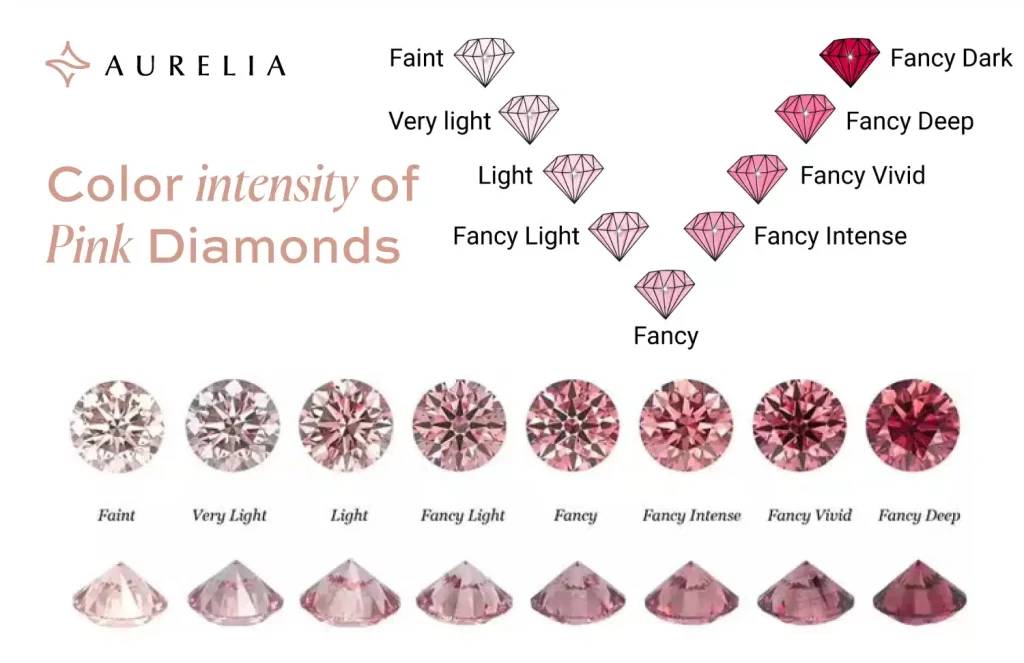
A pure, natural pink diamond is the ultimate wealth preserver. A 1.00-carat GIA-certified “Fancy Intense” pink starts around $400,000.
These stones have no color modifiers. They hold immense resale value. High-net-worth buyers acquire them specifically to diversify portfolios in the post-Argyle market.
Lab vs. Natural: Which 1-Carat Pink Diamond Should You Buy?
Your choice depends entirely on your end goal. Are you building an investment portfolio, or do you want a beautiful engagement ring?
Review this breakdown of the fancy color diamond grading scale and market values to decide.
| Buyer Goal | Diamond Type to Buy | 2026 Price Estimate |
| Maximum Visual Color & Size | Lab-Grown IGI Fancy Vivid Pink | $500 – $1,000 |
| Strict Budget Value | Lab-Grown Cushion or Oval Cut | $500 |
| Long-Term Asset Investment | Natural GIA Fancy Intense Pink | $400,000+ |
Frequently Asked Questions (FAQ)
Why are lab-grown pink diamonds so cheap in 2026?
Lab-grown pink diamonds average $500 per carat due to highly stabilized manufacturing efficiencies. The color saturation easily masks minor defects, making them cheaper to produce than pure colorless stones.
The CVD and HPHT processes can now consistently produce high-saturation “Fancy Vivid” pinks at scale. This abundance drives the wholesale price down.
How much does a 1 carat natural pink diamond cost?
A 1-carat natural pink diamond starts around $11,000 for lower-quality stones with “brownish” modifiers. High-quality, pure “Fancy Intense” natural pinks command premium prices, often exceeding $400,000.
The exact cost relies heavily on the color grading. Pure pinks without secondary hues are exceptionally rare and priced accordingly.
Do natural pink diamonds hold their resale value?
Yes, but only pure, high-grade natural pink diamonds hold significant resale value. Investment-grade stones, like a GIA-certified “Fancy Intense Pink,” act as reliable hard assets for wealth preservation.
Lower-tier natural stones with secondary color modifiers typically do not appreciate. They are poor choices for long-term financial investment.
Can you tell the difference between a lab and natural pink diamond?
Visually and chemically, they are identical. A standard jeweler cannot tell the difference with the naked eye or a standard loupe.
Advanced laboratory equipment is required. Gemologists must detect specific, microscopic crystal growth patterns to distinguish a lab-grown pink diamond from a mined one.
What is the best certification for a lab-grown pink diamond?
For lab-grown colored diamonds, IGI (International Gemological Institute) is the dominant and most trusted grading authority.
For natural pink diamonds where investment value is paramount, GIA (Gemological Institute of America) remains the strict industry standard.
